
The Impact of ERCOT's RTC+B on Clean Energy Markets and Battery Storage Investment Opportunities


 Aime Summary
Strategic Infrastructure Shifts: A New Market Paradigm
ERCOT's RTC+B replaces the outdated ORDC with Ancillary Service Demand Curves (ASDCs), enabling real-time co-optimization of energy and ancillary services. This shift treats batteries as single devices with a state of charge, allowing the real-time dispatch engine (SCED) to allocate resources every 5 minutes based on grid conditions, transmission congestion, and battery capacity. By eliminating the need for separate Day-Ahead commitments for ancillary services, the design reduces manual interventions and streamlines operations.
The integration of batteries into the pricing framework is particularly transformative. For instance, the Constraint Competitiveness Test now evaluates both charging and discharging capabilities, ensuring batteries are dispatched optimally during periods of high demand or renewable intermittency. This infrastructure upgrade is projected to reduce system costs by up to $6.4 billion annually while improving grid flexibility.
Battery Storage Investment Opportunities: Enhanced Utilization vs. Reduced Premiums
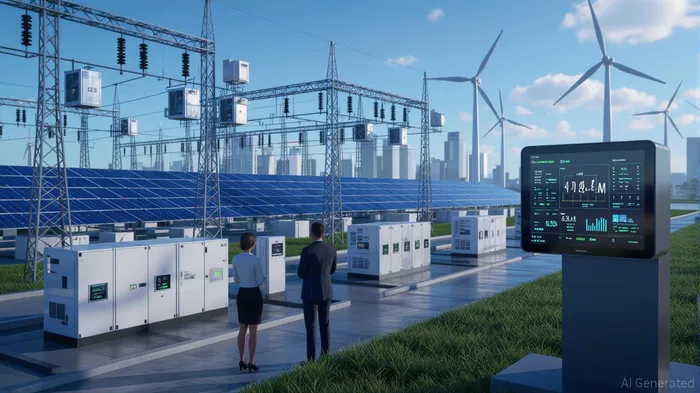 For battery storage investors, RTC+B introduces a dual-edged dynamic. On one hand, the ability to co-optimize energy and ancillary services in real time enhances asset utilization, particularly in scenarios where solar and wind generation fluctuate unpredictably. This aligns with the broader U.S. energy transition, where renewable integration is accelerating. On the other hand, the increased efficiency of the market may reduce price volatility, which historically allowed storage assets to capture premium revenues during scarcity events.
Data from Resurety indicates that while RTC+B could lower wholesale energy costs by $2.5–$6.4 billion annually, it may also compress margins for storage operators by reducing the frequency of high-price arbitrage opportunities. Investors must now balance the benefits of dynamic dispatch with the risk of diminished revenue from price spikes. Hybrid projects that combine storage with generation assets may offer a mitigating strategy, leveraging diversified revenue streams to offset these challenges.
Long-Term Asset Valuation: Navigating Market Dynamics
The long-term valuation of battery storage assets under RTC+B hinges on three key factors: operational efficiency, market liquidity, and regulatory alignment. The new framework's emphasis on real-time co-optimization ensures that batteries are dispatched based on their full operational range, maximizing their value in both charging and discharging modes. However, this also means that asset valuations will increasingly depend on granular data analytics and predictive modeling to optimize participation in the market. This shift requires advanced analytics.
Moreover, the elimination of legacy constructs like supplemental reserve markets has created a more transparent pricing environment. While this reduces uncertainty for investors, it also necessitates a shift in bidding strategies. For example, Day-Ahead/Real-Time Spreads will play a critical role in determining the profitability of storage assets, requiring operators to adopt advanced forecasting tools.
Broader Implications for the U.S. Energy Transition
ERCOT's RTC+B is a microcosm of the broader U.S. energy transition, where infrastructure modernization is critical to integrating renewable resources. By treating batteries as flexible, responsive assets, the design supports the decarbonization goals of states like Texas, which aims to achieve 100% clean electricity by 2035. The projected annual savings of $2.5–$6.4 billion underscore the economic viability of this approach, demonstrating that grid reliability and cost efficiency can coexist with aggressive clean energy targets.
However, the success of RTC+B also highlights the need for complementary policies. For instance, federal incentives for storage deployment and interregional coordination could amplify the benefits observed in Texas, accelerating the adoption of similar market designs nationwide.
Conclusion
ERCOT's RTC+B marks a watershed moment for clean energy markets, redefining the role of battery storage in a decarbonizing grid. While the design enhances operational efficiency and reduces costs, it also demands a recalibration of investment strategies to account for reduced price volatility and evolving revenue mechanisms. For investors, the path forward lies in leveraging advanced analytics, hybrid project models, and proactive engagement with market rules to maximize long-term asset valuation. As the U.S. energy transition gains momentum, ERCOT's innovation serves as a blueprint for how infrastructure shifts can drive both economic and environmental progress.

Blending traditional trading wisdom with cutting-edge cryptocurrency insights.
Latest Articles
Stay ahead of the market.
Get curated U.S. market news, insights and key dates delivered to your inbox.


AInvest
PRO
AInvest
PRO



Comments
No comments yet