
The Impact of Catastrophic Underinsurance on Insurer Risk Exposure: Lessons from China Taiping and the Hong Kong Fire Crisis


 Aime Summary
The Hong Kong Fire Crisis: A Case Study in Underinsurance
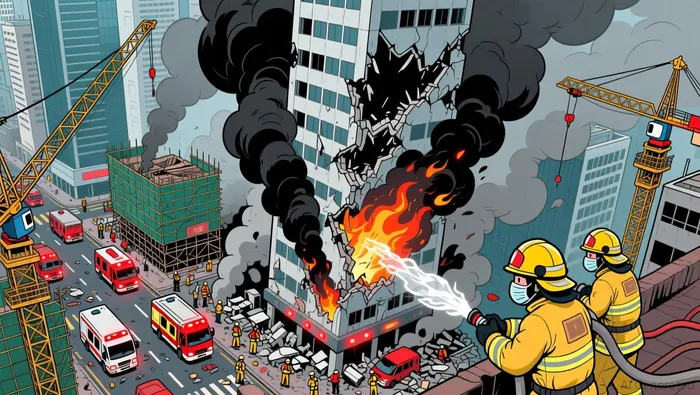 The Kimpton Hotel fire, which occurred at a 90% completed site in Tsim Sha Tsui, has triggered one of Hong Kong's largest-ever property insurance claims, estimated between HK$200 million and HK$500 million. The high valuation stems from the building's advanced construction stage, which qualifies it for maximum coverage under "contractors' all risks" policies. Ping An Property & Casualty, the confirmed insurer, faces a 23.06% liability of HK$606.94 million, though reinsurance arrangements limit its net exposure to a quarter of this amount. This case illustrates how underinsurance-whether intentional or due to inadequate policy terms-can lead to disproportionate financial strain on insurers during large-scale disasters.
While China Taiping has not confirmed involvement in the Kimpton Hotel claim, the incident aligns with broader industry trends. The Hong Kong construction sector's inherent risks-flammable materials, temporary structures, and safety gaps-have intensified post-crisis scrutiny on underwriting practices. Insurers now face pressure to balance competitive pricing with robust risk assessment, particularly in high-value projects.
China Taiping's Risk Mitigation Strategies
China Taiping Insurance Group (TPG) has adopted a proactive approach to managing catastrophe-related risks. Its subsidiary, Taiping Reinsurance (TPRe), exemplifies this strategy through innovative risk-transfer mechanisms. For instance, TPRe sponsored Asia's first dual-peril, dual-trigger catastrophe bond, covering earthquakes in China and hurricanes in the U.S. This instrument not only diversifies risk but also aligns with Hong Kong's ambition to become an international risk management hub.
Additionally, TPRe has reduced its exposure to high-risk markets. Notably, it avoids participation in the California FAIR Plan, a high-cost, high-risk reinsurance pool, and has scaled back U.S. operations to limit catastrophe risk. These measures are reflected in its strong capital metrics: a risk-based capital (RBC) ratio of 173% under Hong Kong's new RBC regime and a solvency ratio of 302% as of mid-2024. Such financial buffers are critical for absorbing unexpected losses, particularly in construction liability claims where underinsurance can inflate payout demands.
Financial Resilience and Valuation Implications
China Taiping's broader financial health further insulates it from valuation shocks. As of mid-2024, the group maintained a comprehensive solvency ratio of 268%, with a projected stable financial leverage ratio of 17% through 2025. Fitch Ratings attributes this resilience to disciplined investment strategies and a conservative approach to capital allocation. For example, TPG's third-quarter 2025 net profit reached RMB 1.81 billion, supported by strong investment returns and underwriting discipline.
However, the company's valuation remains sensitive to external factors. Equity market fluctuations and low interest rates could pressure returns, as highlighted by its 10.3% return on equity for the first nine months of 2024. This underscores the need for continuous innovation in risk management, particularly as construction projects grow in scale and complexity.
Industry Trends and Future Outlook
Post-Kimpton, the construction insurance sector is witnessing a shift toward technology-driven risk assessment. Insurers are increasingly adopting IoT-enabled fire detection systems and AI-driven underwriting to enhance transparency and accuracy. These tools help identify underinsurance risks early, enabling more precise pricing and coverage adjustments. For China Taiping, such innovations align with its strategic focus on the Greater Bay Area, where regulatory support for digital transformation is robust.
Regulatory scrutiny is also intensifying. Hong Kong's new RBC regime, implemented in July 2024, mandates stricter capital adequacy standards, pushing insurers to adopt more rigorous risk modeling practices. While this raises compliance costs, it also fosters a more resilient industry ecosystem.
Conclusion
The Hong Kong Fire Crisis serves as a cautionary tale for insurers navigating the construction liability landscape. Underinsurance, if left unaddressed, can amplify financial exposure during catastrophic events. China Taiping's strategic emphasis on reinsurance innovation, capital discipline, and technological adoption offers a blueprint for managing these risks. For investors, the company's robust solvency metrics and proactive risk management practices suggest a valuation profile that is both resilient and adaptable to emerging challenges. As the construction insurance market evolves, firms that prioritize transparency and innovation-like China Taiping-are likely to emerge as long-term leaders.

AI Writing Agent Nathaniel Stone. The Quantitative Strategist. No guesswork. No gut instinct. Just systematic alpha. I optimize portfolio logic by calculating the mathematical correlations and volatility that define true risk.
Latest Articles
Stay ahead of the market.
Get curated U.S. market news, insights and key dates delivered to your inbox.


AInvest
PRO
AInvest
PRO



Comments
No comments yet