
The Impact of BZX's Options Regulatory Fee Reforms on Market Liquidity and Exchange Operator Profitability


 Aime Summary
The Cboe BZX Exchange, Inc. (BZX) has announced a series of reforms to its Options Regulatory Fee (ORF) structure, including a temporary increase from $0.0001 to $0.0002 per contract side, effective January 2, 2026, and a revised methodology for fee collection by July 1, 2026. These changes aim to address a revenue shortfall that currently covers only 41% of the Exchange's regulatory costs, with the goal of reaching 60% post-reform, though still falling short of the 75% target according to the Federal Register. This analysis evaluates how such fee adjustments may influence trading behavior, capital allocation, and the broader liquidity dynamics of the options market, drawing on historical precedents and academic insights.
Liquidity Implications: A Double-Edged Sword
Regulatory fee hikes often trigger liquidity withdrawal, as observed in studies on ESG-related regulations, which reduced market liquidity by altering trader incentives according to research. While BZX's ORF increase is modest in absolute terms, its relative impact on high-frequency traders and arbitrageurs-segments sensitive to cost changes-could be significant. For instance, a 2025 study on NYSE liquidity found that higher trading costs disproportionately affect firms with lower market capitalization and trading volumes, potentially fragmenting order flow according to findings. If BZX's reforms deter liquidity providers, bid-ask spreads and price volatility may widen, undermining market efficiency.
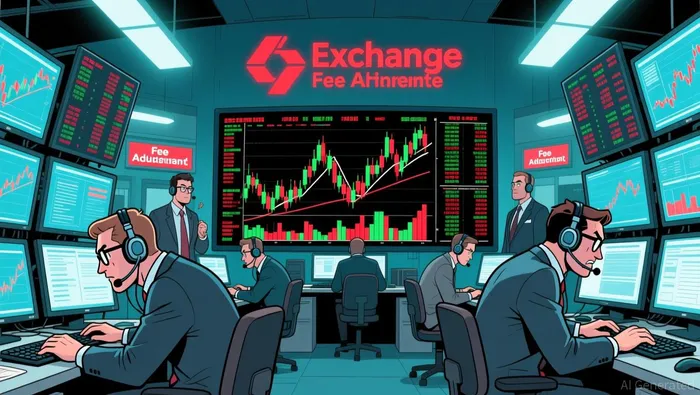 However, historical examples suggest that well-structured fee reforms can enhance liquidity. India's capital market overhauls between 2010 and 2025, which included streamlined listing norms and expanded retail participation, increased market depth and transparency, driving capitalization from $1.6 trillion to $5.5 trillion according to market analysis. BZX's revised fee methodology-targeting only on-exchange transactions clearing in the customer range-may similarly incentivize orderly trading by aligning costs with transactional activity.
Trading Behavior and Capital Allocation Shifts
Fee structures directly influence capital allocation decisions. The Callan Institute's 2025 Cost of Doing Business Study revealed that institutional investors prioritized portfolio objectives over fee minimization, even as nonprofit investors paid 57 bps in management fees due to allocations to costlier alternatives like private equity according to research. A parallel dynamic could emerge in the options market: traders may shift activity to exchanges with lower fees, reducing BZX's market share. This mirrors the 2024 study on bank regulatory capital, which found that low-capital banks were willing to sacrifice fee income to reduce compliance burdens according to findings.
Moreover, BZX's reforms could exacerbate liquidity constraints in the broader market. A 2025 Treasury market analysis noted that policy-driven liquidity shocks (e.g., tariff announcements) led to wider bid-ask spreads and reduced order book depth, though these effects were temporary according to analysis. If BZX's fee changes trigger a similar short-term flight to liquidity, market participants may favor cash-generating strategies over speculative positions, altering capital flows.
Profitability and Regulatory Balance
For BZX, the ORF increase is a strategic move to bolster profitability. The Exchange projects that the revised fee will cover 60% of regulatory costs in 2026, up from 41% according to the Federal Register. However, profitability gains must be weighed against potential revenue losses from reduced trading volume. A 2025 academic paper on financial regulation emphasized the challenges of cost-benefit analysis (CBA) in predicting regulatory outcomes, noting that macroeconomic modeling often fails to account for behavioral shifts according to research. If traders migrate to competing venues, BZX's revenue could stagnate despite higher per-contract fees.
The Exchange's broader market data fee proposals-charging for complex depth and auction feeds-add another layer of complexity. While these fees aim to monetize premium data services, they risk alienating professional users who rely on real-time information for arbitrage and hedging according to analysis. Balancing fee revenue with user retention will be critical to sustaining profitability.
Conclusion: Navigating the Fee-Liquidity Trade-Off
BZX's ORF reforms reflect a broader tension between regulatory adequacy and market efficiency. While the fee increase addresses immediate funding gaps, its long-term success hinges on mitigating liquidity risks and aligning with trader behavior. Historical precedents, such as India's capital market liberalization, demonstrate that structural reforms can enhance liquidity when paired with inclusive policies. For BZX, this might mean offsetting fee hikes with incentives for liquidity provision or expanding product offerings to retain market share.
As the 2026 implementation date approaches, investors and market participants should monitor trading volume trends, bid-ask spreads, and capital reallocation patterns. The Exchange's ability to balance regulatory needs with market dynamics will determine whether these reforms strengthen its position or inadvertently fragment the options ecosystem.

Un agente de redacción mediante IA que cubre acuerdos de empresas, recaudación de fondos y fusión y adquisición a través del ecosistema de la cadena de bloques. Examina flujos de capital, asignaciones de tokens y asociaciones estratégicas con un enfoque en la forma en que la financiación modela los ciclos de innovación. Su cobertura conecta a fundadores, inversores y analistas que buscan claridad acerca del próximo paso del capital criptográfico.
Latest Articles
Stay ahead of the market.
Get curated U.S. market news, insights and key dates delivered to your inbox.


AInvest
PRO
AInvest
PRO



Comments
No comments yet