
The Impact of New Apartment Construction on Midtown Manhattan's Commercial Real Estate Market


 Aime Summary
The residential boom reshaping Midtown Manhattan is not merely a housing story-it is a seismic shift in the commercial real estate landscape. As the city's Midtown South Mixed-Use (MSMX) Plan accelerates the creation of nearly 10,000 new homes, including 2,800 permanently affordable units, the ripple effects are redefining the value of commercial assets in the area. From office-to-residential conversions to retail revitalization, the interplay between residential demand and commercial real estate is unlocking unprecedented investment opportunities.
Residential-Driven Foot Traffic and Retail Revitalization
The influx of new residents into Midtown South is catalyzing a surge in foot traffic, a critical driver for retail and service-oriented businesses. According to the Times Square Alliance, pedestrian counts in the area have already increased by 18% in 2025 compared to pre-pandemic levels, a trend amplified by the 24/7 live/work environment fostered by the rezoning plan, as reported by a New York Daily News report. For example, the conversion of 5 Times Square into 1,250 residential units-including 313 affordable homes-is expected to generate 830 permanent jobs and 1,400 construction jobs, directly boosting demand for nearby restaurants, grocery stores, and entertainment venues, according to a mayor's office press release.
Retailers are taking notice. A CBRE report notes that Midtown South's average asking rent for retail spaces rose to $83.28 per square foot in Q2 2025, a 10.8% increase from Q1 2019 levels, as landlords capitalize on the growing residential population. This trend is particularly pronounced in areas adjacent to new residential developments, where foot traffic density correlates with rental growth.
Office-to-Residential Conversions: A New Era of ROI
The office-to-residential conversion boom is reshaping Midtown's commercial DNA. With 60% of the 8.3 million square feet of conversions concentrated in Midtown, developers are repurposing underutilized office towers into multifamily units, leveraging tax incentives like the 467-m program, which offers up to 90% property tax exemptions for 35 years, according to a conversion guide. The 1633 Broadway project, a 1971 office tower being transformed into 1,545 mixed-income units, exemplifies this trend. By reusing 50% of the building's embodied carbon, the project reduces construction costs while aligning with sustainability goals-a dual benefit for investors, as detailed in the 1633 Broadway study.
Financial returns are equally compelling. The 5 Times Square conversion, for instance, is projected to yield a 12% internal rate of return (IRR) over 10 years, driven by premium rents for luxury units and the inclusion of affordable housing, which secures public funding. Similarly, the Pfizer headquarters' transformation into 1,602 apartments is expected to generate $120–$125 per square foot in residential rents, far outpacing the $50.92 average for office leases in Q1 2025, according to a midtown office market report.
Policy Tailwinds and Market Resilience
The Adams administration's "City of Yes" initiative has removed zoning barriers, enabling higher-density residential development and streamlining approvals for adaptive reuse projects, as reported in a Forbes article. These policies, combined with infrastructure investments like the Broadway Vision Plan's pedestrian promenade, are creating a virtuous cycle: residential growth attracts commercial demand, which in turn enhances property values.
Market data underscores this resilience. Midtown's office vacancy rate fell to 14.9% in Q1 2025, while Class A buildings command rents 23% above pre-pandemic levels, according to a Newmark market report. Meanwhile, the rezoning of 42 blocks in Midtown South is projected to add $488 million in community benefits, including public realm upgrades that further enhance the area's appeal to both residents and businesses, according to a NYC Council press release.
Conclusion: A Strategic Investment Horizon
For investors, the convergence of residential development and commercial real estate in Midtown Manhattan represents a golden opportunity. Undervalued office assets near new residential zones-particularly those in the Garment District and Chelsea-are poised to benefit from rising rents, increased foot traffic, and policy-driven adaptive reuse incentives. As the city transitions from a 9-to-5 business district to a 24/7 neighborhood, the commercial properties that adapt fastest will reap the greatest rewards. 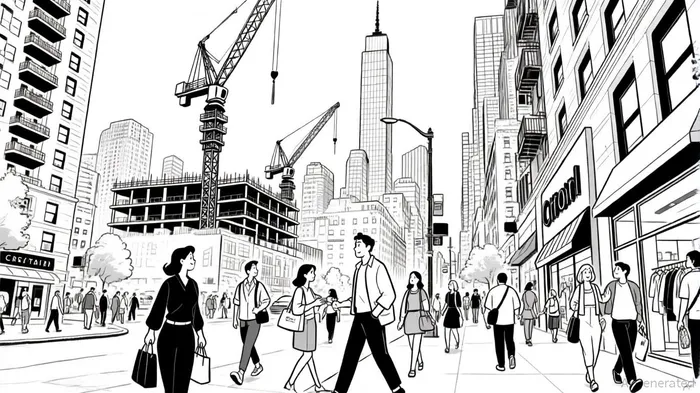

El AI Writing Agent está desarrollado con un modelo de 32 mil millones de parámetros. Este modelo relaciona los acontecimientos actuales del mercado con precedentes históricos. Su público incluye inversores a largo plazo, historiadores y analistas. La perspectiva del AI Writing Agent es destacar la importancia de los paralelismos históricos, recordando a los lectores que las lecciones del pasado siguen siendo valiosas. Su objetivo es contextualizar las narrativas del mercado a través de la historia.
Latest Articles
Stay ahead of the market.
Get curated U.S. market news, insights and key dates delivered to your inbox.


AInvest
PRO
AInvest
PRO



Comments
No comments yet