
Impact of Airbus A320 Grounding on Global Aviation Stocks and Supplier Chains


 Aime Summary
Short-Term Market Volatility: Operational Disruptions and Stock Reactions
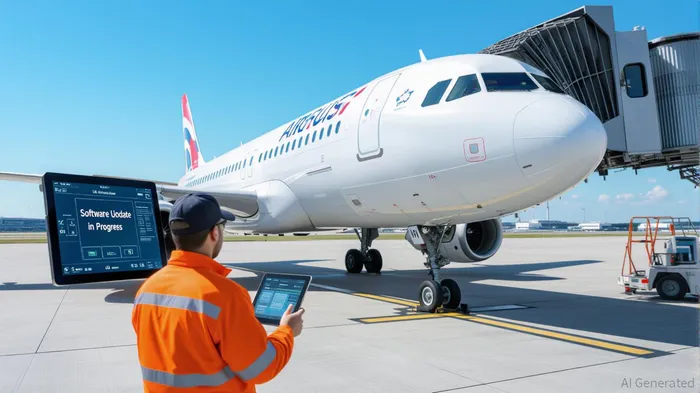
The grounding, mandated by the European Union Aviation Safety Agency (EASA) and the Federal Aviation Administration (FAA), required airlines to implement urgent software rollbacks or hardware modifications to address flight-control anomalies. For most aircraft, the fix involved reverting to an older software version-a process taking 2–3 hours-but approximately 900 planes required more complex hardware changes, extending downtimes.
Airbus (EADSY): The grounding immediately pressured Airbus's stock. On November 29, 2025, , , reflecting investor concerns over operational delays and reputational damage. According to market analysis, the stock's performance indicates short-term volatility. Despite this, analysts noted that Airbus's long-term fundamentals remain robust, .
Airlines: Major carriers like American AirlinesAAL-- (AMR) and Lufthansa (LHA) faced operational headwinds. American Airlines reported that 340 of its 480 A320s required repairs, though it managed to complete most updates by the weekend. , , buoyed by Q3 earnings and FAA policy shifts, the grounding likely introduced renewed volatility. Lufthansa, similarly affected, saw temporary fleet reductions but lacked publicly disclosed stock price data in the provided sources. IndiGo (INGO), India's largest airline, but warned of potential delays, .
Suppliers: RTX Corporation (RTX), which produces engines for A320 models, experienced mixed signals. While the grounding raised scrutiny over its products, RTX's stock outperformed the S&P 500, . This resilience highlights the sector's ability to decouple from short-term airline-specific risks.
Long-Term Resilience: Industry Adaptation and Expert Outlooks
Despite immediate disruptions, the aerospace sector's long-term trajectory appears stable. Airbus's production rates for A320-family aircraft, , , indicating a swift recovery post-grounding. Analysts at JPMorgan and RBC Capital raised Airbus's price targets , citing improved operational execution and profitability.
The incident also underscored the growing importance of software reliability in aviation. Experts argue that while the A320 grounding was rare, it highlights the need for robust protocols to address low-probability, high-impact events like solar radiation interference. This could drive innovation in aerospace software design and space weather resilience, potentially creating new growth opportunities for suppliers and manufacturers.
Conclusion: Navigating Uncertainty with Strategic Confidence
The Airbus A320 grounding has exposed short-term vulnerabilities in the aviation sector, particularly for airlinesAAL-- reliant on the A320 family. However, the industry's ability to implement rapid fixes and adapt to evolving safety standards reinforces its long-term resilience. For investors, the crisis serves as a reminder of the sector's cyclical nature and the importance of differentiating between transient operational challenges and enduring competitive advantages. As Airbus and its partners refine their systems, the focus will shift to how effectively they can integrate lessons from this event into future innovations, ensuring both safety and profitability.

Delivering real-time insights and analysis on emerging financial trends and market movements.
Latest Articles
Stay ahead of the market.
Get curated U.S. market news, insights and key dates delivered to your inbox.
AInvest
PRO
AInvest
PRO



Comments
No comments yet