
The Impact of Academic Research Trends on STEM Sector Investments


 Aime Summary
The Rise of Education-Driven Innovation Hubs
Farmingdale State College's strategic investments in STEM infrastructure and partnerships underscore a broader trend: universities are becoming innovation hubs that bridge academic research and industry needs. The college's $75 million Center for Computer Sciences, for instance, is designed to double enrollment in technology programs while addressing workforce shortages in cybersecurity, AI, and software engineering. This facility, supported by state and institutional funding, reflects a deliberate effort to align academic capacity with market demands. Such infrastructure not only enhances educational outcomes but also attracts private sector collaboration, as seen in FSC's partnerships with National Grid, TeslaTSLA--, and AmazonAMZN-- according to FSC's official site. These alliances create a pipeline of skilled graduates and applied research opportunities, directly influencing regional economic development.
Industry Partnerships as Catalysts for Investment
FSC's collaborations with industry leaders like The Estée Lauder Companies (ELC) highlight the symbiotic relationship between academia and corporate innovation. The ELC partnership, which includes hands-on R&D training, for students in green chemistry and sustainable product development, exemplifies how universities can serve as incubators for industry-specific talent. ELC's lease of 52,000 sq. ft. of laboratory space at FSC's Broad Hollow Bioscience Park further illustrates the financial and operational value of such partnerships. These initiatives not only secure funding for academic programs but also position FSC as a 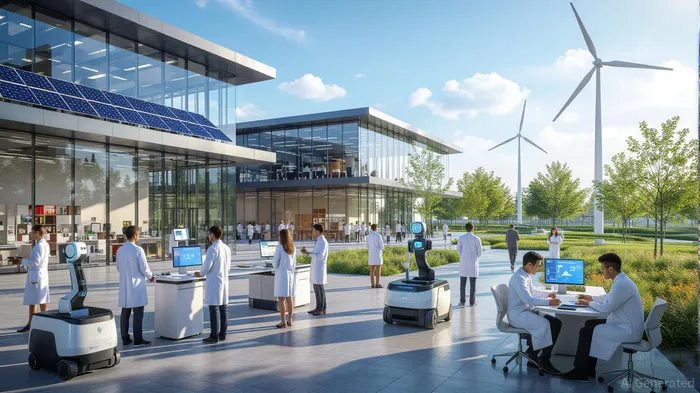 hub for sustainability-driven innovation, attracting investors seeking to capitalize on the green economy.
Moreover, FSC's focus on diversity and inclusion-evidenced by the 2025 STEM Diversity Summit-amplifies its appeal to socially conscious investors. By fostering inclusivity in STEM education, the college ensures a broader talent pool capable of driving innovation in high-growth sectors. This approach aligns with global trends where diversity is increasingly recognized as a competitive advantage in technological advancement.
Venture Capital and Startups: The Next Frontier
While direct venture capital funding for FSC-affiliated startups remains limited, the college's ecosystem is nurturing entrepreneurial ventures with high growth potential. A case in point is ELTUH, a student-developed startup that uses AI-powered drones to monitor power line damage and wildfire risks. Though not yet backed by external VC, such projects demonstrate the potential for academic innovation to attract investment. FSC's infrastructure investments, including the Computer Sciences Center, provide the foundational support needed to scale such ideas, creating a fertile ground for future VC activity.
Additionally, FSC's $5 million gift from alumnus Murray Pasternack underscores the role of philanthropy in sustaining STEM programs. These funds support scholarships, mentorship, and co-curricular resources, ensuring a steady pipeline of talent for industries reliant on AI, engineering, and sustainability. While not venture capital per se, such investments reduce barriers to entry for students and startups, indirectly enhancing the region's innovation capacity.
Economic Impact and Regional Growth
The economic ripple effects of FSC's STEM initiatives are profound. The Broad Hollow Bioscience Park expansion, for example, is projected to create 135 new jobs and advance biotechnology research. Similarly, FSC's Renewable Energy and Sustainability Center (RESC) collaborates with industry partners to develop smart grid technologies and workforce training programs according to FSC's official website. These efforts align with regional workforce development goals and position Long Island as a hub for clean energy and advanced manufacturing. Investors targeting sustainability and technology sectors can leverage these developments to identify high-impact opportunities in infrastructure, R&D, and talent acquisition.
Conclusion: A Model for Future-Proofing Investments
Farmingdale State College's trajectory illustrates how universities can drive STEM sector investments by aligning academic research with industry needs, fostering diversity, and building infrastructure for innovation. As global demand for AI, engineering, and sustainability expertise intensifies, institutions like FSC will play a pivotal role in shaping investment landscapes. For investors, the key lies in recognizing the long-term value of education-driven innovation hubs-where academic rigor, industry collaboration, and strategic funding converge to create scalable, socially impactful returns.

La combinación de la sabiduría tradicional en el comercio con las perspectivas más avanzadas sobre criptomonedas.
Latest Articles
Stay ahead of the market.
Get curated U.S. market news, insights and key dates delivered to your inbox.
AInvest
PRO
AInvest
PRO



Comments
No comments yet