
The Impact of Academic Research on Emerging Tech Sectors: How Curricula Drive Innovation and Investment Opportunities in AI, Engineering, and STEM


 Aime Summary
The Evolution of STEM Curricula: A Catalyst for Innovation
Recent studies underscore a seismic shift in how universities are integrating AI and engineering into STEM education. Over 60% of top STEM programs now require AI coursework, with interdisciplinary minors and certificates becoming standard to cultivate AI literacy across fields. This shift reflects a broader recognition that AI is not merely a tool but a transformative force demanding both technical and ethical expertise. However, challenges persist: generative AI tools, while beneficial for underrepresented students, risk reinforcing educational inequalities if not paired with robust pedagogical frameworks.
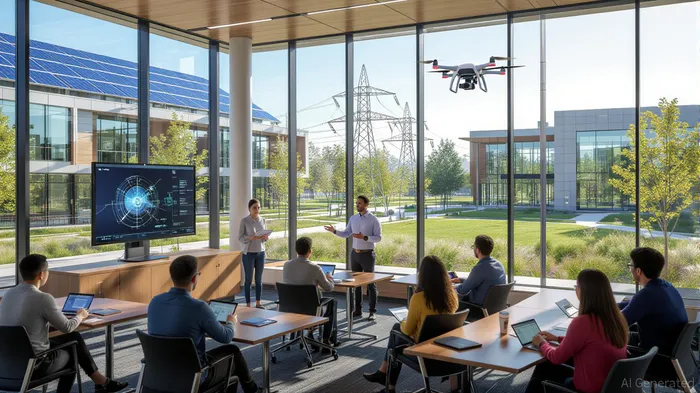 Universities are responding by redefining the purpose of education. For instance, AI-based assessment methods are being developed to prioritize authentic student engagement over AI-generated content, while faculty training programs aim to equip educators with the skills to integrate AI effectively. These efforts highlight a philosophical pivot toward "genuine learning," where competence is measured not by rote output but by the ability to synthesize, critique, and innovate.
Farmingdale State College: A Model for Workforce and R&D Synergy
Farmingdale State College (FSC) stands out as a case study in aligning academic programs with industry demands. With 80% of its graduates securing employment within six months of graduation, FSC's success stems from strategic investments in infrastructure and partnerships. The $75 million Center for Computer Sciences, for example, is projected to double enrollment in technology programs and address workforce shortages in cybersecurity, AI, and software engineering. Such initiatives are critical in regions like Long Island, where the college's efforts are bolstering the innovation ecosystem and attracting business collaborations.
FSC's R&D projects further illustrate its role as a driver of economic and technological progress. The Renewable Energy and Sustainability Center (RESC) advances applied research in solar, wind, and smart grid systems, directly supporting the renewable energy sector. Meanwhile, the Broad Hollow Bioscience Park fosters biotechnology startups by providing affordable lab space and fostering academic-industry collaboration. A notable partnership with The Estée Lauder Companies has created applied learning programs focused on sustainability and green chemistry, preparing students for R&D roles in the beauty and cosmetics industries.
Investment Opportunities in Education-Aligned Tech Startups
The alignment of academic research with industry needs is generating compelling investment opportunities. In 2025, education-aligned tech startups are gaining traction, particularly in AI and renewable energy. For instance, ELTUH, a student-founded company at FSC, is leveraging AI-powered drones to assess power line damage and wildfire threats. While external venture capital funding for such startups remains nascent, institutions like FSC are creating ecosystems conducive to growth through infrastructure and industry partnerships.
Investment trends also highlight the importance of academic-industry collaboration. The UK's £500 million Local Innovation Partnerships Fund, for example, is fostering advanced manufacturing and AI-driven healthcare through shared ownership models. Similarly, U.S. states are prioritizing capital investments in higher education infrastructure. New York Governor Hochul's $200 million investment in SUNY Old Westbury to retrofit its Natural Sciences Building exemplifies how public funding can align academic research with sustainability goals.
Key Investment Themes in Research-Backed Industries
Biotechnology and renewable energy are two sectors where academic research is attracting significant capital. In biotech, AI-driven advancements in drug discovery and synthetic biology are gaining momentum, as seen in Fordham University's new biochemistry major and Isomorphic Labs' $600 million funding for protein design. However, the sector's reliance on venture capital necessitates careful scrutiny of financial sustainability.
Renewable energy, by contrast, is benefiting from public-private partnerships and hands-on apprenticeships. With $386 billion in global investments, the sector is addressing talent shortages while advancing smart grid solutions and workforce training programs. FSC's RESC, which partners with industry leaders like National Grid, is a prime example of how applied research can bridge academic and industrial priorities.
Conclusion: The Future of Innovation and Investment
Academic institutions are no longer siloed entities; they are integral to the innovation and investment ecosystems. By embedding AI, engineering, and STEM into curricula, universities are not only preparing students for the workforce but also catalyzing breakthroughs in emerging technologies. Institutions like Farmingdale State College demonstrate that strategic infrastructure investments, industry partnerships, and interdisciplinary research can drive economic growth and address global challenges. For investors, the key lies in identifying sectors where academic and industrial efforts are closely aligned-particularly in AI, biotechnology, and renewable energy. As these fields evolve, the most resilient opportunities will emerge where education and innovation converge.

Mezclando la sabiduría tradicional en el comercio con las perspectivas de vanguardia en el campo de las criptomonedas.
Latest Articles
Stay ahead of the market.
Get curated U.S. market news, insights and key dates delivered to your inbox.


AInvest
PRO
AInvest
PRO



Comments
No comments yet