
The Impact of Academic Research on Emerging Tech Investment Trends
 Aime Summary
Strategic Infrastructure and Talent Pipeline Development
Farmingdale State College's $75 million Computer Sciences Center, funded by the Empire State Development's Long Island Investment Fund and the SUNY Construction Fund, exemplifies how institutional investment in infrastructure directly fuels workforce development. The facility, set to double enrollment in computing programs, provides state-of-the-art resources for AI, cybersecurity, and data science, addressing a critical gap in Long Island's tech ecosystem. By expanding access to cutting-edge tools and collaborative spaces, the center positions students to meet the surging demand for skilled professionals in these fields.
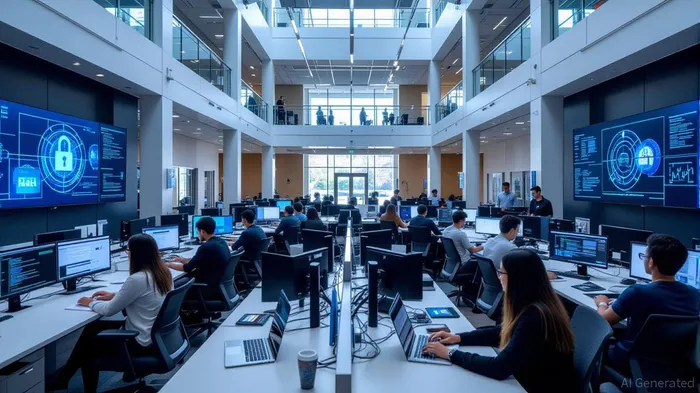 This infrastructure also supports interdisciplinary learning, a key driver of innovation. For instance, Farmingdale's Bachelor of Science in Artificial Intelligence Management integrates technical expertise with business acumen, preparing graduates to lead in AI-driven industries. Such programs align with industry needs, as evidenced by partnerships with companies like Tesla and Amazon, which help tailor curricula to real-world applications. These collaborations ensure that graduates enter the workforce with skills that immediately add value to startups and established firms alike.
Research Innovation and Curriculum Evolution
Academic research plays a pivotal role in advancing emerging technologies. Farmingdale's National Science Foundation-funded project, which uses AI and a Socratic Metacognitive Inquiry-based Learning Environment (SMILE) to enhance critical thinking in programming courses, underscores this point. By embedding AI tools into education, the college fosters deeper engagement and independent reasoning-skills essential for tackling complex challenges in cybersecurity and data science.
Moreover, the college's focus on applied research extends beyond traditional classrooms. The Broad Hollow Bioscience Park, an incubator for biotech startups like BF Innovation and Codagenix, demonstrates how academic institutions can catalyze regional economic growth. While these ventures operate in life sciences, the park's success highlights the broader potential of academic-industry ecosystems to attract venture capital and create high-value jobs.
Alumni and Entrepreneurial Ecosystems
Farmingdale's impact on Long Island's startup ecosystem is further amplified by its alumni network. Initiatives like the Farmingdale Student Alumni Grant (FSAG), which provides $2,000 in funding for student-led entrepreneurial projects, nurture early-stage innovation. Notable alumni, such as Daniel Hardwick, founder of Quick Fi Capital, exemplify how academic programs can empower individuals to overcome challenges and achieve professional success.
While direct venture capital investments in Farmingdale-affiliated AI or cybersecurity startups remain unquantified in recent data, the college's role in fostering a talent pipeline is undeniable. Over 500 graduates in computing fields over the past three years have entered industries where demand for AI and cybersecurity expertise is projected to grow by 30% annually. This steady supply of skilled professionals reduces the risk for investors and accelerates the commercialization of emerging technologies.
Long-Term Investment Returns and Regional Impact
The strategic alignment of academic programs with industry needs creates a compounding effect on investment returns. By addressing workforce shortages and fostering innovation, institutions like Farmingdale reduce the barriers to entry for startups and scale-ups. For example, the Student-Managed Investment Fund at Farmingdale, where students manage a $500,000 portfolio using industry-standard tools, bridges academic theory with practical financial decision-making. Such programs cultivate a generation of entrepreneurs and investors who understand both technological and economic dynamics.
Furthermore, Farmingdale's infrastructure investments contribute to Long Island's broader economic revitalization. The expansion of the Broad Hollow Bioscience Park, including plans for a third building and 135 new jobs, illustrates how academic institutions can act as anchors for regional innovation hubs. These developments attract external capital by demonstrating a commitment to long-term growth and a supportive ecosystem for startups.
Conclusion
Academic research and STEM programs are no longer peripheral to investment trends-they are central to the future of emerging technologies. Institutions like Farmingdale State College prove that strategic infrastructure, interdisciplinary research, and industry partnerships can create a self-sustaining cycle of innovation and capital attraction. As AI, cybersecurity, and data science continue to reshape industries, the role of academia in nurturing talent and fostering ecosystems will remain a cornerstone of long-term investment success.

Combina sabiduría tradicional sobre negociación con las perspectivas de la criptomoneda más moderna
Latest Articles
Stay ahead of the market.
Get curated U.S. market news, insights and key dates delivered to your inbox.






Comments
No comments yet