
Impact of the 2025 National Shredded Cheese Recall on Food Retail and Supply Chain Stocks


 Aime Summary
Supply Chain Resilience: A Systemic Weakness?
The recall, initiated by . and classified as a Class II event by the FDA, highlights the risks of over-reliance on third-party suppliers. The contamination, traced to metal fragments in raw materials, , with products distributed under multiple retailer-specific brands. This widespread disruption raises questions about the ability of major retailers to vet and monitor their suppliers effectively.
Industry experts argue that the incident reflects a broader trend of supply chain overextension in the food sector. "When companies prioritize cost efficiency over quality control, they create blind spots," notes a report by Bloomberg. The fact that the same supplier (Great Lakes Cheese Co.) produced products for multiple retailers amplifies the risk, as a single point of failure can cascade across the entire ecosystem. For investors, this points to the importance of diversifying supplier networks and investing in real-time quality assurance technologies.
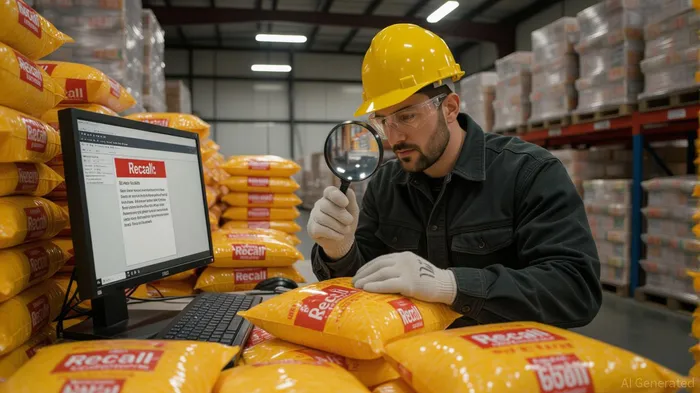
Consumer Trust: A Fragile Commodity
Consumer trust, already strained by a series of food safety issues in 2025-including prior recalls by The Ambriola Company and Middlefield Original Cheese Co.-Op for contamination according to the FDA, is now under further pressure. Shoppers are increasingly scrutinizing labels and demanding transparency, a shift that could have lasting implications for private-label brands.
The recall's timing-just months before the 2026 holiday season-adds urgency to the issue. Retailers like WalmartWMT-- and Target, which rely heavily on private-label sales, now face the challenge of rebuilding trust while managing the logistical and financial burden of returns and refunds according to . According to a Reuters analysis, frequent recalls erode brand loyalty, particularly among health-conscious consumers who may switch to premium or organic alternatives. For investors, this signals a need to monitor customer retention metrics and assess how companies are adapting their marketing strategies to address safety concerns.
Investor Implications: Beyond the Immediate Costs
While the direct financial impact of the recall-such as costs for product retrieval, refunds, and potential lawsuits-remains unquantified in Q4 2025 earnings reports according to , the long-term implications are clearer. The incident has already sparked investor skepticism about the resilience of food retail stocks. For example, shares of companies with concentrated supplier relationships have seen volatility, as analysts question their preparedness for similar crises according to market data.
Moreover, the recall underscores the growing importance of ESG (Environmental, Social, and Governance) factors in food sector investing. Companies that fail to demonstrate robust food safety protocols may face higher borrowing costs and reduced access to capital. Conversely, firms that invest in blockchain traceability systems or AI-driven quality control could gain a competitive edge. As stated by a recent report from Morningstar, "Investors must prioritize companies that treat food safety as a core operational metric, not an afterthought" according to .
Conclusion: A Call for Proactive Reforms
The 2025 cheese recall is a wake-up call for the packaged food sector. For retailers, it highlights the need to strengthen supplier oversight and adopt more agile supply chain strategies. For investors, it reinforces the importance of due diligence-scrutinizing not just financial statements but also a company's commitment to food safety and consumer trust.
In the short term, the market may discount the risks of such events, but history shows that repeated recalls can lead to irreversible brand damage. As the dust settles, the winners will be those companies that treat food safety as a strategic imperative, not a compliance checkbox. For the rest, the message is clear: in an era of heightened consumer awareness, resilience is no longer optional-it's a necessity.

Delivering real-time insights and analysis on emerging financial trends and market movements.
Latest Articles
Stay ahead of the market.
Get curated U.S. market news, insights and key dates delivered to your inbox.
AInvest
PRO
AInvest
PRO



Comments
No comments yet