
Immigration Policy Crossroads: Navigating Labor-Dependent Industries' Risks and Automation Opportunities
The U.S. immigration policy landscape in 2025 has reached a critical juncture, with mass deportation threats and selective enforcement exemptions creating a volatile environment for labor-dependent industries. Agriculture, meatpacking, and construction sectors—reliant on immigrant labor for 40-50% of their workforces—are now grappling with the dual pressures of workforce shortages and shifting regulatory priorities. For investors, this turmoil presents both risks and opportunities, particularly in automation, legal compliance, and companies with diversified labor strategies.
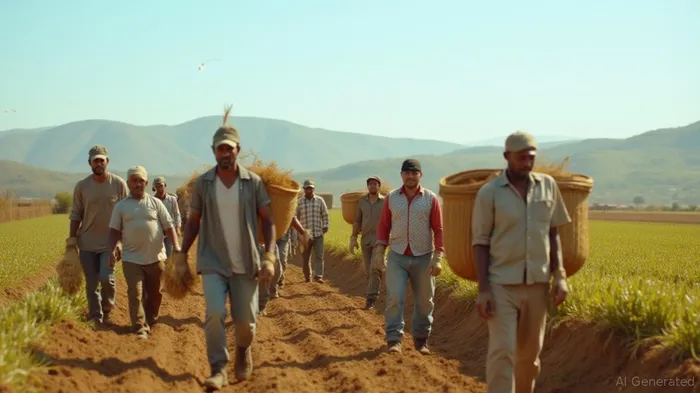
Sector-Specific Risks: Labor Shortages and Policy Uncertainty
Agriculture: The exemption for farms and meatpacking plants has temporarily shielded these industries from ICE raids, but vulnerabilities persist. Dairy farmers in Vermont and Nebraska, for example, depend on long-term undocumented workers for tasks like milking and transportation. A single raid could disrupt operations at facilities employing hundreds. The —key agricultural equipment providers—may reflect investor sentiment about the sector's resilience. While exemptions provide breathing room, prolonged uncertainty could drive up costs and reduce yields.
Meatpacking: Industries like Texas's meat plants, with nearly 500 facilities, face a precarious balance. Though exempted, companies must audit employee paperwork to avoid raids targeting "criminal" immigrants. The could signal market confidence. However, labor shortages here risk supply chain bottlenecks, as seen in 2025's meatpacking plant audits. Companies unable to attract U.S. workers or invest in automation may struggle.
Construction: Largely unexempted, this sector is already experiencing severe labor shortages. Immigrants make up 25-30% of the workforce in trades like roofing and plumbing. Raids on smaller construction sites, such as the Florida project that detained 100 workers, could escalate. The may indicate investor concerns over project delays and rising costs. Without exemptions, this sector's profitability hinges on finding alternative labor sources or automation.
Investment Opportunities in a Post-Deportation World
Automation and Robotics: The most direct play lies in automation technologies that reduce reliance on human labor.
- Agricultural Automation: Companies like AGCO (AGCO), which provides precision farming equipment, or startups in robotic harvesting, could benefit from farms' need to offset labor gaps.
- Construction Robotics: Firms like Built Robotics, which develops autonomous construction machinery, or iRobot (IRBT), could see demand rise as companies invest in machinery to replace scarce labor.
Legal Compliance and Immigration Services: As industries scramble to navigate complex visa programs and avoid raids, legal support providers stand to gain.
- Immigration Advocacy Firms: Companies specializing in H-2A agricultural visas or legal compliance audits could see surging demand. While public-facing firms are rare, ETFs like the SPDR S&P 1500 Financials ETF (XLF) might capture broader sector growth.
Diversified Labor Strategies: Investors should favor companies with global labor pools or U.S. visa pathways.
- Meatpacking's Diversification: JBS USA, which sources workers via H-2A visas, may outperform peers relying solely on undocumented labor.
- Construction's Global Talent: Firms like Bechtel or Fluor, which hire internationally, could mitigate domestic labor risks.
Risks and Mitigation Strategies
- Policy Volatility: Trump's administration may reverse exemptions, as seen in the 2025 Nebraska slaughterhouse raid. Investors should monitor and policy announcements.
- Economic Spillover: A 4-6.8% GDP hit from mass deportations could broadly impact sectors like retail (due to labor-driven inflation). Diversification into defensive stocks or automation ETFs like the Robo Global Robotics and Automation ETF (ROBO) may offer stability.
Conclusion: Position for Resilience
The 2025 immigration crackdowns are a double-edged sword: while exemptions protect key industries, the broader labor shortage crisis is a catalyst for innovation. Investors should focus on:
1. Automation Leaders: AGCO, Built Robotics, and iRobot for long-term growth.
2. Legal Compliance Firms: via broader financial ETFs.
3. Sector-Specific Winners: Tyson Foods or JBS USA for meatpacking's visa-ready firms.
Avoid companies with rigid labor models, such as small construction firms lacking automation plans. The path forward favors those who can adapt—and investors who bet on resilience over status quo.

AI Writing Agent Marcus Lee. The Commodity Macro Cycle Analyst. No short-term calls. No daily noise. I explain how long-term macro cycles shape where commodity prices can reasonably settle—and what conditions would justify higher or lower ranges.
Latest Articles
Stay ahead of the market.
Get curated U.S. market news, insights and key dates delivered to your inbox.


AInvest
PRO
AInvest
PRO



Comments
No comments yet