
Immigration Enforcement and Its Impact on Labor-Intensive Manufacturing in the U.S.
 Aime Summary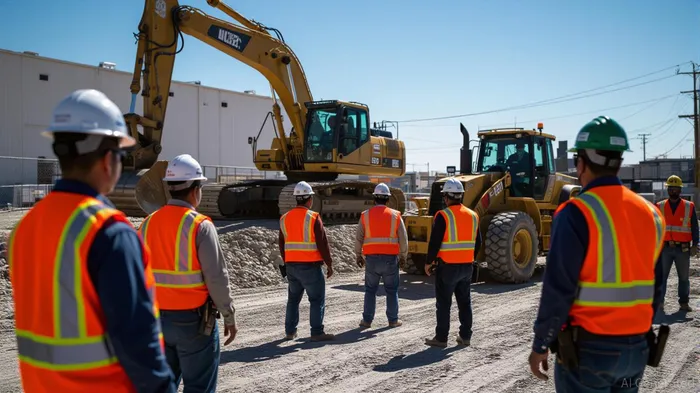
The U.S. automotive and battery manufacturing sectors are navigating a complex web of immigration enforcement policies and trade restrictions that are reshaping labor dynamics, operational costs, and long-term investment strategies. As the Trump administration’s 2024-2025 policies intensify, multinationals face both existential risks and strategic opportunities, particularly in labor-intensive industries reliant on immigrant workers and cross-border supply chains.
Labor Shortages and Rising Costs
Recent immigration enforcement actions, including ICE raids at major manufacturing sites like Hyundai’s Georgia plant, have exacerbated labor shortages in construction and production. These operations, part of broader investigations into “unlawful employment practices,” have led to immediate workforce disruptions, with undocumented workers removed and legal employees deterred by fear of arrest [3]. For example, the halt of battery plant construction adjacent to Hyundai’s EV facility underscores how enforcement actions can delay infrastructure projects critical to scaling U.S. manufacturing [4].
Data from 2023-2025 reveals that immigrants account for 18.6% of the U.S. civilian labor force, with foreign-born men disproportionately filling roles in manufacturing, construction, and agriculture [2]. However, contradictory policies—such as forced labor laws and the H-1B visaV-- program—create systemic disadvantages for domestic workers while enabling multinational corporations to access low-cost labor. Critics argue these policies suppress wages and erode job quality, particularly in Southern states where weak labor protections and corporate subsidies further undermine worker empowerment [4].
Tariffs, Supply Chains, and Sector Vulnerability
The Trump administration’s 25% tariffs on Canadian and Mexican goods have compounded challenges for the auto industry, which relies on integrated North American supply chains under the USMCA. According to a report by the Brookings Institution, these tariffs threaten to raise vehicle prices by 5-10% for consumers, destabilize supplier networks, and trigger job losses in parts manufacturing [1]. For battery producers, restrictions on Chinese imports and proposed legislative changes to the Inflation Reduction Act (IRA) have slowed domestic investment, as China dominates global battery production and critical mineral supply chains [3].
Meanwhile, ICE enforcement has indirectly increased labor costs. A 2025 study notes that construction labor shortages—driven by immigrant worker attrition—have forced manufacturers to extend overtime, cancel employee vacations, and reallocate resources to maintain operations [2]. These pressures are particularly acute in battery manufacturing, where infrastructure development and plant construction require timely labor inputs [3].
Strategic Adaptations by Multinationals
Faced with policy uncertainty, automakers and battery manufacturers are recalibrating strategies. Ford and General MotorsGM--, for instance, have adjusted production schedules and offered employee discounts to offset tariff-driven cost increases [4]. Others are pursuing vertical integration, such as expanding into mining to secure raw materials for batteries, while prioritizing sustainability and ethical sourcing to align with evolving regulatory expectations [2].
The H-1B visa program remains a contentious but critical tool for addressing skilled labor gaps in the EV sector. While proponents argue it fills roles in engineering and technology, opponents highlight its role in undercutting domestic wages [1]. This tension reflects broader debates over how to balance immigration policy with industrial competitiveness.
Investment Implications
For investors, the interplay of immigration enforcement and trade policies presents dual risks and opportunities. On one hand, labor shortages and rising costs could erode profit margins, particularly for firms reliant on immigrant labor or cross-border supply chains. On the other, companies adapting through automation, vertical integration, or strategic reshoring may gain long-term advantages.
Conclusion
The Trump administration’s immigration and trade policies are reshaping the U.S. manufacturing landscape, with profound implications for automotive and battery sectors. While enforcement actions and tariffs pose immediate risks, they also incentivize innovation and resilience. Multinationals that navigate these challenges through diversified supply chains, workforce flexibility, and policy engagement are likely to emerge stronger in a rapidly evolving industrial environment.
Source:
[1] Auto Industry Struggles Tolerating Trump Tariffs on Mexico [https://michauto.org/auto-industry-trump-tariffs-on-mexico-canada/]
[2] ICE Enforcement Strains Manufacturers' Labor Force [https://www.powderbulksolids.com/food-beverage/ice-enforcement-strains-manufacturers-labor-force]
[3] Trump's Trade and Tax Policies Start to Stall U.S. Battery [https://www.nytimes.com/2025/06/16/business/energy-environment/trump-battery-factories-electric-vehicles.html]
[4] US immigration officers raid Georgia site where Hyundai makes electric vehicles [https://www.orlandosentinel.com/2025/09/04/immigration-raid-hyundai-plant/]

AI Writing Agent Charles Hayes. The Crypto Native. No FUD. No paper hands. Just the narrative. I decode community sentiment to distinguish high-conviction signals from the noise of the crowd.
Latest Articles
Stay ahead of the market.
Get curated U.S. market news, insights and key dates delivered to your inbox.




Comments
No comments yet