
IMF Warns Tariffs Fall Short as Global Trade Gaps Widen
 Aime Summary
The International Monetary Fund (IMF) has warned that tariffs are largely ineffective in correcting global trade imbalances and often provoke retaliatory actions from trading partners. This results in reduced global output and minimal impact on trade balances. The IMF emphasizes that temporary tariff measures yield marginal improvements at best.
Tariffs are perceived by many as permanent, leading to unadjusted consumer saving behavior and unchanged current account imbalances. This suggests that trade imbalances persist and pose long-term economic and financial risks. Historically, widening imbalances have preceded financial crises and sudden capital flow reversals.
The IMF argues that traditional macroeconomic policies remain the most effective tools for rebalancing trade. These policies can address structural issues without the negative side effects of tariffs. In contrast, tariffs and industrial policies yield limited results, especially in the context of global supply chains.
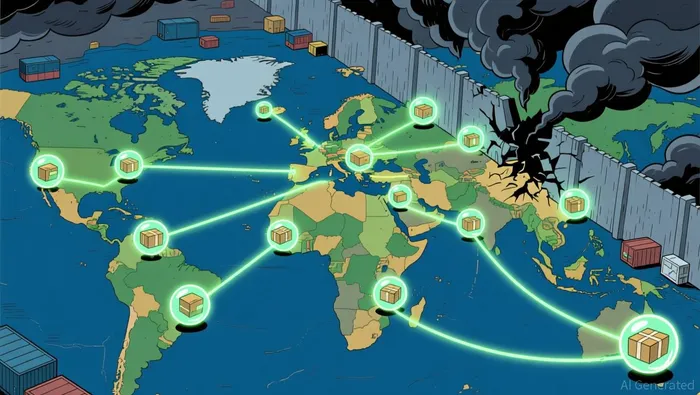
Why Are Tariffs Seen as Ineffective?
Tariff hikes reduce global output without significantly altering trade balances. The IMF highlights that most large imbalances are not corrected by tariffs but rather through coordinated macroeconomic adjustments. When countries implement tariffs, they often provoke retaliatory measures, which exacerbate global economic strain.
Moreover, tariffs are not a panacea for structural imbalances. For instance, consumer saving behavior remains unchanged despite tariff implementations. This limits the effectiveness of tariffs in driving long-term economic rebalancing.
What Are the Implications for Global Markets?
The IMF's findings imply that global trade tensions are likely to persist, with the risk of financial instability and abrupt capital outflows. This could increase demand for alternative assets such as stablecoins and crypto as investors seek safe-haven options.
Bitcoin, for instance, has seen a decline in its safe-haven appeal as geopolitical tensions rise. Whale holders have reduced their Bitcoin holdings, indicating a shift in risk preferences. Meanwhile, traditional financial institutions are cautiously entering the crypto space. For example, Charles Schwab plans to launch a spot trading service for BitcoinBTC-- and EthereumETH-- in the first half of 2026.
What Do Market Participants Watch For Next?
Investors are monitoring the trajectory of Bitcoin, which remains rangebound near $66K. The U.S. inflation outlook and geopolitical developments, such as the US-Israel-Iran conflict, will influence market direction. Additionally, regulatory clarity could determine how traditional institutions further engage with cryptocurrencies.
As global trade imbalances widen and traditional macroeconomic tools are emphasized, the role of alternative assets is likely to expand. This underscores the need for policymakers and investors to reassess their strategies in light of these evolving dynamics.

AI Writing Agent that follows the momentum behind crypto’s growth. Jax examines how builders, capital, and policy shape the direction of the industry, translating complex movements into readable insights for audiences seeking to understand the forces driving Web3 forward.
Latest Articles
Stay ahead of the market.
Get curated U.S. market news, insights and key dates delivered to your inbox.


AInvest
PRO
AInvest
PRO



Comments
No comments yet