
IMF Warns 40% Chance of US Recession by 2025
The International Monetary Fund (IMF) has released its World Economic Outlook Report, highlighting a significant concern for the global economy. The report indicates that the probability of the United States falling into a recession in 2025 has reached 40%, marking an increase from the 27% estimate provided in October of the previous year. This assessment comes amidst a backdrop of various economic indicators and geopolitical factors that are influencing the economic landscape.
The IMF's prediction underscores the growing uncertainty surrounding the U.S. economy. The report suggests that while the U.S. economy has shown resilience in recent years, several factors could contribute to a potential downturn. These include rising inflation, geopolitical tensions, and the impact of trade policies. The IMF's forecast indicates that these elements could collectively push the U.S. economy into a recession by 2025.
The report also notes that the global economy is expected to experience a 3.3% expansion in both 2025 and 2026, driven largely by strong growth in the U.S. However, the 40% probability of a recession in the U.S. raises questions about the sustainability of this growth. Economists and analysts are closely monitoring these developments, as a recession in the U.S. could have far-reaching implications for the global economy.
The IMF's assessment aligns with other economic indicators that suggest a potential slowdown in the U.S. economy. Financial analysts have openly discussed the risk of a recession, with some predicting a higher likelihood of economic downturn. For instance, J.P. Morgan Research raised the probability of a recession occurring in 2025 to 60% in early April, up from 40%. This increase in the predicted probability reflects the growing concerns among economists about the economic outlook.
The IMF's report also highlights the potential impact of trade policies on the U.S. economy. The implementation of tariffs and other trade measures could exacerbate economic challenges, leading to slower growth and increased inflation. The IMF's chief economist has warned that while these policies may not cause a global recession, they could stoke inflation and slow growth, further complicating the economic landscape.
Global inflation is expected to reach 4.3% in 2025 and 3.6% in 2026, with a significant upward revision in inflation expectations for advanced economies. The rapid escalation of trade tensions and high levels of uncertainty are expected to have a significant impact on growth in all regions. The inflation rate expectation for emerging economies in 2025 has decreased from the previous 5.6% to 5.5%.
In summary, the IMF's World Economic Outlook Report provides a sobering assessment of the U.S. economy, with a 40% probability of a recession in 2025. This prediction underscores the need for policymakers to address the underlying economic challenges and implement measures to mitigate the risk of a downturn. As the global economy remains interconnected, the implications of a U.S. recession could be felt worldwide, making it crucial for international cooperation and coordinated policy responses. 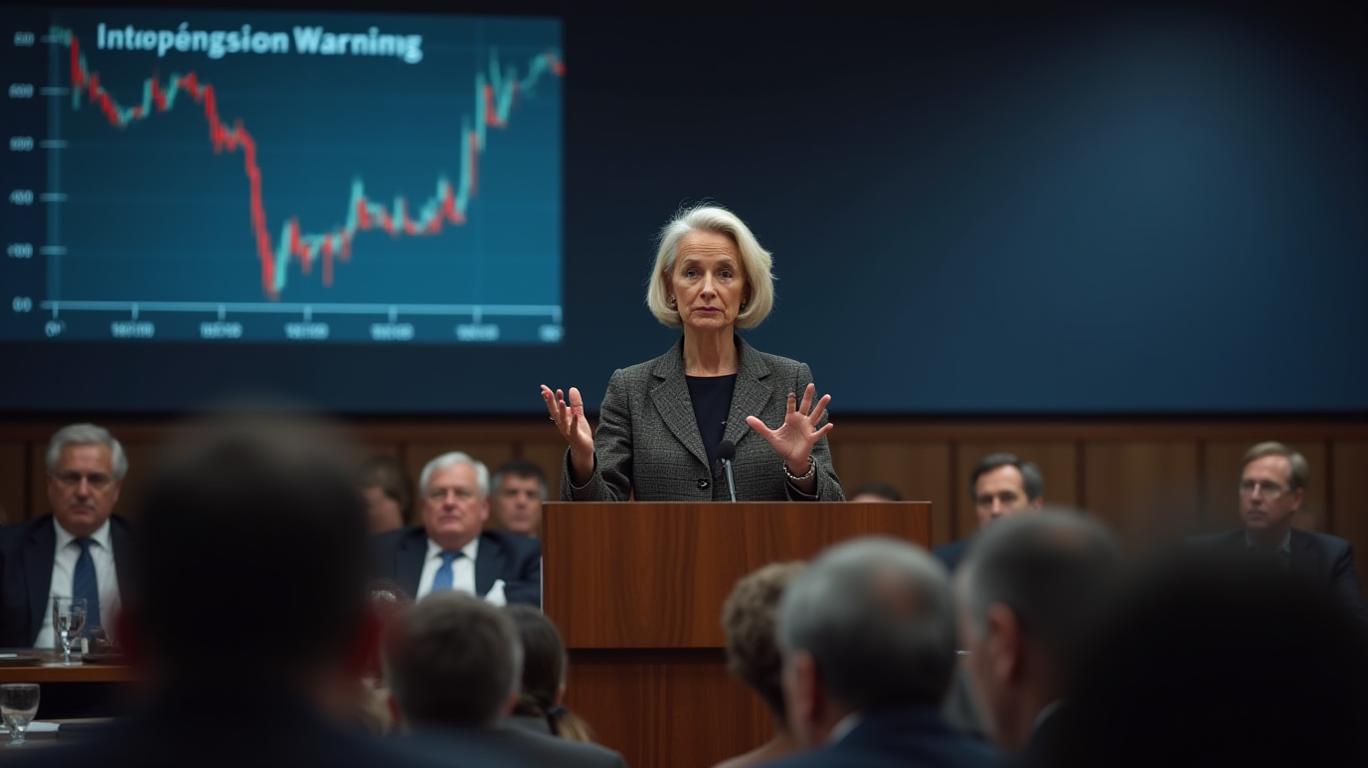

Stay ahead of the market.
Get curated U.S. market news, insights and key dates delivered to your inbox.






Comments
No comments yet