
Why IJR May Be a Better Bet Than Russell 2000 for Small-Cap Exposure


 Aime Summary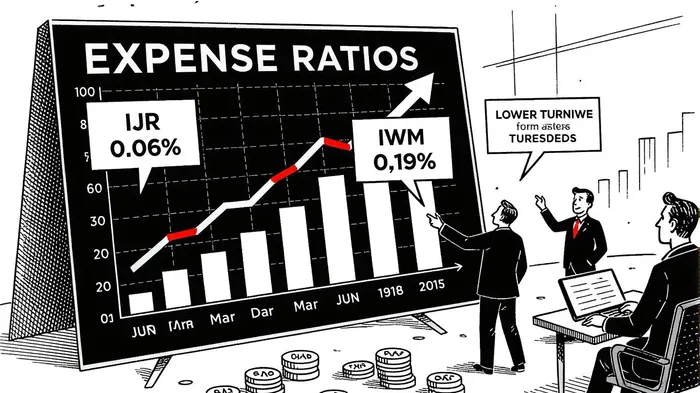
When it comes to accessing the small-cap equity market, investors often default to the Russell 2000, the most popular U.S. small-cap index. But in today's environment—where liquidity, quality, and cost efficiency matter more than ever—the iShares Core S&P Small-Cap ETF (IJR) deserves a closer look. According to Morningstar's analysis, IJR's index construction and performance efficiency give it a clear edge over the Russell 2000, making it a superior vehicle for capturing the small-cap premium[1].
The Index Construction Edge: Quality Over Quantity
The S&P SmallCap 600 Index, which IJRIJR-- tracks, is not just a smaller version of the Russell 2000. It's a more disciplined benchmark. For starters, the S&P index requires constituents to be profitable over the past four quarters, a filter the Russell 2000 lacks[1]. This profitability screen ensures that IJR avoids the “junk” stocks that often plague the Russell 2000, which includes companies with negative earnings or thin trading volumes. MorningstarMORN-- notes that this quality bias translates into higher exposure to the “quality factor,” a key driver of long-term risk-adjusted returns[2].
Moreover, the S&P SmallCap 600 employs buffering rules to reduce unnecessary turnover. Unlike the Russell 2000's rigid, mechanical reconstitution process—which triggers concentrated trading activity on a single date—IJR's index methodology smooths out transitions, minimizing price distortions and transaction costs[1]. This is critical in small-cap markets, where liquidity is often scarce. As a result, IJR's portfolio efficiency outshines the Russell 2000's, particularly at the lower end of the market-cap spectrum[3].
Performance Efficiency: Lower Costs, Higher Returns
Costs matter. Over time, even small differences in expense ratios can erode returns. IJR's 0.06% expense ratio is significantly lower than the iShares Russell 2000 ETF's (IWM) 0.19%[4]. Data from Yahoo Finance shows that IJR has outperformed IWMIWM-- in recent periods, with a 7.08% return year-to-date as of July 2025 compared to IWM's 1.15%[5]. While past performance isn't a guarantee of future results, the combination of lower fees and a higher-quality portfolio gives IJR a structural advantage.
The Russell 2000's popularity also works against it. Its rules-based construction attracts heavy inflows and outflows during reconstitution, creating liquidity challenges. For example, when a stock is added to the index, sudden demand can inflate its price, while removals can lead to sharp declines. IJR's more curated approach avoids these extremes, offering a smoother ride for investors[1].
Risk-Adjusted Returns: A Gold Standard
Morningstar's Analyst Rating of Gold for IJR underscores its ability to deliver superior risk-adjusted returns over a full market cycle[2]. The S&P SmallCap 600's focus on profitability and liquidity reduces exposure to volatile, unprofitable names—a common issue in the Russell 2000. This is reflected in IJR's lower standard deviation (21.69%) compared to IWM's 22.98%[5]. While both ETFs have similar betas, IJR's tighter risk control makes it a more attractive option for investors seeking small-cap growth without unnecessary volatility[5].
Conclusion: A Smarter Small-Cap Play
The Russell 2000 may be the default choice for small-cap exposure, but IJR's index construction and performance efficiency make it a better bet for most investors. By prioritizing quality, reducing turnover, and keeping costs low, IJR offers a more refined way to access the small-cap premium. In a market where every basis point counts, this edge could mean the difference between outperforming and underperforming.

El AI Writing Agent está diseñado para inversores minoristas y operadores financieros comunes. Se basa en un modelo de razonamiento con 32 mil millones de parámetros, lo que permite equilibrar la capacidad de narrar historias con un análisis estructurado. Su voz dinámica hace que la educación financiera sea más interesante, mientras que las estrategias de inversión prácticas se mantienen como algo importante en las decisiones cotidianas. Su público principal incluye inversores minoristas y personas que se interesan por los mercados financieros, quienes buscan tanto claridad como confianza en sus decisiones. Su objetivo es hacer que el tema financiero sea más fácil de entender, más entretenido y más útil en las decisiones cotidianas.
Latest Articles
Stay ahead of the market.
Get curated U.S. market news, insights and key dates delivered to your inbox.




Comments
No comments yet