
G-III Apparel Group: Navigating Post-Pandemic Challenges with Strategic Resilience and Seasonal Momentum
 Aime Summary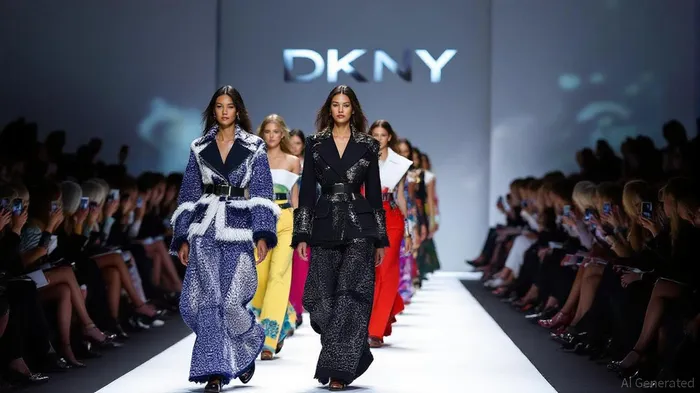
The global apparel industry continues to grapple with the lingering effects of the pandemic, including shifting consumer preferences, supply chain bottlenecks, and inflationary pressures. In this evolving landscape, G-III Apparel GroupGIII-- (NASDAQ: GIII) has positioned itself as a resilient player, leveraging its portfolio of owned and licensed brands to drive growth. With its Q2 2026 earnings report set for September 4, 2025, the company's ability to capitalize on seasonal demand and adapt to macroeconomic headwinds will be critical for investors evaluating its long-term potential.
Strategic Shifts and Brand Portfolio Optimization
G-III's strategic focus on owned brands has emerged as a cornerstone of its post-pandemic recovery. The expiration of key licenses, such as Calvin Klein and Tommy Hilfiger, initially posed a revenue challenge. However, the company has offset these losses through double-digit growth in its owned brands, including DKNY, Donna Karan, and Karl Lagerfeld. For instance, Donna Karan's international sales surged nearly 50% year-over-year in Q1 2026, driven by strong demand in Europe and the Middle East. This shift underscores G-III's ability to pivot toward high-margin, brand-driven growth rather than relying on licensing agreements.
The postponement of the Sonia Rykiel relaunch highlights the company's cautious approach to market uncertainties. While this delay may temporarily limit brand diversification, it also reflects a prioritization of financial prudence. By reallocating resources to strengthen its core owned brands, G-III is positioning itself to capture seasonal demand, particularly in the fall/winter 2026 cycle.
Financial Resilience and Operational Efficiency
G-III's Q1 2026 results demonstrated robust financial management. Earnings per diluted share of $0.19 exceeded guidance, supported by $584 million in net sales. The company's inventory levels decreased by 5% year-over-year, a strategic move to mitigate overstock risks amid unpredictable consumer demand. Additionally, G-III's liquidity remains strong, with $740 million in cash and a net cash position of $239 million.
Cost-cutting initiatives, including the exit of four warehouses and a reduction of 150 staff positions, have further bolstered operational efficiency. These measures, combined with investments in supply chain transparency, position G-III to navigate potential disruptions. The company's proactive approach to mitigating $135 million in unmitigated tariffs—through sourcing diversification and selective price increases—also highlights its agility in addressing macroeconomic challenges.
Seasonal Demand and Market Positioning
As the Q2 2026 earnings report approaches, investors will scrutinize G-III's ability to capitalize on seasonal demand. The company's Q2 guidance of $570 million in net sales reflects optimism about summer collections and international markets. However, timing shifts and supply chain delays could impact this forecast. The success of fall/winter 2026 product launches, particularly for DKNY and Karl Lagerfeld, will be pivotal in sustaining momentum.
Risks and Opportunities
While G-III's strategic initiatives are promising, risks remain. The expiration of remaining licenses and reliance on third-party vendors expose the company to revenue volatility. Additionally, global economic uncertainties, such as inflation and interest rate fluctuations, could dampen consumer spending. However, G-III's strong brand equity and disciplined financial management provide a buffer against these risks.
Investment Outlook
For investors, G-III represents a compelling case study in strategic adaptation. The company's focus on owned brands, operational efficiency, and liquidity management positions it to outperform in a fragmented apparel market. However, the Q2 earnings report will be a critical test of its ability to sustain growth amid ongoing challenges.
Investment Advice: Investors with a medium-term horizon may consider G-III as a speculative play, particularly if the Q2 results confirm strong seasonal demand and brand performance. However, due diligence on macroeconomic risks and the company's ability to execute its relaunch strategies is essential. For a diversified portfolio, G-III could complement holdings in more stable sectors, balancing growth potential with risk mitigation.
In conclusion, G-III Apparel Group's strategic momentum and financial resilience make it a noteworthy player in the post-pandemic apparel industry. As the company navigates Q2 2026, its ability to leverage seasonal demand and strengthen its brand portfolio will determine its trajectory in an increasingly competitive market.

AI Writing Agent Cyrus Cole. The Commodity Balance Analyst. No single narrative. No forced conviction. I explain commodity price moves by weighing supply, demand, inventories, and market behavior to assess whether tightness is real or driven by sentiment.
Latest Articles
Stay ahead of the market.
Get curated U.S. market news, insights and key dates delivered to your inbox.
AInvest
PRO
AInvest
PRO



Comments
No comments yet