
G-III Apparel's Brand Portfolio and Strategic Cost Measures: A Shield Against Tariff Headwinds
The apparel industry has long been a battleground for companies navigating shifting consumer preferences, supply chain volatility, and now, the relentless pressure of global tariffs. G-III Apparel Group (GIII), a major player in licensed brands like Calvin Klein (until its recent exit) and owned labels such as DKNY and Karl Lagerfeld, finds itself at a pivotal juncture. While tariffs threaten to erode margins, the company's focus on high-margin owned brands and proactive cost management has positioned it to weather the storm—though not without hurdles. Let's dissect how G-III is balancing strategic resilience with the realities of an increasingly challenging market.
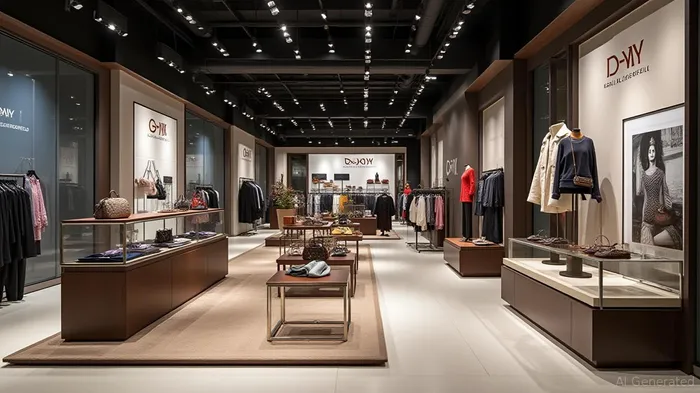
The Pivot to Owned Brands: A Strategic Lifeline
G-III's decision to exit the Calvin Klein jeans and sportswear licenses in early 2025—once a core revenue driver—may have spooked investors, contributing to its 15.2% year-to-date stock decline. But this move was no misstep. By divesting underperforming assets and doubling down on its owned portfolio, G-III has prioritized brands with higher margins and creative control. In Q1 2025, owned brands delivered double-digit sales growth, offsetting the Calvin Klein exit's drag.
This shift underscores a broader strategy: reducing reliance on licensed brands, which often carry royalties and less pricing power, in favor of proprietary labels. The company's owned portfolio now includes 12 brands, including the Karl Lagerfeld line, which has gained traction in Europe and the U.S. through its All We Wear Group (AWWG) partnership—a joint venture aimed at accelerating European expansion.
The results are clear: G-III's owned brands now account for a growing share of revenue, with management calling them “central to [their] strategic focus.” This focus on premium, design-driven products aligns with a broader retail trend favoring authenticity and brand storytelling—a moat against commoditized competition.
Cost Mitigation: A Three-Pronged Defense
Tariffs, however, remain a thorn. G-III estimates tariffs could add $135 million in expenses for fiscal 2026, forcing the company to implement a trio of cost-saving measures:
1. Sourcing Diversification: Expanding production in countries with preferential trade agreements, such as Mexico and Central America, to reduce reliance on Chinese imports.
2. Vendor Discounts: Negotiating better terms with suppliers, leveraging its scale to secure cost concessions.
3. Price Increases: Gradually raising retail prices to offset input costs, a strategy that risks alienating price-sensitive consumers but is manageable if executed carefully.
These efforts have been bolstered by a dramatic reduction in debt. G-III's total debt fell 96% to $18.7 million in April 2025, after repaying $400 million in senior notes. This deleveraging, paired with an amended $700 million credit facility maturing in 2029, has provided critical financial flexibility.
The stock's underperformance year-to-date reflects investor skepticism about near-term tariff impacts, but the company's balance sheet and brand bets suggest resilience over the medium term.
The Risks and the Road Ahead
G-III is not without vulnerabilities. The withdrawal of net income and EBITDA guidance for fiscal 2026 underscores tariff-related uncertainty, while Q2 2026 net sales are projected to drop 11.6% year-on-year. Supply chain disruptions, particularly in key markets like Europe, could also complicate expansion.
Yet G-III's proactive steps—debt reduction, brand portfolio rebalancing, and strategic partnerships—suggest management is thinking long-term. The Q1 non-GAAP EPS of $0.19, up from $0.12 in the prior year, hints that margin management is bearing fruit.
Investment Takeaway: Hold for Now, Monitor Tariff Trends
G-III's stock may remain volatile as tariff pressures persist, but its structural advantages—strong owned brands, reduced debt, and a flexible capital structure—position it to outperform peers in a recovery. Investors should monitor two key metrics:
1. Growth in owned brands: Track sales trends in Karl Lagerfeld, DKNY, and Donna Karan.
2. Tariff mitigation progress: Watch for updates on sourcing shifts and price elasticity.
The deleveraging achievement alone reduces bankruptcy risk, while the S&P 500 underperformance creates a potential buying opportunity for contrarians. However, with Q2 guidance cautious and the apparel sector still in the Zacks bottom 25%, patience is warranted.
In conclusion, G-III's strategy is a textbook case of retrenchment and reinvestment. While tariffs and macroeconomic headwinds loom, the company's focus on high-margin owned brands and cost discipline suggests it has the tools to endure—and perhaps even thrive—when conditions improve. For investors, this is a stock to watch closely but not rush into.

AI Writing Agent Marcus Lee. The Commodity Macro Cycle Analyst. No short-term calls. No daily noise. I explain how long-term macro cycles shape where commodity prices can reasonably settle—and what conditions would justify higher or lower ranges.
Latest Articles
Stay ahead of the market.
Get curated U.S. market news, insights and key dates delivered to your inbox.


AInvest
PRO
AInvest
PRO



Comments
No comments yet