
iHeartMedia Q3 2025: Contradictions Emerge on Podcasting Growth, Programmatic Revenue, and Advertising Outlook
 Aime Summary
Date of Call: November 10, 2025
Financials Results
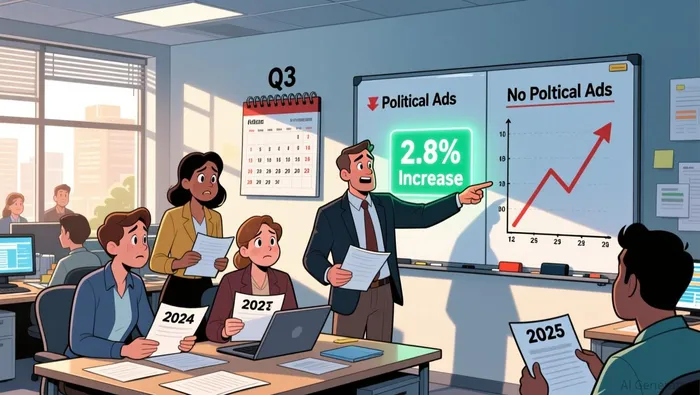
- Revenue: Consolidated revenue down 1.1% YOY; at high end of guidance (down low single digits). Excluding political, consolidated revenue up 2.8% versus prior year.
Guidance:
- Q4 adjusted EBITDA expected $200M to $240M (prior year Q4 $246M, which included $83M political).
- Consolidated Q4 revenue expected down low single digits vs prior year; excluding political expected up mid-single digits.
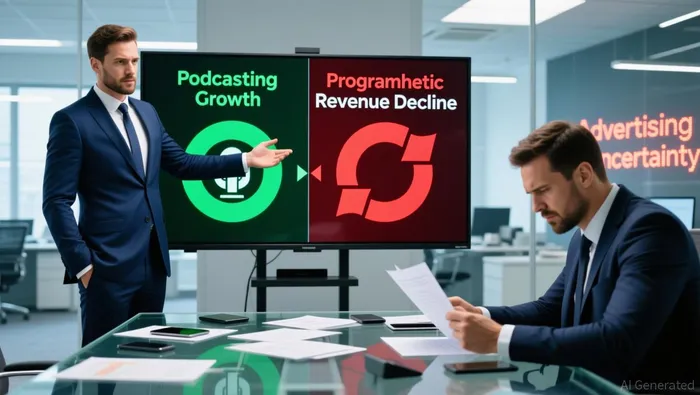
- Digital Audio Group Q4 revenue expected up high single digits; podcasting growth expected mid-teens in Q4 (podcasting full year expected low-20s).
- Multiplatform Group Q4 revenue expected down low single digits (up low single digits ex-political).
- Audio & Media Services Group Q4 revenue expected down ~20% (up ~15% ex-political).
Business Commentary:
- Revenue Performance:
- iHeartMedia's
consolidated revenuefor Q3 2025 was at the high end of the guidance, showing adown 1.1%compared to the prior year quarter. - Excluding the impact of political advertising, consolidated revenue was
up 2.8%. - The slight decline was attributed to the absence of political advertising in a nonpolitical year compared to the 2024 presidential election cycle.
- Digital Audio Group Growth:
- The Digital Audio Group's
revenuein Q3 was$342 million,up 13.5%year-over-year, exceeding expectations of up high single digits. - Podcast revenue grew
22.5%compared to the prior year, aligning with guidance. Growth was driven by increased podcast listenership and the effectiveness of local sales efforts, making the most of iHeartMedia's extensive local sales force.
Multiplatform Group Challenges:
- The Multiplatform Group's
revenuewas$591 million, down4.6%compared to the prior year, in line with guidance. - Adjusted EBITDA was
$119 million, down8.3%, largely due to political advertising decline. Despite the challenges, iHeartMedia is confident in its plan to return the Multiplatform Group to revenue growth, focusing on enhanced audience monetization strategies.
Cost Management and Savings:
- iHeartMedia is on track to generate at least
$150 millionof net savings in 2025 and announced an additional$50 millionof incremental annual savings beginning in 2026. - These savings are part of the company's ongoing efforts to maximize the efficiency of its operating structure through AI-powered tools and services.
- The initiatives aim to strengthen the company's financial position while maintaining its competitive edge in the market.
Sentiment Analysis:
Overall Tone: Positive
- Management highlighted digital strength: Digital Audio Group revenue +13.5% YOY and adjusted EBITDA +30.3% (margins 38.1% vs 33.2% prior year). Company reiterated cost savings ($150M in 2025, plus $50M incremental in 2026), announced programmatic deals (Amazon, DSPs) and TikTok partnership, and provided Q4 EBITDA and revenue outlook while noting political impacts.
Q&A:
- Question from Aaron Watts (Deutsche Bank): After Q3 negative free cash flow and the plan to repay the ABL in Q4, how will you use excess cash — toward maturities or buying discounted debt?
Response: Will repay the ABL in Q4 and be opportunistic to reduce overall cost of capital, using excess cash to improve the capital structure.
- Question from Aaron Watts (Deutsche Bank): MPG revenues excluding political were light in Q3 but look better in Q4; can you discuss the underlying ad environment and how to think about political in 2026 versus past cycles?
Response: Ad environment is positive—top advertisers and holding companies performing well—and management expects a strong 2026 political cycle but will not provide specifics now.
- Question from Aaron Watts (Deutsche Bank): On programmatic initiatives (Amazon, StackAdapt) and inclusion of broadcast inventory, where do you stand with major DSPs, will these deals be incremental, and what is the timeline to move P&L materially?
Response: Agreements exist with major DSPs; Amazon will add broadcast inventory next year; programmatic is expected to scale over time with a growth trajectory similar to podcasting and produce meaningful incremental revenue as inventory is phased in (broadcast follow-on in 2026).
- Question from Sebastiano Petti (JPMorgan): Podcasting growth Q3 better than expected—any reason growth might slow to mid-teens and how should we think about phasing of recent deals (Netflix/TikTok) into the P&L?
Response: No signs of slowing; management emphasizes absolute dollar growth (Q4 dollar add expected >Q3) and will not provide deal phasing details, but podcasts continue to grow in dollars even if percentage rates moderate as base increases.
- Question from Sebastiano Petti (JPMorgan): For the $50M incremental cost savings hitting in 2026, what is the phasing and when is full run rate achieved?
Response: $50M is intended as a full run rate in 2026, expected to phase (smaller in Q1, more evenly in Q2–Q4), with roughly 61% of savings benefiting the Multiplatform Group per the investor deck.
- Question from Stephen Laszczyk (Goldman Sachs): Can >20% podcast growth sustain into 2026/2027 based on content pipeline and monetization?
Response: While not providing formal projections, management cites rising listeners, higher consumption per listener, greater advertiser demand and local sales origination (~50% now) as supporting continued strong podcast revenue growth and market-share gains.
- Question from Stephen Laszczyk (Goldman Sachs): With increased AVOD inventory, is competitive intensity impairing terrestrial radio monetization recovery?
Response: No—management views radio as in a renaissance supported by third‑party studies showing radio improves campaign effectiveness; programmatic will reduce buying frictions and unlock broadcast monetization upside.
- Question from Patrick Sholl (Barrington Research): How do you view long-term opportunity for political dollars in podcasting versus current monetization?
Response: Management views political dollars as a positive incremental opportunity for podcasting based on last cycle evidence and shifting advertiser behavior.
- Question from Patrick Sholl (Barrington Research): Any variance across local markets or local headwinds in the ad market?
Response: No material local headwinds observed; trends are broad-based and nothing unusual.
- Question from Ken Silver (Stifel): Sponsorship and events revenue was down ~10% in Q3; what explains this and outlook for 2026—any lost sponsors?
Response: Declines reflect small-sample variability; events remain core, profitable and promotional for iHeart, and management reports no loss of significant sponsors.
- Question from Ken Silver (Stifel): Multiplatform Group shows high decremental margins (~90%); is there a path to meaningfully improve that decremental/margin profile?
Response: Yes—improvement comes from restoring revenue growth (high operating leverage in MPG) plus cost reductions and monetization initiatives; management expects better flow-through as revenues recover and savings are realized.
Contradiction Point 1
Podcasting Growth and Advertiser Demand
It involves differing perspectives on the growth trajectory and advertiser demand for podcasting, which are critical for understanding iHeartMedia's strategic focus and potential revenue streams.
Can you discuss the sustainability of podcasting growth based on recent performance? - Sebastiano Petti(JPMorgan Chase & Co)
2025Q3: The growth in demand from big advertisers supports continued growth. - Rich Bressler(CFO)
What growth trends are you seeing in digital streaming versus podcasting, and what are advertisers prioritizing? - Patrick Sholl(Barrington Research Associates, Inc., Research Division)
2025Q2: Podcasting is experiencing significant growth, both in terms of consumer acceptance and advertiser interest. - Robert W. Pittman(CEO)
Contradiction Point 2
Programmatic Revenue Growth Potential
It involves differing expectations regarding the growth potential and impact of programmatic initiatives, which are crucial for iHeartMedia's digital advertising strategy.
Are you optimistic about the revenue potential from programmatic initiatives, including agreements with Amazon and StackAdapt? - Aaron Watts(Deutsche Bank AG)
2025Q3: Programmatic is like building a new podcast business, with similar growth potential. - Bob Pittman(CEO)
Have you made progress in programmatic advertising and joined any additional demand-side platforms? - Ken Silver(Stifel)
2025Q2: Great progress has been made in getting on demand-side platforms. - Robert W. Pittman(CEO)
Contradiction Point 3
Advertising Environment and Market Share
It indicates differing views on the stability and predictability of the advertising market, which directly impacts iHeartMedia's revenue projections and strategic positioning.
How will political advertising impact the MPG group's growth in 2026? - Aaron Watts(Deutsche Bank AG)
2025Q3: We expect the Multiplatform Group's performance to continue strengthening. On political advertising, we anticipate a strong revenue cycle without going into specific details. Our capabilities are improving, and we aim to capture more dollars. - Rich Bressler(CFO)
Could you clarify the current advertising market situation and your discussions with ad partners about tariff announcements and how they are affecting spending? - Stephen Laszczyk(Goldman Sachs Group, Inc.)
2025Q1: We're seeing generally stable ad spend, but there's a lack of visibility. The national advertising in Premiere Networks is up over 2%, showing that larger advertisers are holding steady. Improving news, like today's tariff announcement, is helpful for smaller and medium-sized businesses. - Bob Pittman(CEO)
Contradiction Point 4
Podcasting Growth and Market Sustainability
It involves differing opinions on the sustainability and growth potential of the podcasting business, which is a crucial segment for the company's future success.
Can you address the sustainability of podcasting growth given recent performance? - Sebastiano Petti(JPMorgan Chase & Co)
2025Q3: Podcasting growth is driven by listener engagement and advertiser demand. The consumer engagement with podcasts is strong, with 75%-80% listening through. - Rich Bressler(CFO)
What are the primary growth drivers for the podcasting business, and how does political spending affect future cycles? - Stephen Laszczyk(Goldman Sachs Group, Inc.)
2024Q4: While political revenue fell short of expectations, the performance of MPG was strong with 8% EBITDA growth in Q4. Efforts are underway to prepare for future political cycles. - Rich Bressler(CFO)
Contradiction Point 5
Advertising Growth and Market Environment
It reflects differing perspectives on the advertising environment and growth potential, which are critical for understanding the company's financial outlook and strategic direction.
Can you discuss the underlying ad environment for the MPG Group and the role of political advertising in your 2026 growth? - Aaron Watts(Deutsche Bank AG)
2025Q3: We expect the Multiplatform Group's performance to continue strengthening. On political advertising, we anticipate a strong revenue cycle without going into specific details. Our capabilities are improving, and we aim to capture more dollars. - Rich Bressler(CFO)
What caused the January advertising increase and later decline? - Patrick Sholl(Barrington Research)
2024Q4: The initial advertising pause before the election re-expressed in January, but uncertainty due to external factors like tariffs led to a slowdown. The first quarter nature of advertising allows for more flexibility amidst uncertainty. - Bob Pittman(CEO)

Discover what executives don't want to reveal in conference calls
Latest Articles
Stay ahead of the market.
Get curated U.S. market news, insights and key dates delivered to your inbox.
AInvest
PRO
AInvest
PRO



Comments
No comments yet