
IEA: Global Grid Investments Must Double to Meet 2030 Electricity Demand
 Aime Summary
- Global electricity demand is set to grow by more than 3.5% per year on average over the rest of this decade, driven by electrification in transport, industry, and buildings, along with the rapid rise of data centers and AI according to IEA analysis.
- Renewables and nuclear energy are projected to generate 50% of global electricity by 2030, up from 42% today, as coal-fired generation declines and natural gas expands in some regions according to IEA projections.
- Over 2,500 gigawatts of power projects are currently stalled in connection queues worldwide. Grid-enhancing technologies and regulatory reforms could unlock up to 1,600 gigawatts of these projects according to IEA estimates.
- Electricity affordability is a growing concern, with household prices rising faster than incomes in many countries since 2019. Policymakers are focusing on market designs and regulations to improve efficiency and reduce costs according to IEA findings.
- Advanced economies are seeing renewed electricity demand after 15 years of stagnation, especially in the U.S., where data center expansion accounts for half of the projected demand growth through 2030 according to IEA data.
Electricity demand is surging globally, and the implications for investors are clear. The International Energy Agency (IEA) is sounding the alarm: if current trends continue, global electricity consumption will grow by more than 3.5% per year on average for the rest of this decade. That's more than double the pace of energy demand overall. The driving force behind this surge is not just economic growth or population increases—it's the rapid expansion of electricity-intensive technologies like artificial intelligence, electric vehicles, and data centers according to IEA analysis.
For investors, this means a pivotal shift is underway. The power sector is moving into what the IEA has called the "Age of Electricity," where demand is no longer just a function of economic growth but of technological transformation. And while renewable and nuclear energy are expanding rapidly, the grid infrastructure and flexibility needed to support this transition are lagging. That creates both risks and opportunities for those watching the energy sector.
Why Is Grid Infrastructure Falling Behind the Surge in Electricity Demand?
The IEA's latest report, Electricity 2026, makes one point very clear: electricity demand is outpacing supply-side capacity. Over 2,500 gigawatts of power projects—spanning renewables, storage, and large-load facilities like data centers—are currently stalled in connection queues worldwide. That's a significant bottleneck according to IEA analysis.
Meanwhile, the power mix is shifting. Renewables, particularly solar photovoltaics, are overtaking coal, and nuclear power hit a record high in 2025. By 2030, renewables and nuclear are expected to generate half of the world's electricity 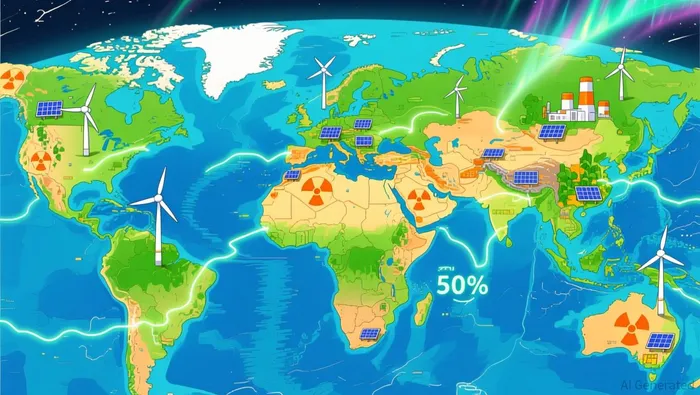 . But these sources, especially solar and wind, are weather-dependent. That means power systems will need more flexibility to handle variability and maintain reliability.
This is where grid investment comes in. The IEA estimates that annual grid investments must rise by 50% by 2030 to accommodate this shift. That means not only building new transmission lines but also deploying advanced technologies like dynamic line rating and smart grid controls. These investments will be crucial for integrating stalled projects and ensuring that supply keeps up with demand according to IEA analysis.
What Should Investors Watch in the Global Power Transition?
For investors, the key message is simple: infrastructure is the next big opportunity in the energy transition. Grid upgrades, energy storage, and advanced grid controls are all areas where capital is needed—and where returns could be substantial.
Emerging economies will drive most of the new electricity demand through 2030, but advanced economies are not off the hook. In the U.S., for example, data centers alone are expected to account for half of the country's electricity demand growth by 2030 according to IEA data. That's a significant shift from the past decade, when electricity demand in the U.S. was relatively flat.
China is set to be the largest contributor to global electricity demand growth. In fact, the country's new power capacity additions over the next four years will be roughly equivalent to the total current electricity consumption of the European Union according to IEA projections. India and Southeast Asia will also see substantial increases, driven by growing industries and a surge in air conditioning use.
But it's not all about growth. Energy affordability is becoming a growing concern. Household electricity prices have risen faster than incomes in many countries since 2019. That's putting pressure on both consumers and businesses. Policymakers are now focusing on reforms that can help manage costs while still supporting the transition to cleaner energy according to IEA analysis.
How Can Investors Navigate the Shifting Power Landscape?
The message for investors is clear: the global power sector is undergoing a fundamental transformation. But not all players will benefit equally. Utilities with strong grid infrastructure and a focus on system flexibility are likely to be the most well-positioned. Companies specializing in grid-enhancing technologies, battery storage, and renewable integration could also see strong growth.
Meanwhile, countries with outdated power infrastructure and high reliance on fossil fuels may face higher costs and slower adoption of new technologies. Investors should be cautious in markets where regulatory uncertainty or political instability could delay or derail energy transition efforts.
For those who have been watching the energy transition, the IEA's latest report is a reminder: this is not just about replacing coal with solar or wind. It's about building a new power system that can support a world increasingly powered by electricity—and doing it quickly enough to keep up with the pace of technological change.
What's Next for Global Electricity Demand?
The coming years will be critical for the global power sector. If current trends continue, electricity demand will continue to grow rapidly, and the pressure on grid infrastructure will only increase. But with the right investments and policy support, this challenge could become an opportunity for investors.
The IEA's message is clear: the power grid is not just a back-end infrastructure issue. It's a strategic enabler for the AI, data center, and electrification trends reshaping the global economy. And for investors, that means one thing—grid investments are no longer optional. They're essential according to IEA analysis.

Stay ahead of the market.
Get curated U.S. market news, insights and key dates delivered to your inbox.


AInvest
PRO
AInvest
PRO



Comments
No comments yet