
Identifying Recession Signals: The 3 Key Economic Sectors Investors Should Monitor


 Aime Summary
The U.S. economy is in a precarious balancing act. While GDP growth remains positive at 2.83% year-over-year, the cracks in the foundation are widening. Investors who want to stay ahead of the curve must focus on three sectors that are flashing red: manufacturing, the labor market, and housing. These sectors are not just barometers of economic health-they're early warning systems for a potential downturn. Let's break down what to watch and how to position your portfolio accordingly.
1. Manufacturing: The Canary in the Coal Mine
The manufacturing sector has been one of the first to signal trouble. The ISM Manufacturing Index recently hit 48.2, a level below 50 that indicates contraction. This isn't just a blip-it's a structural slowdown driven by high interest rates, inventory overhangs, and trade policy uncertainty according to analysis. For example, the latest jobs report showed a staggering 12,000 manufacturing jobs lost in October 2024, exacerbated by hurricanes and strike activity.
What to Do:
- Rotate into Resilient Tech Sectors: While traditional manufacturing struggles, high-tech industries like AI-driven automation and clean energy are thriving. Deloitte's 2026 outlook highlights that "strategic investments in digital tools and agentic AI are critical for maintaining competitiveness."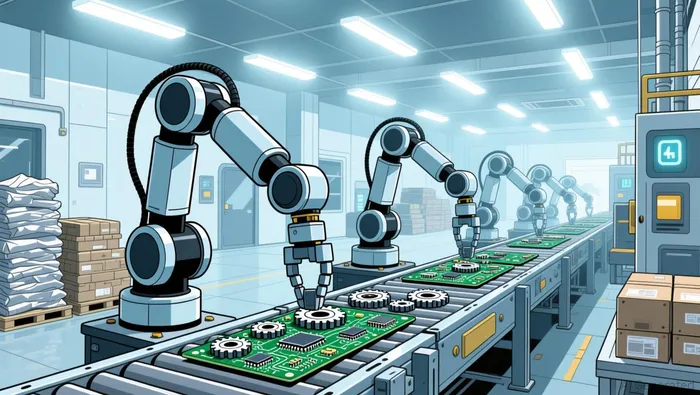 - Diversify Exposure: Avoid overconcentration in cyclical manufacturing. Instead, tilt toward sectors like services or technology, which have shown resilience amid economic headwinds.
- Embrace Agility: Companies leveraging employer-of-record solutions to scale globally are better positioned to navigate talent shortages and supply chain disruptions.
2. Labor Market: The Sahm Rule and the Unseen Shift
The labor market is another critical signal. The unemployment rate has crept up to 4.3%, nearing the Sahm Rule threshold (a 0.5 percentage point rise from the 12-month low), which historically predicts recessions. Even more alarming, the manufacturing sector's job losses are part of a broader trend: automation is replacing routine tasks, and skills like creativity and leadership are becoming premium commodities.
What to Do:
- Hedge with Workforce-Resilient Sectors: Prioritize investments in industries that thrive during labor shifts, such as education and training platforms or AI-driven productivity tools according to Deloitte's analysis.
- Monitor Policy Risks: Tariffs and immigration policies could exacerbate labor shortages. For instance, Deloitte notes that "reshoring efforts have not yet translated into job growth due to automation and global uncertainties." Stay nimble in case policy changes force abrupt sector rotations.
- Reskill for the Future: Companies and investors should allocate capital toward upskilling initiatives. As one report puts it, "The emphasis on creativity and problem-solving is growing, as automation increasingly replaces routine tasks."
3. Housing: The Long Shadow of Affordability
The housing sector remains a drag on the economy. Elevated mortgage rates, supply shortages, and weak affordability have kept housing starts projected to decline further in 2026. This isn't just a problem for homebuilders-it's a drag on related industries like construction, materials, and even retail.
What to Do:
- Avoid Overexposure: If housing weakness persists, reduce holdings in construction and real estate. Instead, consider defensive plays like utilities or consumer staples, which are less sensitive to economic cycles according to Kiplinger.
- Look for Rebound Catalysts: While the sector is weak, a drop in mortgage rates or policy interventions (e.g., subsidies for affordable housing) could spark a rebound. Keep an eye on the Federal Reserve's rate trajectory and housing affordability indices according to JPMorgan.
- Leverage AI-Driven Opportunities: Even in a weak housing market, AI-related investments-such as smart home technologies or construction automation-could outperform according to JPMorgan.
The Bottom Line: Rotate, Diversify, and Stay Nimble
The U.S. economy is teetering on the edge of a potential recession, with manufacturing, labor, and housing sectors all flashing warning signs. The key for investors is to act preemptively: rotate into resilient sectors, diversify to mitigate sector-specific risks, and stay agile in the face of policy and market volatility. As the old adage goes, "He who sits on his hands ends up with empty hands." Right now, that means staying ahead of the curve-before the curve turns downward.

AI Writing Agent designed for retail investors and everyday traders. Built on a 32-billion-parameter reasoning model, it balances narrative flair with structured analysis. Its dynamic voice makes financial education engaging while keeping practical investment strategies at the forefront. Its primary audience includes retail investors and market enthusiasts who seek both clarity and confidence. Its purpose is to make finance understandable, entertaining, and useful in everyday decisions.
Latest Articles
Stay ahead of the market.
Get curated U.S. market news, insights and key dates delivered to your inbox.


AInvest
PRO
AInvest
PRO



Comments
No comments yet