
How to Identify Value Traps Using Free Cash Flow and Balance Sheet Health
 Aime Summary
Investors are often drawn to stocks that appear to be on sale. A low price-to-earnings (P/E) ratio or a stock trading near its historical lows can look like a bargain. However, not all cheap stocks are good investments. Some are "value traps"—companies that seem undervalued but are actually deteriorating. To avoid these pitfalls, investors must look beyond simple earnings and focus on two critical health indicators: Free Cash Flow (FCF) and Balance Sheet strength.
Understanding the Core Concept
A value trap occurs when a stock’s price drops due to fundamental problems in the business, causing it to appear cheap based on traditional metrics. The danger lies in the fact that the "cheap" price is justified by declining future prospects. To identify these traps, we need to understand two key concepts.
First, Free Cash Flow is the cash a company generates after accounting for cash outflows to support operations and maintain its capital assets. Think of it as the money left over that can be used to pay dividends, buy back shares, or reinvest in growth. Unlike accounting earnings, which can be manipulated, cash flow is harder to fake.
Second, Balance Sheet health refers to a company’s financial structure, specifically its assets versus its liabilities. A healthy balance sheet means the company has enough assets to cover its debts and has room to maneuver during economic downturns.
Applying Strategies to Your Portfolio
When evaluating a seemingly cheap stock, start by analyzing its Free Cash Flow. If a company reports positive net income but has negative or declining free cash flow, this is a major red flag. It suggests that the company is spending more cash to run its business than it is earning, or that it is struggling to collect payments from customers. A consistent decline in FCF over several quarters often indicates that the business model is breaking down.
Next, examine the balance sheet. Look at the debt-to-equity ratio and the current ratio. A high debt load can be manageable if the company has strong cash flows to service that debt. However, if debt is rising while cash flow is falling, the company may face liquidity issues. Investors should also check for short-term liabilities that are due soon. If a company cannot easily pay its immediate bills, it may need to take on more expensive debt or dilute shareholders by issuing new shares, which can further depress the stock price.
Case Study: The Decline of a Retail Giant
Consider the case of a well-known brick-and-mortar retailer that faced the rise of e-commerce. On the surface, the stock appeared undervalued with a P/E ratio of 5. However, a deeper dive revealed that its Free Cash Flow had been shrinking for three consecutive years. The company was investing heavily in stores that were losing customers, yet it could not generate enough cash to cover these costs. Furthermore, its balance sheet showed a significant increase in long-term debt used to fund these unprofitable expansions. While the stock looked cheap, the fundamentals told a story of a 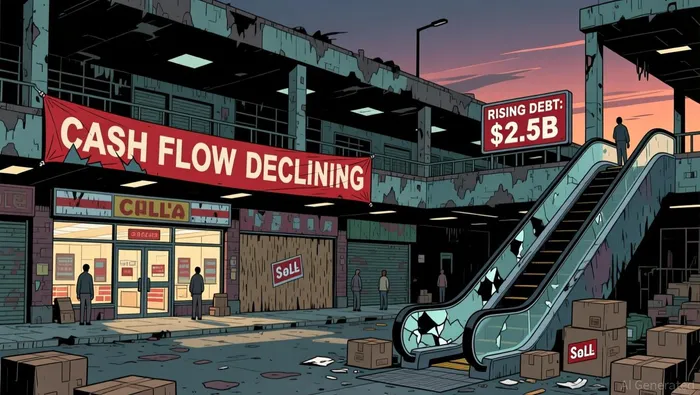 business in decline. Investors who ignored these signals lost significant capital, while those who monitored cash flow and debt avoided the trap.
Risks and Considerations
Relying solely on historical data can be misleading. Always consider the broader economic context and industry trends. A company might have strong current cash flows but face obsolescence due to technological changes. Additionally, accounting practices can vary, so it is wise to compare a company’s metrics against its direct competitors. Risk mitigation involves diversification and continuous monitoring. Do not invest based on a single metric. Instead, use FCF and balance sheet health as part of a broader due diligence process.
Conclusion
Identifying value traps requires moving beyond surface-level metrics like P/E ratios. By focusing on Free Cash Flow and Balance Sheet health, investors can gain a clearer picture of a company’s true financial stability. Remember, a cheap stock is only a bargain if the underlying business remains healthy. Always conduct thorough research, analyze cash generation capabilities, and assess debt levels before making investment decisions. This disciplined approach helps protect your capital and ensures that you are buying value, not just a discount.

Stay ahead of the market.
Get curated U.S. market news, insights and key dates delivered to your inbox.


AInvest
PRO
AInvest
PRO




Comments
No comments yet