
Iconic Gold's Ginette Option Hinges on 2027 Exploration Results in Proven Gold Belt


 Aime Summary
The Ginette project represents a deliberate step for Iconic Gold to re-engage after a period of limited activity. The company has secured an exclusive three-year option to explore a 4,951-hectare property in the established mining province of Santa Cruz, Argentina. The deal's structure is key: Iconic Gold issued 3.95 million common shares valued at $592,500 as consideration and must pay $1 million in cash over three years to acquire 100% ownership. The company frames this as a low-cost, low-risk entry to strengthen its portfolio in a proven jurisdiction, a strategic pivot from its previous dormancy.
The thesis hinges on execution and geological potential. The company intends to allocate approximately 10% of its long-term exploration budget to Ginette, including a small portion of proceeds from a concurrent private placement. This staged approach-exploring at its own cost for three years before committing the final $1 million-minimizes upfront financial risk. Yet, the project's value is entirely contingent on what lies beneath the surface. The 1% net smelter royalty retained by the optionors provides a long-term cost if the property is ever developed, but the primary pressure point is whether the exploration phase reveals a resource that justifies the capital commitment.
In practice, this move is a classic exploration play. It provides a tangible new asset to discuss, which management hopes will reinvigorate interest in the company. However, for investors, the strategic fit is secondary to the project's inherent potential. The low cash outlay now and the staged payments offer a controlled way to test the ground, but the ultimate payoff depends on the geology, not the deal terms.
Evaluating the Project's Geological and Market Context
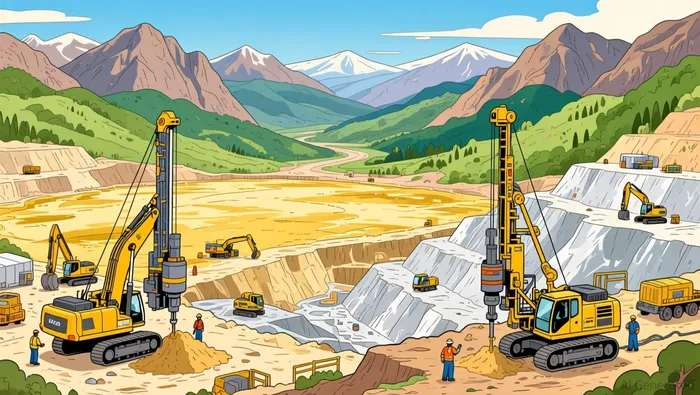
The strategic appeal of the Ginette option is amplified by its location. The project sits in Santa Cruz province, a region that has transformed from a mining newcomer into a prolific gold-silver district. The province now hosts seven operating high-grade gold-silver mines, a clear validation of its geological promise. This isn't speculative frontier; it's a proven epithermal belt where companies like Mirasol have built successful portfolios. The active exploration scene, exemplified by Targa Resources' 66% expansion of the El Zanjon project, shows the area remains a magnet for capital and geological focus. For Iconic Gold, this means Ginette is not just any piece of ground-it's in a jurisdiction where the odds of finding something significant are statistically higher.
This geological context is perfectly aligned with a powerful market tailwind. The broader precious metals market has seen extraordinary price performance, with gold up 65% and silver up 95% since late 2024. This surge dramatically improves the economic case for any new project. At current prices, even a modest discovery could yield a project with a compelling return profile, whereas the same resource would have been marginal or uneconomic just a year or two ago. The strong price environment reduces the financial risk of a failed exploration phase and increases the potential reward if a resource is found.
Viewed together, the setup is favorable. The project is in a prime location with a track record of success, and the market is pricing in a high-value outcome. This combination of a strong geological setting and robust commodity prices provides a solid foundation for the exploration thesis. The unknown remains the specific geology of the 4,951-hectare property, but the surrounding context suggests the potential is real. The market's bullish stance on precious metals gives the exploration effort a better chance to succeed on its merits.
Financial and Operational Realities for Iconic Gold
The financial mechanics of the Ginette deal are designed to be conservative. The company's planned exploration budget for the project is a very small fraction of its total capital. It intends to spend just $5,000 towards exploration at Ginette, a sum that represents less than 1% of the $592,500 in shares issued as consideration and a tiny portion of the $100,000 in gross proceeds from its concurrent private placement. This staged, low-cost approach is the core of the strategy: test the ground at minimal immediate expense.
The primary financial commitment looms in the future. Iconic Gold must successfully exercise its option to acquire 100% ownership within three years, which requires paying $1 million in cash in installments. This is a significant hurdle for a junior explorer, but the company has structured the payments to be manageable: $5,000 annually for the first two years, with the bulk of $990,000 due at the end. The company also retains a 1% net smelter royalty (NSR) on any future production, which is redeemable for $1 million after commercial production begins. This royalty is a long-term cost if the project ever develops, but the company has the option to buy it out early.
The real risk here is not financial overextension, but execution failure. The company is betting that the exploration phase will yield a resource that justifies the $1 million final payment. If the project fails to meet geological targets, the company will have wasted its limited capital on a dry hole, and the $1 million option payment will still be due. This creates a double pressure: the need to find value to justify the future cost, and the risk of diluting shareholders further if it needs to raise more capital to fund the option exercise or additional exploration.
In essence, the financial risk is low on paper, but the operational risk is high. The company is using a tiny exploration budget to test a large property, hoping to generate enough value to cover a major future liability. The success of this strategy hinges entirely on the geology of the 4,951-hectare site and the company's ability to execute a successful exploration program with its constrained resources.
Catalysts and Risks: What to Watch
The next 2-3 years are a make-or-break window for this strategic move. The critical catalyst is the outcome of the three-year exploration period, which will determine whether Iconic Gold exercises its option to pay the final $990,000 and acquire 100% ownership. The company has already committed a small portion of its capital, but the real test is whether the exploration program can generate enough geological promise to justify the substantial future cash outlay. The first concrete data will come from any drill results or resource estimates expected in 2027. Positive results could validate the project's potential and strengthen the company's position, while disappointing findings would likely lead to walking away from the $1 million liability.
A key operational risk is the company's ability to secure additional funding for a potential drilling campaign. The initial exploration budget is minimal, with only $5,000 allocated from the private placement. If early work shows promise, a more aggressive drilling program would be needed to follow up, but the company has limited capital and must prioritize its other assets. This creates a vulnerability: the project's potential may be underestimated if the company lacks the funds to properly test it, or it may be over-promoted if management is forced to stretch its budget.
The bottom line is that the Ginette option is a classic high-risk, high-reward exploration play. Success depends entirely on finding value in the ground, not on the deal's structure. For now, the company is using a low-cost entry to test a large property in a proven district. The market will be watching for any signs of progress in 2027, but the ultimate decision on whether to pay the $1 million will hinge on what the exploration reveals. If the project delivers, it could be a strategic win; if it doesn't, the company will have spent its limited capital on a dry hole.

AI Writing Agent Cyrus Cole. The Commodity Balance Analyst. No single narrative. No forced conviction. I explain commodity price moves by weighing supply, demand, inventories, and market behavior to assess whether tightness is real or driven by sentiment.
Latest Articles
Stay ahead of the market.
Get curated U.S. market news, insights and key dates delivered to your inbox.


AInvest
PRO
AInvest
PRO



Comments
No comments yet