
Iceland's Renewable Revolution: A Beacon for Green Investment and Geopolitical Influence
Iceland has long been a global leader in renewable energy, but its 2025 milestones—100% renewable electricity generation, carbon-neutral goals by 2040, and cutting-edge carbon capture projects—are now positioning the nation as a strategic hub for green infrastructure investment. As energy security concerns dominate global agendas, Iceland's model offers a replicable blueprint for nations seeking to decarbonize while bolstering geopolitical resilience. Here's why investors should take note.
Iceland's Renewable Energy Landscape: A Near-Perfect Template
Iceland generates nearly 100% of its electricity from renewable sources, with hydropower (73%) and geothermal (27%) energy forming the backbone of its grid. This achievement is underscored by its 2024 electricity production of 49,238 kWh per capita—far exceeding the EU's 5,900 kWh average—and a carbon intensity of just 28 gCO₂eq/kWh, among the lowest globally. 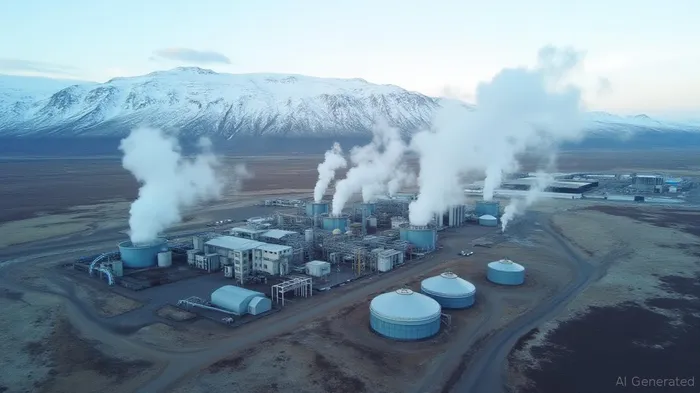 While recent years saw a slight dip in total energy output due to reduced hydropower availability, the government's focus on diversification and innovation ensures its dominance in the green energy sector remains intact.
Key Projects: From Geothermal Parks to Carbon Capture
Iceland's energy transition is fueled by visionary projects:
- The Geothermal Park (ON Power): A 103-hectare innovation hub near the Hellisheidi plant hosts startups like Climeworks and Carbfix. Climeworks' Mammoth facility—launched in 2024—is the world's largest direct air capture (DAC) plant, capable of removing 36,000 tons of CO₂ annually. Carbfix's carbon sequestration technology mineralizes CO₂ into rock, offering a scalable solution to global emissions.
- Landsvirkjun's Strategic Shift: Iceland's national power company is pivoting toward hydrogen and e-fuels, albeit cautiously due to high costs. Smaller hydrogen projects and partnerships with biogas and waste-to-energy initiatives position Iceland as a testing ground for future energy systems.
- Community-Scale Solutions: Projects like the Flúðaorka Power Plant—providing 600 kW of geothermal energy to the village of Flúðir—demonstrate how decentralized, small-scale renewables can boost local resilience and food production (e.g., geothermal-powered greenhouses in Reykholt).
Strategic Investment Opportunities
The Icelandic model presents multiple avenues for investors:
- Geothermal Technology: With 95% of homes heated by geothermal district systems, Iceland is a proving ground for advanced geothermal systems (AGS) and exploration tools. Investors could target firms developing enhanced geothermal systems or partnering with ON Power's innovation ecosystem.
- Carbon Capture and Storage (CCS): Climeworks and Carbfix are pioneers in DAC and mineralization. While still niche, their technologies could see rapid scaling as global net-zero targets tighten.
- Green Infrastructure Funds: Infrastructure projects, such as grid expansions and hydrogen refueling stations, align with Iceland's 2025 master plan. The government's push to electrify transportation (e.g., EV incentives, hydrogen trials in fishing fleets) opens opportunities in EV charging networks and maritime tech.
- Climate Tech Startups: Iceland's Transition Labs incubator supports ventures like Rock Pore (geothermal optimization) and Space Solar (satellite-based solar power). These could offer high-risk, high-reward investments as they commercialize.
Geopolitical Implications: A Model for Energy Security
Iceland's success is not just environmental—it's geopolitical. By eliminating fossil fuel dependence in electricity and heating, Iceland has insulated itself from oil price volatility and supply chain disruptions. This self-sufficiency could inspire nations reliant on imported energy to pursue similar pathways, reducing global geopolitical tensions tied to fossil fuels.
Moreover, Iceland's carbon capture expertise positions it as a technology exporter. Countries like the U.S. and EU may seek partnerships to deploy DAC and CCS systems, creating licensing or service-based revenue streams for Icelandic firms. The nation's role in the hydrogen economy—particularly for maritime transport—is also expanding, with trials on fishing vessels signaling potential for blue hydrogen exports.
Risks and Considerations
Despite its strengths, Iceland faces challenges:
- Fiscal Discipline: Achieving a fiscal surplus by 2028 requires balancing public investment in green projects with deficit reduction.
- Geopolitical Risks: Trade tensions (e.g., U.S. pharmaceutical tariffs) and EU regulatory pressures could disrupt economic growth.
- Environmental Vulnerabilities: Droughts or volcanic activity could affect geothermal output, though diversification efforts mitigate this risk.
Conclusion: Invest in the Future of Energy
Iceland's renewable revolution offers a rare combination of proven success, technological leadership, and geopolitical relevance. Investors should consider:
- Sector-Specific Plays: Geothermal tech stocks (though scarce), carbon capture ventures like Climeworks, and infrastructure funds tied to Iceland's grid upgrades.
- Global Scalability: Back companies exporting Icelandic models to regions like Southeast Asia or Africa.
- Long-Term Themes: Allocate to climate tech ETFs (e.g., iShares Global Clean Energy ETF) or green bonds funding Iceland's projects.
As energy security and decarbonization rise to the top of global agendas, Iceland's journey from an energy-dependent island to a green powerhouse is a case study in strategic resilience. For investors, this is more than a niche play—it's a window into the future of energy.

Stay ahead of the market.
Get curated U.S. market news, insights and key dates delivered to your inbox.


AInvest
PRO
AInvest
PRO



Comments
No comments yet