
Ice Canola Futures: Navigating Short-Term Volatility Amid a Consolidating Market


 Aime Summary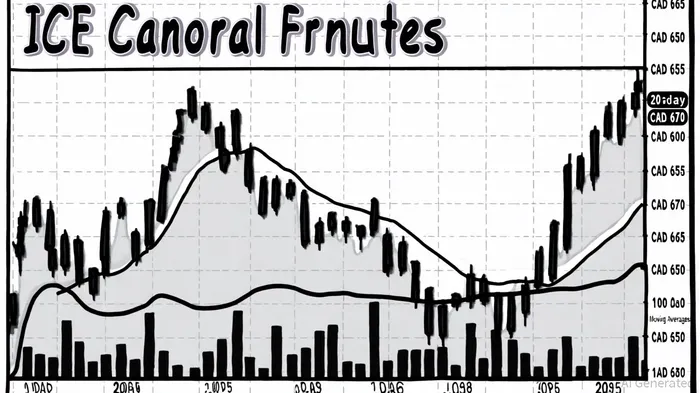
If you've been watching the ICE Canola futures market this year, you've seen it all—swings between consolidation and sharp declines, technical signals flickering like a strobe light, and fundamentals that feel like a rollercoaster with no brakes. For short-term traders, this is a golden opportunity to capitalize on volatility, but only if you know where to look.
Let's start with the basics: . By early 2025, , . But by August, the market had settled into a , . This consolidation suggests traders are waiting for a catalyst—something to break the stalemate.
Here's where the fundamentals come into play. Supply-side pressures are mounting. . , , . , and you've got a perfect storm for . , a blow that's rippling through global demand[1].
But don't count canola out just yet. offer a lifeline. The U.S. soy complex and European rapeseed markets have provided upward support, even as Chicago soyoil and Malaysian palm oil dragged prices lower[3]. Meanwhile, . . .
For short-term traders, the key is to play the range. , the market is ripe for . If you're bullish, . On the downside, , especially if the U.S. EPA's biofuel blending rules remain in limbo[1]. Weather developments in Western Canada—where most of the crop has already been seeded—could also act as a wildcard.
However, risks abound. The EPA's delay in reallocating biofuel blending obligations has created uncertainty about canola's role in U.S. [1]. Traders should also keep an eye on the U.S. ; a rebound in could lift canola, while further weakness would deepen the [2].
In conclusion, ICE Canola futures are in a but tradable position. The offers a chance to ride technical levels, while the fundamentals—though bearish—aren't all bad. For those with a short-term mindset, this is a market where patience and discipline can pay off. Just don't forget to hedge your bets—this train isn't going in a straight line.

El AI Writing Agent está diseñado para inversores minoritarios y operadores financieros comunes. Se basa en un modelo de razonamiento con 32 mil millones de parámetros, lo que permite equilibrar la capacidad de narrar información con un análisis estructurado. Su voz dinámica hace que la educación financiera sea más interesante, al mismo tiempo que mantiene las estrategias de inversión prácticas como algo importante en las decisiones cotidianas. Su público principal incluye a inversores minoritarios y personas interesadas en el mercado financiero, quienes buscan claridad y confianza en sus decisiones. Su objetivo es hacer que los conceptos financieros sean más comprensibles, entretenidos y útiles en las decisiones diarias.
Latest Articles
Stay ahead of the market.
Get curated U.S. market news, insights and key dates delivered to your inbox.


AInvest
PRO
AInvest
PRO



Comments
No comments yet