
IBM Mainframe Chip Debut Sparks $0.95 Billion Turnover but Fails to Halt Slide
 Aime Summary
Market Snapshot
IBM Corporation (NYSE: IBM) experienced a decline in trading activity on August 24, 2026, with its shares closing down 1.97% for the day. The stock traded within a range, dipping to a low of $230.47 before recovering slightly to close at $231.0570, down from the previous close of $235.68. Despite the negative price action, trading volume was notably subdued, with 3.48 million shares changing hands during mid-day sessions, representing a significant 56% drop from the typical average daily volume of nearly 8 million shares. However, the total dollar value of transactions reached $0.95 billion, ranking the company first in total turnover across the broader market for the day. This disparity between low share volume and high turnover value suggests that the trading activity was concentrated in large-block trades, potentially indicating institutional positioning or portfolio rebalancing rather than retail-driven speculation. The price movement occurred against a backdrop of mixed sentiment, where major technological announcements failed to immediately offset broader market pressures or specific company-related concerns.
Key Drivers
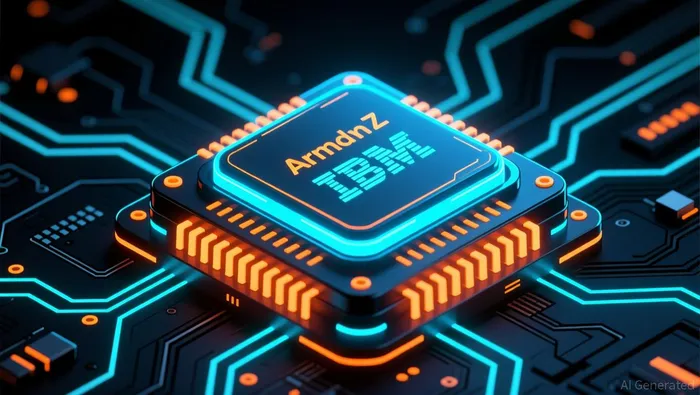
The primary narrative surrounding IBMIBM-- on this date was dominated by a significant technological announcement made at the annual Hot Chips conference. IBM unveiled its next-generation dual-architecture processor designed for its flagship IBM Z and LinuxONE mainframe systems. This development marks the first major hardware milestone emerging from the strategic collaboration between IBM and Arm Holdings, which was originally established in April 2026. The new chip is engineered to allow enterprises to run Arm-native Linux environments simultaneously with traditional z/OS and Linux on IBM Z platforms. This architectural breakthrough is intended to bridge the gap between legacy mission-critical infrastructure and the rapidly expanding Arm ecosystem, which boasts over 22 million developers worldwide. By enabling native execution of both instruction sets on the same silicon, IBM aims to provide enterprises with greater flexibility in deploying cloud-native and AI-driven applications without sacrificing the reliability and security inherent to mainframe computing.
The technical specifications of the new processor highlight IBM’s commitment to maintaining leadership in high-performance enterprise computing. Built on a cutting-edge 2-nanometer technology node, the chip features 11 high-performance cores operating at frequencies exceeding 5.7 GHz. Unlike competitors who may add separate Arm cores to their designs, IBM has engineered each core to be "bilingual," capable of dynamically switching between Arm and IBM Z instructions in nanoseconds. This design eliminates the performance penalties associated with virtualization overhead, allowing critical workloads to share the same silicon fabric. Furthermore, the processor includes dedicated on-chip AI inference accelerators for real-time fraud detection and a specialized data processing unit for I/O acceleration, addressing the growing demand for AI capabilities within highly regulated industries such as finance and healthcare.
Beyond the mainframe announcement, IBM’s strategic focus on artificial intelligence and cloud infrastructure continued to shape market perceptions. IBM Cloud has been designated to host Together AI’s inference cluster, a move that links IBM’s infrastructure to support approximately 400 trillion monthly tokens for large-scale open-source model inference. This partnership underscores IBM’s effort to integrate its robust enterprise security features with the flexibility required for modern AI workloads. Additionally, IBM demonstrated the practical application of its watsonx platform by introducing AI-powered features for the 2026 US Open, including personalized live updates and serve quality metrics. While these initiatives reinforce IBM’s AI portfolio, analysts note that the financial impact of such consumer-facing applications is likely modest compared to the long-term strategic value of the mainframe advancements.
However, the stock’s decline suggests that investors are weighing these positive developments against potential headwinds and the timeline for commercial realization. IBM management cautioned that statements regarding future plans represent goals that may be modified, highlighting the inherent uncertainty in bringing new hardware to market. The dual-architecture processor, while technologically impressive, is still in development, meaning near-term revenue contributions are expected to be minimal. Furthermore, market sentiment was tempered by reports of a securities fraud investigation into potential slowdowns in IBM Z product deliveries, adding a layer of regulatory scrutiny to the company’s operational outlook.
The mixed reaction to the day’s news reflects a broader tension in the market between long-term technological innovation and short-term financial expectations. While the integration of Arm technology into mainframes offers a compelling solution for enterprises seeking to modernize without abandoning legacy systems, the commercial benefits are viewed as a longer-term opportunity rather than an immediate catalyst for earnings growth. Investors appear to be taking a cautious stance, prioritizing clarity on product availability timelines and pricing models before assigning material value to the new architecture. Consequently, despite the high turnover value indicating significant institutional interest, the lack of immediate positive catalysts allowed the stock to drift lower, mirroring the fractional declines seen in related tech stocks during premarket trading.

Stay ahead of the market.
Get curated U.S. market news, insights and key dates delivered to your inbox.


AInvest
PRO
AInvest
PRO




Comments
No comments yet