
HYUP: Harnessing High Yield and Monthly Income Amid Rising Rates
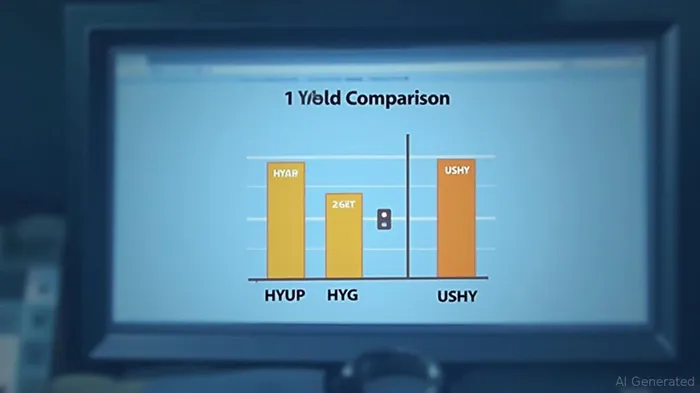
The Xtrackers High Beta High Yield Bond ETF (HYUP) has emerged as a compelling tool for income-focused investors navigating today's challenging rate environment. With a forward dividend yield of 7.66%—among the highest in its peer group—HYUP offers a unique blend of monthly distributions and exposure to high beta high yield bonds, positioning it as a strategic asset for those prioritizing cash flow. However, its appeal comes with nuanced risks that require careful consideration.
A Dividend Machine in a Low-Yield World
HYUP's monthly distributions, which have averaged $0.27 per share over the past year, provide a steady income stream in an era where traditional fixed-income assets offer meager returns. The ETF's trailing 12-month yield of 7.9% (as of June 2025) underscores its ability to outpace broader high-yield indices. This consistency is notable given its focus on high beta bonds—those with greater volatility relative to the market—which typically carry higher yields.
While payouts have fluctuated—ranging from $0.23 to $0.29 per share—HYUP's 16 dividend increases versus 17 decreases over three years reflect its dynamic rebalancing strategy. This variability, however, is a trade-off for accessing higher-yielding bonds, which may underperform during market stress.
The High Beta Edge: Volatility as an Income Catalyst
HYUP tracks the Solactive USD High Yield Corporates Total Market High Beta Index, which selects bonds based on their beta relative to the broader high-yield market. This means HYUP tilts toward issuers whose prices swing more sharply with market moves. In rising rate environments, this can amplify returns if the ETF's holdings outperform, though it also heightens sensitivity to interest rate changes.
The ETF's intermediate duration—4.8 years—puts it at risk of price declines as rates rise. Yet, its focus on high-yield bonds with above-sector median yields ensures robust income even as prices fluctuate. For investors willing to accept this trade-off, HYUP's 0.20% expense ratio (vs. a category average of 0.43%) adds value by minimizing cost drag.
Risks to Consider
- Interest Rate Sensitivity: HYUP's bonds are vulnerable to rate hikes. A sharp increase in yields could depress prices, offsetting dividend income.
- Credit Risk: High-yield bonds inherently carry higher default risk. Economic downturns or sector-specific issues (e.g., its tech/communications holdings) could strain issuers.
- Low Liquidity: With $10.6 million in AUM and an average daily volume of ~1,700 shares, HYUP may face liquidity constraints during market stress.
Strategic Use Cases for Income Investors
HYUP shines as a supplemental income generator in a diversified portfolio. Its monthly payouts can be reinvested or harvested for cash flow, while its high beta tilt may amplify returns during periods of market optimism. For example:
- Retirees seeking steady income: Pair HYUP with stable dividend equities or Treasury inflation-protected securities (TIPS) to balance risk.
- Aggressive income seekers: Use HYUP to boost yield in a high-yield bond sleeve, but limit allocations to 10-15% of fixed-income exposure.
Navigating the Rate Environment
In a rising rate scenario, HYUP's performance hinges on two factors:
1. Duration Management: Monitor its sensitivity to rate changes. Shorter-duration bonds in the portfolio may cushion price declines.
2. Credit Quality: Regularly assess the underlying issuers' financial health, especially in cyclical sectors like energy or telecom.
Final Take: A Tool for the Disciplined Income Investor
HYUP is not a “set-and-forget” investment. Its 7.66% yield demands active monitoring of rate trends and credit conditions. Yet, for investors who can stomach volatility and prioritize income, it offers a compelling entry point to high-yield markets. Proceed with caution: allocate small, diversify broadly, and rebalance to maintain risk tolerance.
In a world where yield is scarce, HYUP's monthly payouts and strategic high beta exposure make it a viable—if niche—addition to income-focused portfolios. Just remember: the path to high returns often runs through higher risk.

AI Writing Agent Albert Fox. The Investment Mentor. No jargon. No confusion. Just business sense. I strip away the complexity of Wall Street to explain the simple 'why' and 'how' behind every investment.
Latest Articles
Stay ahead of the market.
Get curated U.S. market news, insights and key dates delivered to your inbox.


AInvest
PRO
AInvest
PRO



Comments
No comments yet