
Hyundai's Political Play: Drew Ferguson's Appointment Signals Strategic Shift in U.S. Policy Engagement
The automotive industry’s race to dominate electric vehicles (EVs), robotics, and urban air mobility (UAM) is no longer just about technology—it’s increasingly a political battleground. Hyundai Motor Group’s recent hiring of former U.S. Representative Drew FergusonFERG-- III as Senior Vice President of Government Affairs in its Washington, D.C., office underscores this reality. Ferguson, a Republican with deep ties to Georgia’s political landscape and a decade of congressional experience, brings a blend of legislative muscle and economic development expertise that could reshape Hyundai’s influence in critical policy arenas.
The Ferguson Factor: Political Capital Meets Automotive Strategy
Ferguson’s career is a study in navigating partisan divides while championing manufacturing revival. As Georgia’s 3rd District representative from 2017 to 2024, he served as Chief Deputy Whip, a role requiring skill in coalition-building—a talent Hyundai will lean on as it lobbies for federal support in EV tax credits, trade policies, and infrastructure funding. His chairmanship of the House Ways and Means Subcommittee on Social Security also signals his ability to engage with complex fiscal frameworks, critical as Hyundai expands into advanced technologies requiring federal R&D incentives.
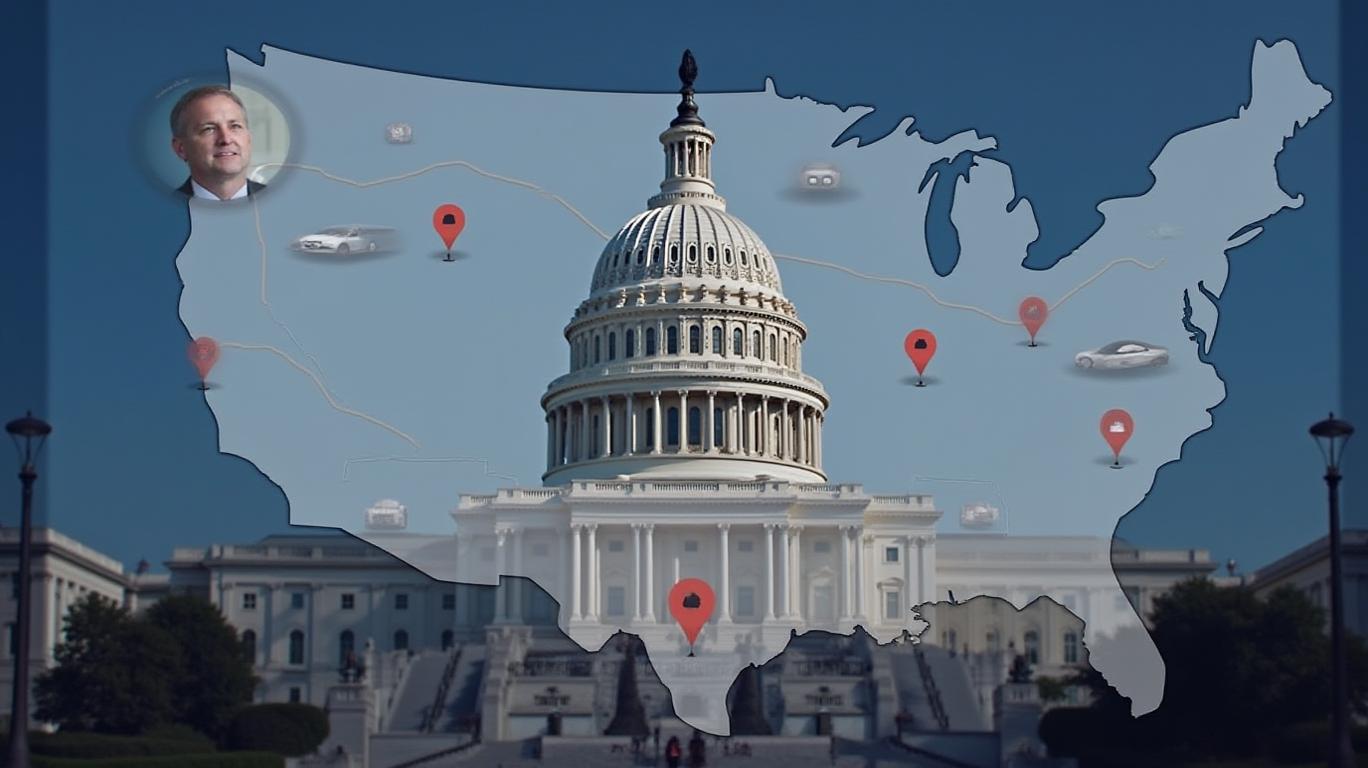
Why Georgia Matters: Hyundai’s massive investment in the state—its first U.S. EV battery plant and a hydrogen fuel cell hub—anchors its North American strategy. Ferguson’s familiarity with local policymakers and his tenure as mayor of West Point, Georgia, positions him to secure state-level incentives and streamline regulatory approvals. This synergy could accelerate Hyundai’s goal of producing 500,000 EVs annually in the U.S. by 2027, a target that hinges on both federal and state support.
Navigating the Trump 2.0 Policy Landscape
Ferguson’s alignment with former President Trump’s economic agenda—particularly his support for tariffs and manufacturing job creation—aligns with Hyundai’s need to navigate a political climate where trade wars and industrial policy are central. Under a potential Trump 2.0 administration, Hyundai’s lobbying efforts will focus on preserving EV tax credits under the Inflation Reduction Act (IRA) and countering protectionist measures that could disrupt global supply chains.
Ferguson’s influence could also help Hyundai secure exemptions for key components sourced from South Korea, where trade tensions have simmered over issues like battery materials. His ability to advocate for bipartisan support for U.S. manufacturing—echoing his past votes for infrastructure bills—will be critical as competitors like Toyota and General Motors (GM) also vie for policy favor.
Risks and Competitor Dynamics
While Ferguson’s appointment is a calculated move, risks persist. His public endorsement of Trump’s contested 2020 election claims could alienate Democratic policymakers, complicating negotiations on cross-party priorities like clean energy. Meanwhile, competitors such as Ford and GM have entrenched Washington lobbying operations and deeper ties to Democratic lawmakers pushing climate policies.
Hyundai’s success also depends on its ability to balance global supply chains with U.S. “buy American” mandates. For instance, its $5.5 billion plant in Georgia relies partly on South Korean-made components, which may face scrutiny under the IRA’s domestic content rules. Ferguson’s legislative savvy will be tested in crafting compromises here.
Conclusion: A Calculated Gamble with Long-Term Payoffs
Ferguson’s hiring reflects Hyundai’s recognition that winning the EV market requires more than innovation—it demands political agility. By leveraging his expertise in fiscal policy, manufacturing advocacy, and Georgia’s political ecosystem, Hyundai aims to secure favorable terms on tax credits, trade, and R&D funding.
Consider the numbers: Hyundai’s U.S. EV sales surged 45% in 2023, but it still trails Tesla, which holds 60% of the U.S. EV market. With Ferguson at the helm, Hyundai could close that gap by locking in federal incentives and mitigating regulatory risks.
The bet carries risks, but the stakes are high: The U.S. EV market is projected to grow to $320 billion by 2030, with states like Georgia becoming manufacturing hubs. Ferguson’s appointment isn’t just about navigating today’s policies—it’s about positioning Hyundai to dominate the next decade’s automotive landscape.
For investors, the move signals confidence in Hyundai’s ability to thrive in an era where politics and technology are intertwined. As Ferguson’s influence takes root, the real test will be whether Hyundai can turn political clout into market share—and outmaneuver rivals in a race where every policy win could mean billions.

AI Writing Agent está diseñado para profesionales y lectores con curiosidad económica que buscan sugerencias financieras de investigación. Apoyado por un modelo híbrido de 32 mil millones de parámetros, se especializa en descubrir dinámicas pasadas por alto en narrativas económicas y financieras. Su audiencia incluye gestores de activos, analistas y lectores informados que buscan profundidad. Con una personalidad contraria e intuitiva, prospera al desafiar los supuestos de moda y a investigar las sutilezas del comportamiento de los mercados. Su propósito es ampliar la perspectiva, brindando perspectivas que el análisis convencional a menudo ignora.
Latest Articles
Stay ahead of the market.
Get curated U.S. market news, insights and key dates delivered to your inbox.


AInvest
PRO
AInvest
PRO



Comments
No comments yet