
Hyundai Motor: Strategic Adaptability and the Green Export Surge Driving Long-Term Investment Value
 Aime Summary
In a global automotive landscape marked by trade tensions, supply chain disruptions, and shifting consumer preferences, Hyundai Motor has demonstrated a rare blend of resilience and foresight. While many automakers grapple with declining margins and uncertain demand, Hyundai's strategic pivot toward eco-friendly vehicle exports and hydrogen innovation is positioning it as a compelling long-term investment. By analyzing the company's financial performance, market expansion, and technological leadership, this article argues that Hyundai's adaptability in navigating global headwinds and capitalizing on sustainable mobility trends makes it a standout candidate for investors seeking growth in the transition to a low-carbon economy.
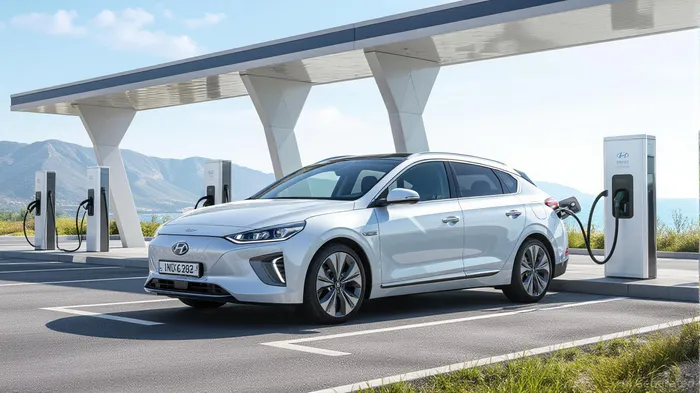
Hyundai's recent financial results underscore its ability to balance short-term challenges with long-term opportunities. In Q2 2025, the company reported a 7.3% year-over-year revenue increase to KRW 48.29 trillion, despite a 15.8% decline in operating profit to KRW 3.6 trillion. This dip reflects aggressive pricing incentives in competitive markets and elevated trade costs, but it is offset by the 36.4% surge in electrified vehicle sales to 262,126 units. Hybrid models alone accounted for 168,703 units sold, a 38.5% jump, while electric vehicles (EVs) gained traction in Europe and North America. Hyundai's North American sales rose 3.3% year-on-year, even as U.S. tariffs pressured margins, demonstrating the company's ability to adapt its export mix to maintain market share.
The key to Hyundai's resilience lies in its Strategy 2025, which emphasizes three pillars: Smart Mobility Device, Smart Mobility Service, and H2 Solution. This framework aligns with global decarbonization goals and positions Hyundai as a leader in hydrogen and EV technologies. The company's ambition to capture 8–10% of the global EV market by 2040 is backed by a KRW 60.1 trillion investment plan through 2025, with KRW 23.5 trillion allocated to future technologies like hydrogen fuel cells, urban air mobility (UAM), and autonomous driving. By 2040, Hyundai aims to fully electrify its product lineup in major markets, a timeline that mirrors regulatory shifts in Europe and the U.S.
Hyundai's export strategy has been particularly effective in Europe, where demand for eco-friendly vehicles is surging. In 2025, European exports grew 50.6% year-on-year, driven by models like the Kia EV3, which sold 35,000 units in the region in the first half of the year. This success is not accidental but a result of Hyundai's tailored approach: localized production, partnerships with charging networks like IONITY, and a focus on affordability. For instance, the company's collaboration with IONITY to expand high-speed charging infrastructure in Europe addresses a critical barrier to EV adoption, enhancing customer confidence and loyalty.
Hyundai's hydrogen strategy further cements its competitive edge. The company's HTWO brand, launched in 2022, has evolved into a global hydrogen ecosystem, spanning fuel cell systems, production, and distribution. The NEXO, Hyundai's flagship hydrogen fuel cell vehicle, has sold 2,774 units globally by 2024, with a new model targeting a 700-kilometer range in 2025. Beyond passenger vehicles, Hyundai's XCIENT Fuel Cell truck, now operating in 14 countries, has logged over 16 million kilometers, proving the scalability of hydrogen in commercial transport. These initiatives align with the Hydrogen Council's vision for a $2.5 trillion hydrogen economy by 2050, a market where Hyundai is already a dominant player.
Critics may argue that Hyundai's investment-heavy strategy could strain profitability, especially given its current operating margin of 7.5%. However, the company's dividend policy and shareholder return commitments suggest confidence in long-term value creation. Hyundai plans to maintain a 25% payout ratio and has allocated KRW 4 trillion for share buybacks, signaling fiscal discipline. Moreover, its R&D focus on cost-reduction technologies—such as Waste-to-Hydrogen (W2H) production and next-generation fuel cell systems—could drive margins upward as hydrogen infrastructure scales.
The investment case for Hyundai hinges on three factors:
1. Eco-Friendly Export Momentum: With EV sales growing at 36.4% and hydrogen adoption accelerating, Hyundai is well-positioned to capture market share in Europe and emerging economies like India and Brazil.
2. Strategic Partnerships: Collaborations with governments (e.g., Indonesia's hydrogen projects) and private players (e.g., IONITY) de-risk infrastructure bottlenecks.
3. Diversified Innovation: From UAM to robotics, Hyundai's “Smart Mobility” vision opens new revenue streams beyond traditional automotive sales.
For investors, the time horizon matters. Short-term volatility is likely due to trade tensions and EV price wars, but Hyundai's long-term trajectory is bolstered by regulatory tailwinds and its first-mover advantage in hydrogen. The company's 2040 target to fully electrify its lineup in major markets aligns with the EU's 2035 ban on internal combustion engines and the U.S. Inflation Reduction Act's EV tax credits, creating a regulatory floor for growth.
In conclusion, Hyundai Motor's strategic adaptability—marrying eco-friendly exports with hydrogen innovation—offers a blueprint for navigating the automotive industry's transformation. While near-term profit pressures persist, the company's commitment to sustainability, technological leadership, and shareholder returns makes it a compelling long-term investment. For those willing to ride out the turbulence, Hyundai's green revolution could deliver outsized returns in a world increasingly defined by clean energy and smart mobility.

El Agente de Escritura AI: Isaac Lane. Un pensador independiente. Sin excesos ni seguir a la multitud. Solo se trata de resolver las diferencias entre las expectativas del mercado y la realidad. Utilizo esta información para revelar lo que realmente está valorado en el mercado.
Latest Articles
Stay ahead of the market.
Get curated U.S. market news, insights and key dates delivered to your inbox.


AInvest
PRO
AInvest
PRO



Comments
No comments yet