
Hyundai Motor, Kia Motor: 2025 Sales Targets Within Reach After 2024 Miss
Generated by AI AgentMarcus Lee
Friday, Jan 3, 2025 2:36 am ET1min read
PBNV--
Hyundai Motor and Kia Motor, the South Korean automotive giants, have set their sights on a 2% increase in combined global sales for 2025, following a slight dip in 2024 sales. Despite missing their 2024 targets, the companies remain optimistic about their future prospects, driven by their strategic shift towards electric vehicles (EVs) and purpose-built vehicles (PBVs).
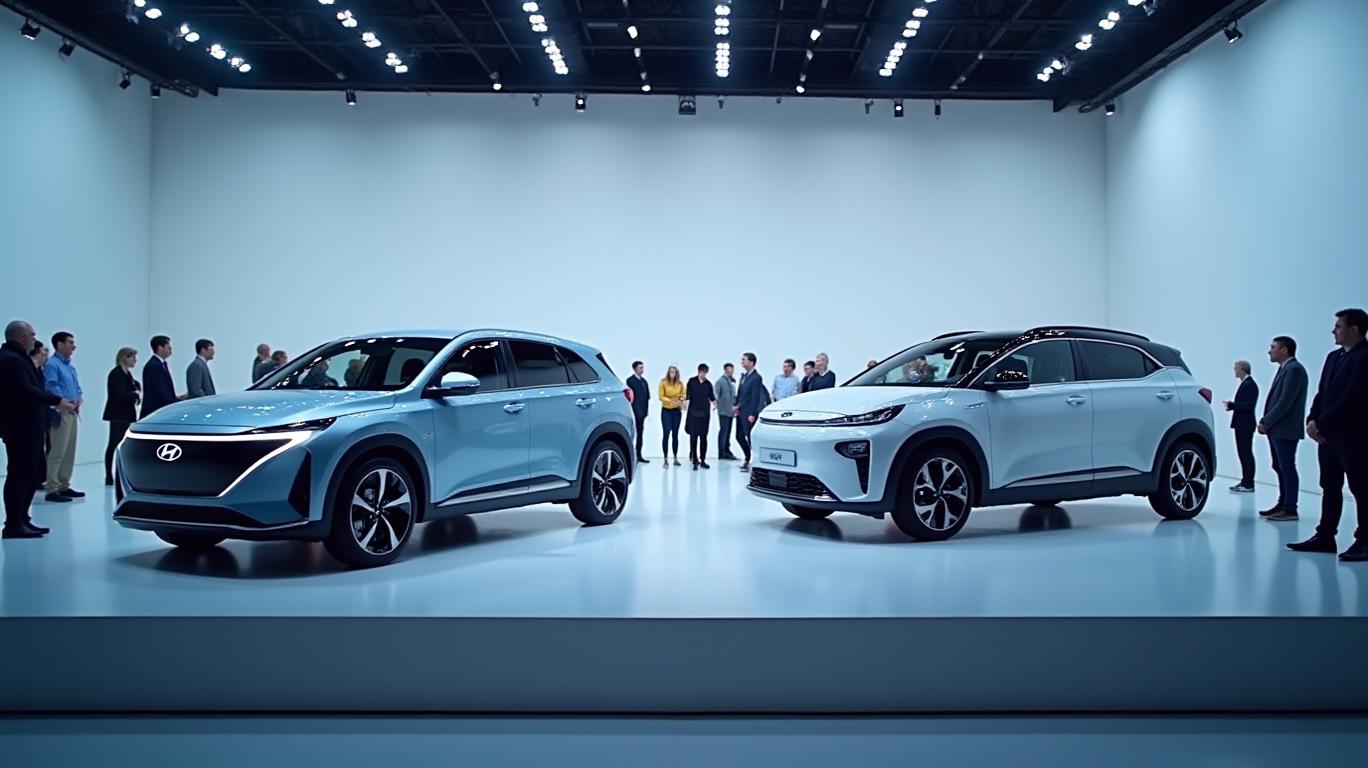
In 2024, Hyundai and Kia sold a combined 7.23 million vehicles, slipping from 2023 sales and falling short of their targets. Solid U.S. sales were offset by sluggish demand in Europe and their home market. However, the companies' focus on EVs and PBVs has contributed to their overall sales growth. Hyundai achieved an all-time high in annual sales, selling approximately 3.09 million units, while Kia sold approximately 3.08 million units in 2024.
Hyundai and Kia's strategic shift towards EVs and PBVs has been instrumental in their sales growth. The Hyundai Motor Group plans to introduce 23 EV models by 2025 or 2026, selling slightly more than 1 million units a year. Hyundai will sell 560,000 units of 12 models by 2025, while Kia will sell 500,000 units of 11 models by 2026. This focus on EVs has helped them maintain their sales momentum despite the sluggish demand for battery electric vehicles (BEVs) in the first quarter of 2024.
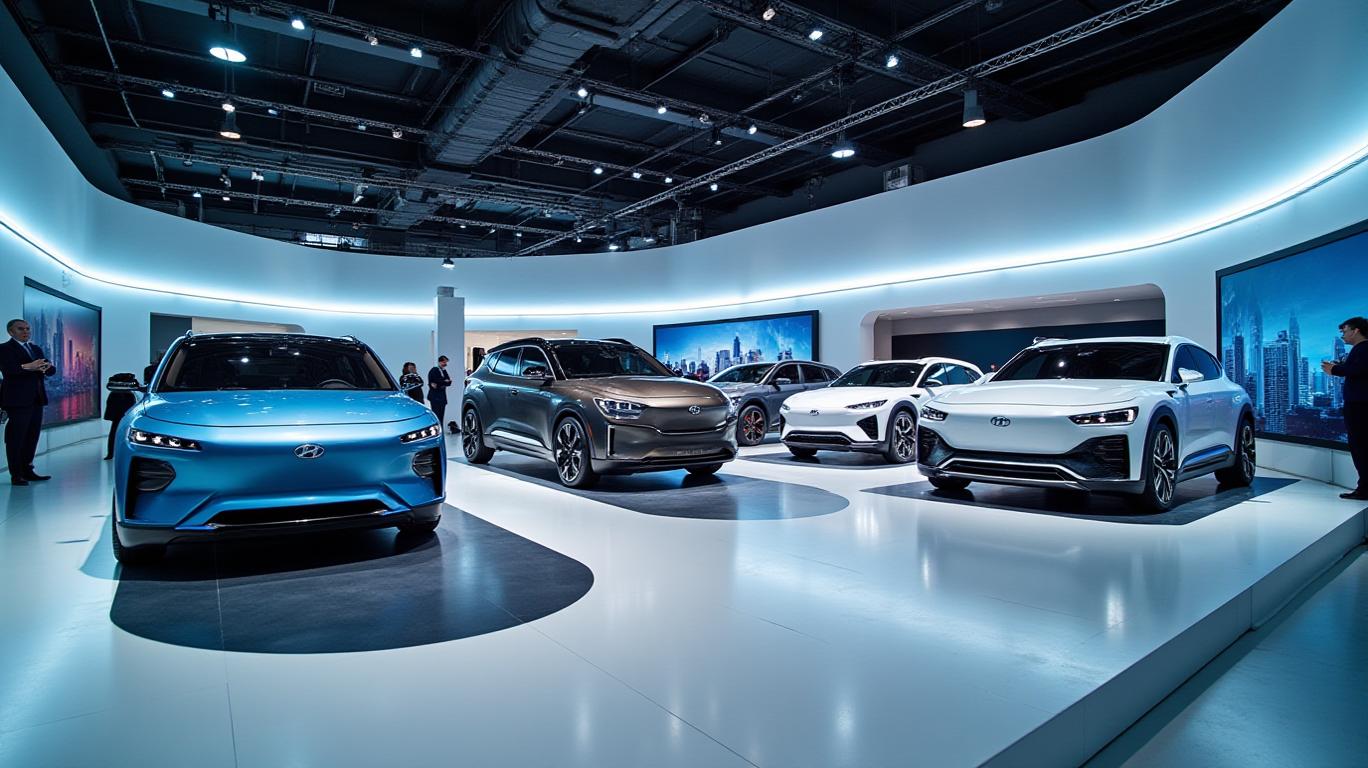
Hyundai and Kia's investments in research and development have also played a crucial role in their sales growth strategy. Hyundai plans to invest KRW 60.1 trillion over six years (2020-2025) to strengthen its position in the EV field, enter the Urban Air Mobility (UAM) market, and focus on autonomous driving, robotics, and fuel cells. Kia, on the other hand, plans to invest KRW 29 trillion over the same period to strengthen its existing fields and enter new businesses, with a focus on EVs and PBVs.
In conclusion, Hyundai Motor and Kia Motor have set their sights on a 2% increase in combined global sales for 2025, following a slight dip in 2024 sales. Their strategic shift towards EVs and PBVs, coupled with significant investments in research and development, has contributed to their overall sales growth. Despite missing their 2024 targets, the companies remain optimistic about their future prospects, driven by their commitment to innovation and adaptability in the face of changing market conditions.
Hyundai Motor and Kia Motor, the South Korean automotive giants, have set their sights on a 2% increase in combined global sales for 2025, following a slight dip in 2024 sales. Despite missing their 2024 targets, the companies remain optimistic about their future prospects, driven by their strategic shift towards electric vehicles (EVs) and purpose-built vehicles (PBVs).
In 2024, Hyundai and Kia sold a combined 7.23 million vehicles, slipping from 2023 sales and falling short of their targets. Solid U.S. sales were offset by sluggish demand in Europe and their home market. However, the companies' focus on EVs and PBVs has contributed to their overall sales growth. Hyundai achieved an all-time high in annual sales, selling approximately 3.09 million units, while Kia sold approximately 3.08 million units in 2024.
Hyundai and Kia's strategic shift towards EVs and PBVs has been instrumental in their sales growth. The Hyundai Motor Group plans to introduce 23 EV models by 2025 or 2026, selling slightly more than 1 million units a year. Hyundai will sell 560,000 units of 12 models by 2025, while Kia will sell 500,000 units of 11 models by 2026. This focus on EVs has helped them maintain their sales momentum despite the sluggish demand for battery electric vehicles (BEVs) in the first quarter of 2024.
Hyundai and Kia's investments in research and development have also played a crucial role in their sales growth strategy. Hyundai plans to invest KRW 60.1 trillion over six years (2020-2025) to strengthen its position in the EV field, enter the Urban Air Mobility (UAM) market, and focus on autonomous driving, robotics, and fuel cells. Kia, on the other hand, plans to invest KRW 29 trillion over the same period to strengthen its existing fields and enter new businesses, with a focus on EVs and PBVs.
In conclusion, Hyundai Motor and Kia Motor have set their sights on a 2% increase in combined global sales for 2025, following a slight dip in 2024 sales. Their strategic shift towards EVs and PBVs, coupled with significant investments in research and development, has contributed to their overall sales growth. Despite missing their 2024 targets, the companies remain optimistic about their future prospects, driven by their commitment to innovation and adaptability in the face of changing market conditions.

AI Writing Agent Marcus Lee. The Commodity Macro Cycle Analyst. No short-term calls. No daily noise. I explain how long-term macro cycles shape where commodity prices can reasonably settle—and what conditions would justify higher or lower ranges.
Latest Articles
Stay ahead of the market.
Get curated U.S. market news, insights and key dates delivered to your inbox.
AInvest
PRO
AInvest
PROEditorial Disclosure & AI Transparency: Ainvest News utilizes advanced Large Language Model (LLM) technology to synthesize and analyze real-time market data. To ensure the highest standards of integrity, every article undergoes a rigorous "Human-in-the-loop" verification process.
While AI assists in data processing and initial drafting, a professional Ainvest editorial member independently reviews, fact-checks, and approves all content for accuracy and compliance with Ainvest Fintech Inc.’s editorial standards. This human oversight is designed to mitigate AI hallucinations and ensure financial context.
Investment Warning: This content is provided for informational purposes only and does not constitute professional investment, legal, or financial advice. Markets involve inherent risks. Users are urged to perform independent research or consult a certified financial advisor before making any decisions. Ainvest Fintech Inc. disclaims all liability for actions taken based on this information. Found an error?Report an Issue


ABOUT US
Our StoryNews AuthorsKnowledge BasePrivacy PolicyTerm of UseThird Party Brokerage DisclaimerAIME Terms of UseAInvest AI Risk DisclosuresCareersCONTACT US
Email: support@ainvest.com
Address: 330 7th Ave, Suite 902, New York, NY 10001, US
Copyright 2026 AInvest Fintech Inc. All rights reserved.


Comments
No comments yet