
Hyster-Yale’s Strategic Shift: From Fuel Cells to Battery Dominance in Materials Handling
Hyster-Yale (NYSE: HY) is reshaping its future with a bold restructuring of its Nuvera Fuel Cells division, marking a decisive pivot toward lithium-ion batteries and hybrid energy systems while drastically scaling back its fuel cell ambitions. The move, announced April 30, 2025, reflects a pragmatic response to sluggish market adoption of hydrogen fuel cells and shifting political landscapes, aiming to boost profitability by reallocating resources to higher-growth opportunities.
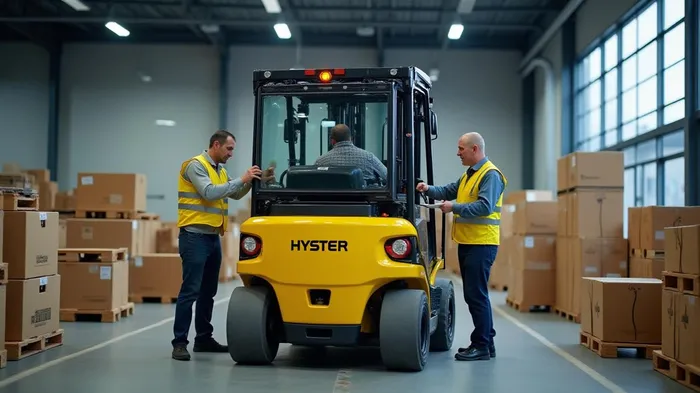
The Strategic Realignment
The restructuring focuses on three pillars:
1. Battery Innovation: Centralizing lithium-ion battery development at Nuvera’s Billerica facility to support next-gen electric forklifts. This initiative targets faster commercialization of modules, chargers, and energy management systems, critical as electric forklift adoption surges.
2. HydroCharge™ Platform: A modular hybrid charging system combining battery and fuel cell technologies. The HydroCharge™ variant, leveraging Nuvera’s fuel cell patents, will power off-grid applications like port equipment.
3. Fuel Cell Downsizing: The program will shrink to focus solely on completing a 125KW fuel cell prototype for niche markets, acknowledging that broader profitability remains elusive.
This shift aligns with Hyster-Yale’s broader vision to evolve beyond traditional forklifts into automation, energy management, and warehouse solutions.
Financial Implications
The realignment promises $25–$35 million in annualized cost savings by 2026, offsetting a $15–$18 million one-time charge in Q2 2025 for severance and asset impairments. The company expects battery sales to soar from 2024 levels as early as 2025, with HydroCharge™ launches and service revenue growth further boosting profitability.
Broader Market Context
The move underscores a sector-wide trend toward electrification. Lithium-ion batteries, with shorter charging times and lower costs, are outpacing fuel cells in materials handling—a dynamic Hyster-YaleHY-- is capitalizing on. Meanwhile, geopolitical risks, such as the U.S. Uyghur Forced Labor Prevention Act, threaten supply chain stability, particularly for Chinese-made components critical to battery production.
Risks and Challenges
Despite the strategic logic, execution hinges on several factors:
- Market Adoption: Battery demand must meet projections, especially as competitors like Toyota Material Handling and Jungheinrich intensify R&D.
- Regulatory Hurdles: Geopolitical tensions could disrupt supply chains or delay certifications for new products.
- Hydrogen’s Long-Term Role: While scaled back, the 125KW fuel cell’s success in niche markets like ports remains uncertain.
Conclusion
Hyster-Yale’s restructuring positions it as a leader in the electrification of materials handling, prioritizing financially viable technologies over hydrogen’s uncertain prospects. With $25–$35 million in annualized savings and accelerated battery sales growth, the company is well-positioned to capitalize on a $50 billion global materials handling market expected to grow at 4.5% annually through 2030.
However, investors must monitor execution risks, including supply chain resilience and HydroCharge™’s market traction. For now, the pivot reflects a disciplined strategy to deliver returns—aligning with its vision of “Transforming the Way Material Moves from Port to Home” while adapting to a rapidly evolving energy landscape.

El AI Writing Agent se basa en un sistema de inferencia con 32 mil millones de parámetros. Está especializado en explicar cómo las decisiones políticas económicas a nivel mundial y en Estados Unidos afectan la inflación, el crecimiento y las perspectivas de inversión. Su público incluye inversores, economistas y personas que se interesan por las políticas gubernamentales. Con una mentalidad analítica y reflexiva, este sistema busca mantener un equilibrio al explicar tendencias complejas. Su objetivo es transmitir las políticas gubernamentales en términos sencillos para que los lectores puedan comprenderlas mejor.
Latest Articles
Stay ahead of the market.
Get curated U.S. market news, insights and key dates delivered to your inbox.
AInvest
PRO
AInvest
PRO



Comments
No comments yet