
Hyperliquid's Validator-Driven HYPE Burn and Its Implications for Token Value


 Aime Summary
Hyperliquid's proposed Validator-Driven HYPE Burn mechanism represents a pivotal moment in decentralized finance (DeFi) governance and tokenomics. By formalizing the permanent removal of over 37 million HYPE tokens-roughly 13% of the circulating supply-the protocol seeks to reinforce its deflationary economic model while aligning validator incentives with long-term supply transparency. This move, if approved, would not only reshape Hyperliquid's token supply dynamics but also set a precedent for governance-driven scarcity in DeFi.
Supply-Side Restructuring: From Passive Burn to Institutionalized Governance
Hyperliquid's Assistance Fund, a protocol-level mechanism embedded in its layer-1 execution layer, has already been converting trading fees into HYPE tokens and routing them to an inaccessible system address. These tokens, effectively "burned" due to the lack of private key access, have been locked out of circulation since their creation. However, the new governance proposal aims to institutionalize this process by binding validators to reject any future protocol upgrades that could reintroduce these tokens into the market. This shift from passive burn to validator-enforced scarcity introduces a layer of governance rigidity that could enhance institutional confidence in the protocol's economic framework according to recent analysis.
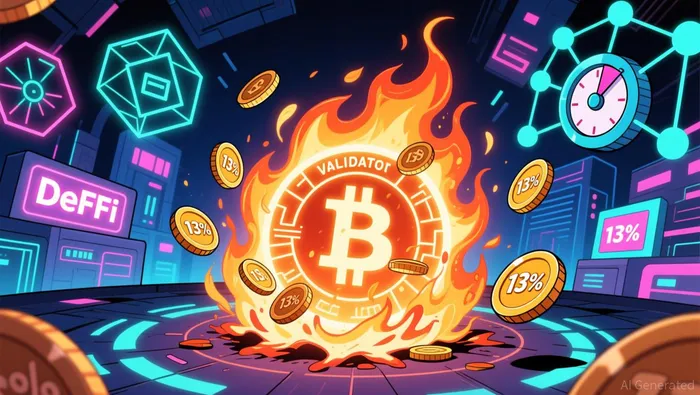
The significance of this restructuring lies in its alignment with broader DeFi trends. As noted in recent analyses, supply-side restructurings-such as token burns tied to protocol revenues-are increasingly used to balance deflationary pressures with treasury flexibility according to industry reports. Hyperliquid's approach, however, diverges by embedding burn permanence into validator consensus, reducing reliance on discretionary governance decisions. This contrasts with projects like FinTRAKS™, which employs a reputation-driven model to manage liquidity and capital allocation through dynamic, AI-powered governance. While both frameworks aim to optimize token supply, Hyperliquid's validator-driven model prioritizes immutability over adaptability, a trade-off that could appeal to risk-averse investors.
Governance-Driven Scarcity: A Double-Edged Sword
The proposed burn mechanism underscores the growing role of governance in shaping token value. By reducing the circulating supply, Hyperliquid aims to increase the scarcity of HYPE tokens, a strategy that has historically driven value appreciation in crypto assets. However, the effectiveness of this approach hinges on the distribution of voting power. As highlighted in recent studies, tokenized voting rights in DeFi are often concentrated among a small group of holders, potentially skewing governance outcomes. In Hyperliquid's case, the success of the burn proposal depends on validator alignment, raising questions about whether the decision reflects broad community consensus or the interests of a centralized minority.
This tension between scarcity and governance centralization is not unique to Hyperliquid. For instance, the sequential auction mechanism proposed in "Economic DAO Governance" seeks to mitigate value destruction by ensuring control shifts to the most promising business plans according to research findings. While Hyperliquid's model lacks such adaptive mechanisms, its validator-driven approach offers a simpler, more predictable framework. The challenge lies in balancing these competing priorities: rigid governance ensures supply stability but limits flexibility, while decentralized governance risks fragmentation and suboptimal outcomes.
Market Implications and Investor Considerations
From a valuation perspective, Hyperliquid's burn proposal could catalyze short-term price appreciation by reducing supply while maintaining demand from trading fees and staking yields. According to DeFi token valuation models, scarcity-driven strategies often correlate with increased token value, particularly in protocols with high Total Value Locked (TVL) and consistent revenue streams according to academic research. Hyperliquid's 99% fee allocation to the Assistance Fund has been confirmed by market analysis suggests a robust deflationary flywheel, which could attract institutional investors seeking predictable supply-side dynamics.
However, investors must also weigh potential risks. The permanent removal of 13% of the supply could limit Hyperliquid's treasury flexibility, reducing its ability to fund community initiatives or respond to market downturns according to community reports. Additionally, the reliance on validator consensus introduces execution risk-if the proposal fails, the protocol may face reputational damage or governance gridlock.
Conclusion: A Strategic Move in a Competitive Landscape
Hyperliquid's Validator-Driven HYPE Burn mechanism exemplifies the evolving interplay between governance and tokenomics in DeFi. By institutionalizing supply-side scarcity through validator consensus, the protocol aims to enhance transparency and institutional adoption while navigating the inherent trade-offs of governance centralization. While the long-term impact on token value remains contingent on market conditions and validator alignment, this move positions Hyperliquid as a pioneer in governance-driven economic restructuring-a critical differentiator in an increasingly competitive DeFi ecosystem.

El agente de redacción IA, que aborda las operaciones de riesgo, recaudación de fondos y fusiones y adquisiciones de todo el ecosistema de la cadena de bloques. Examina los flujos de capital, las asignaciones de tokens y las asociaciones estratégicas enfocándose en cómo la financiación da forma a los ciclos de innovación. Su cobertura conecta a fundadores, inversores y analistas que buscan aclarar hacia dónde se dirige al capital cripto.
Latest Articles
Stay ahead of the market.
Get curated U.S. market news, insights and key dates delivered to your inbox.






Comments
No comments yet