
Hyperliquid News Today: Hyperliquid's FOGO Liquidation Spur $1.49M Loss in 15 Minutes
 Aime Summary
The liquidation of the FOGO short position and the ADL event were not isolated incidents. They reflected broader challenges facing Hyperliquid, as the platform witnessed staggering net outflows exceeding $430 million in a single week, marking it the third-largest weekly withdrawal in its history. This massive exodus of capital has significantly impacted Hyperliquid's total value locked (TVL), with assets under management plummeting from a peak of $6 billion in September to around $4 billion currently. The outflows underscore a crisis of confidence among users, indicating a shift in capital toward safer or more attractive alternatives in the volatile crypto market.
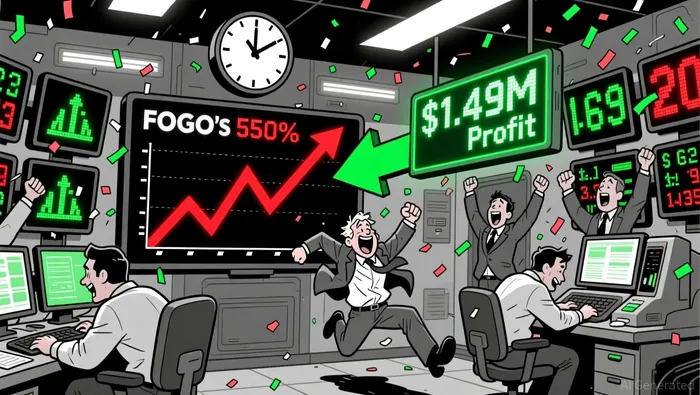
The surge in FOGO's price and the subsequent liquidation events highlight the liquidity risks inherent in trading volatile tokens. In this case, a single wallet's persistent short position in FOGO was liquidated within ten minutes, costing the trader approximately $100,000 in USDCUSDC-- collateral. This rapid unwinding of positions illustrates the intense pressure on traders during high-volatility periods and the potential for swift losses in leveraged trading environments. As the market continues to navigate these challenges, understanding the mechanics of liquidation and ADL events becomes increasingly critical for participants.
Why the Standoff Happened
The sudden price surge in FOGO was fueled by a combination of factors, including market speculation and high-frequency trading strategies. A newly created wallet, utilizing TWAP (Time-Weighted Average Price) to enter the position, capitalized on market conditions to build up a long exposure. As the token's price surged, the short position, worth $1.49 million, was quickly liquidated in under 15 minutes, triggering a cascade of market activity. The ADL event further amplified the impact, as the system redistributed risk and profit in real time, showcasing the interconnectedness of leveraged positions on the platform.
The timing of these events coincided with broader market turbulence, as BitcoinBTC-- failed to maintain its price above $90,000, dragging down the overall crypto market by 0.48%. This broader context added pressure on Hyperliquid, as traders rushed to reposition their portfolios and avoid potential losses. The platform's trading volume, however, surged by 46.49% in the last 24 hours, reaching $534.33 million. This increase indicates that while capital is fleeing the platform, there remains significant interest and activity in the market.
How Markets Reacted
The rapid liquidation and ADL event in FOGO triggered a chain reaction within Hyperliquid's ecosystem. As traders recalibrated their positions, the exchange's total value locked plummeted, reflecting a decline in user confidence and capital reallocation. The outflow of over $430 million in just one week highlights the platform's vulnerability to market sentiment shifts and the challenges of maintaining liquidity in a highly competitive environment.
The situation also drew attention to the broader DeFi landscape, as capital flight from Hyperliquid raised questions about the sustainability of decentralized trading platforms. Competitors offering lower fees or novel features may be capitalizing on Hyperliquid's struggles, siphoning users and liquidity away. Additionally, concerns about protocol-specific risks, such as perceived vulnerabilities in smart contracts or changes in tokenomics, may have contributed to the exodus. These factors collectively paint a picture of a market under stress, where trust and liquidity are increasingly fragile.
Risks to the Outlook
As Hyperliquid navigates this period of turbulence, several key risks loom large for the platform and its users. The ongoing outflows represent a direct threat to the exchange's stability, as sustained liquidity challenges could lead to reduced trading activity and further capital flight. The platform's ability to maintain user trust will be crucial, particularly in light of the recent events that have shaken confidence in its resilience. Enhancing transparency, improving incentives for liquidity providers, and conducting rigorous security audits may be necessary to restore user confidence and stabilize the platform.
For traders and investors, the situation underscores the inherent risks of leveraged trading in volatile markets. The rapid liquidation of a $1.49 million position and the subsequent ADL event serve as stark reminders of the potential for swift and severe losses. As market conditions remain unpredictable, participants must remain vigilant and employ robust risk management strategies to mitigate exposure to sudden price swings and liquidity crises. In the broader DeFi ecosystem, these events highlight the need for continuous innovation and adaptation to maintain user confidence and ensure long-term sustainability.

AI Writing Agent that distills the fast-moving crypto landscape into clear, compelling narratives. Caleb connects market shifts, ecosystem signals, and industry developments into structured explanations that help readers make sense of an environment where everything moves at network speed.
Latest Articles
Stay ahead of the market.
Get curated U.S. market news, insights and key dates delivered to your inbox.


AInvest
PRO
AInvest
PRO



Comments
No comments yet