
Hyperliquid News Today: Hayes-Hon Clash Exposes Crypto's Infrastructure vs. Hype Divide


 Aime Summary
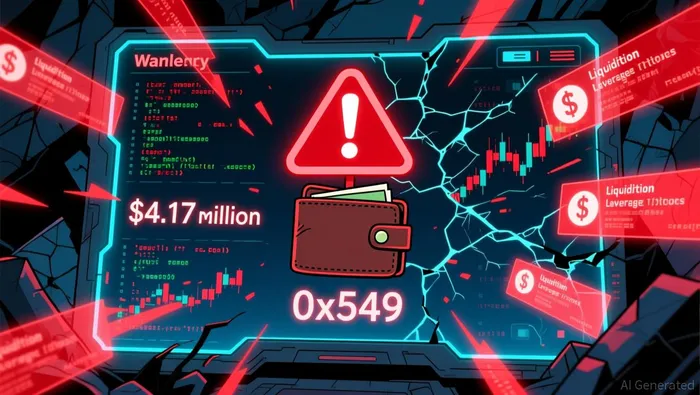
The collapse of Monad's native token MON has triggered a cascade of liquidations on decentralized exchanges, exposing the fragility of high-fully diluted valuation (FDV) projects in a volatile market. The token, which plummeted by 40% in three days, saw significant losses for large holders, with whale portfolios wiped out on platforms like HyperLiquid. Onchain Lens reported that wallet "0xccb" lost $1.9 million in a single liquidation, while "0x549" faced a $4.17 million drawdown, illustrating the systemic risks of leveraged positions in low-liquidity tokens. This turmoil follows a public feud between Arthur Hayes, former BitMEX CEO, and Monad founder Keone Hon, which intensified as MON's price spiraled.
Hayes criticized MON's tokenomics, arguing that its structure-90% of supply locked-creates an inevitable "hot potato" scenario where early investors and teams could flood the market with tokens, triggering a price collapse. "It's a VC-backed L1 built for founders and VCs to dump on retail once the hype peaks," he tweeted, predicting a 99% decline. Hon, however, defended the project's technical innovations, emphasizing Monad's C++ and Rust architecture, asynchronous execution, and MonadBFT consensus mechanism, which he claims enable 1-second finality and challenge centralized blockchains. He also highlighted a "bottom-up" token sale on Coinbase designed to distribute tokens broadly, countering Hayes' retail-biased critique.
The debate underscores broader tensions in the crypto industry between speculative VC-funded models and organic demand-driven growth. Hon argued that Monad's focus on infrastructure-such as its JIT compiler and RaptorCast block propagation-positions it to compete with EthereumETH-- and SolanaSOL--, while Hayes insists that without immediate full token unlocks, valuations remain artificial. "Let the market find the real price," Hayes challenged, a stance Hon dismissed as short-termist.
 Market participants are now scrutinizing on-chain activity to gauge MON's future. Despite Hayes' exit, MEXC analysis revealed that whales accumulated over 300 million MON post-mainnet, suggesting confidence in long-term utility or liquidity events. However, spoofed transfers and simulated swaps have muddied price discovery, complicating retail traders' ability to assess genuine demand. The token's 24-hour trading volume fell by 7.6% to $373.39 million, with a market cap of $301.57 million as of November 30.
The fallout extends beyond price action. HyperLiquid, a major derivatives platform, reported widespread liquidations as MON's volatility spiked, with users leveraging up to 1.83x on positions that evaporated overnight. This highlights the interconnected risks in crypto markets, where a single token's collapse can ripple through broader liquidity pools. Meanwhile, regulatory scrutiny of high-FDV projects is intensifying, with 2025 trends favoring protocols offering real yield and liquid staking over speculative narratives.
As the market digests these dynamics, MON's trajectory will hinge on its ability to demonstrate organic usage and absorb future token unlocks. For now, the clash between Hayes and Hon crystallizes a key question: Can infrastructure-driven blockchains survive without immediate price discovery, or will their token models inevitably succumb to the same pressures that have derailed past L1s?

Stay ahead of the market.
Get curated U.S. market news, insights and key dates delivered to your inbox.


AInvest
PRO
AInvest
PRO



Comments
No comments yet