
Hyperliquid News Today: DeFi's High-Leverage Markets Fuel Systemic Spoofing Risks


 Aime Summary
Hyperliquid, one of the fastest-growing decentralized perpetuals exchanges, has faced a third major market manipulation attack in 2025, this time involving the Solana-based memecoinMEME-- POPCAT. The incident, which occurred on November 12, left $4.9 million in bad debt for the platform's HLP liquidity vault, marking a continuation of vulnerabilities in high-leverage, illiquid token markets.
The attack unfolded when an anonymous actor withdrew $3 million in USDCUSDC-- from OKX and distributed it across 19 wallets. Using this capital, the attacker opened $26 million in positions on Hyperliquid, placing a massive buy wall of $20 million at $0.21 to simulate artificial demand. The strategy was deliberate: after canceling the buy wall, the price of POPCAT plummeted by 30% within seconds, triggering cascading liquidations. While the attacker burned $3 million of their own capital, the manipulation shifted nearly $5 million in losses to Hyperliquid's HLP liquidity providers.
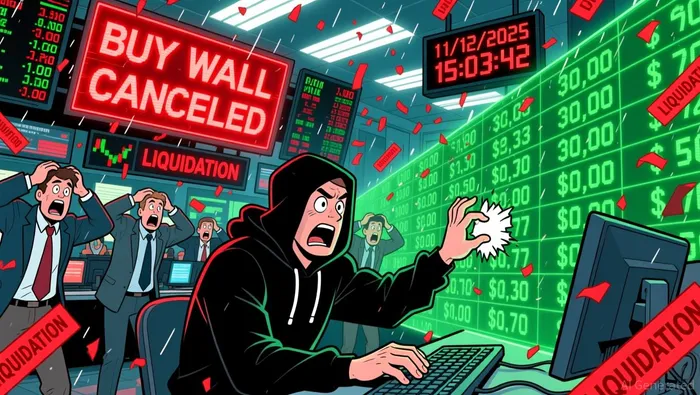
This marks Hyperliquid's third such incident this year, following similar attacks in March and July. The pattern underscores a systemic risk in decentralized perpetuals markets, where thin liquidity and high leverage create opportunities for spoofing and timing-based attacks. Hyperliquid's blockchain infrastructure and smart contracts were not compromised, but the incident highlights the challenges of managing volatility in assets with limited order books.
The platform has become a prime target due to its rapid growth-reporting over $10 billion in daily trading volume-and its reliance on community-funded liquidation pools. Analysts note that the attack exploited the platform's 50x leverage offering on certain tokens, with the attacker using 5x leverage on POPCAT to amplify the impact of the price drop. The lack of robust safeguards against such tactics has raised concerns about the scalability of decentralized exchanges in the current market environment.
Hyperliquid's struggles reflect broader challenges in the crypto derivatives space. The platform's liquidity vault, designed to absorb losses from liquidations, is now bearing the brunt of these attacks. While the company has not yet announced changes to its risk management protocols, the incidents have prompted calls for stricter oversight of high-leverage trading on decentralized platforms.
The attack on POPCAT also underscores the growing sophistication of market manipulators in the crypto space. Unlike traditional markets, where regulatory frameworks can deter such behavior, decentralized exchanges often lack the tools to detect or prevent spoofing in real time. This has left platforms like Hyperliquid exposed to coordinated attacks that exploit the interplay between leverage, liquidity, and governance mechanisms.
As the crypto market continues to evolve, the frequency of these incidents may force a reevaluation of risk models and capital allocation strategies for decentralized exchanges. For now, Hyperliquid's repeated vulnerabilities serve as a cautionary tale for investors and developers alike.

Stay ahead of the market.
Get curated U.S. market news, insights and key dates delivered to your inbox.






Comments
No comments yet