
Hyperliquid HYPE Surges on S&P 500 Launch and 24-7 Trading Shift
 Aime Summary
Hyperliquid has launched the first S&P 500 perpetual futures contract on its HIP-3 market, authorized by S&P Dow Jones Indices. This development follows recent SEC approvals for Nasdaq's tokenized stock settlement and Cboe's proposal for 24x5 U.S. stock trading according to industry reports. These initiatives collectively address outdated bundled trading structures by offering 24/7 global trading and unified platforms as data shows.
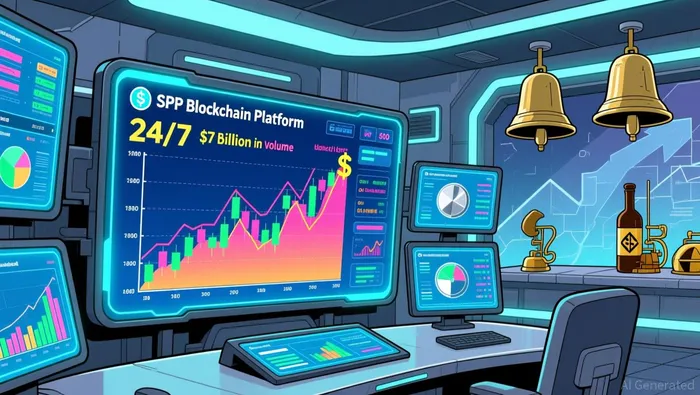
The platform's HIP-3 market experienced a $72 billion volume surge in one month, with over half coming from commodities like silver and crude oil according to platform data. Open interest on the platform doubled from $1.13 billion to $2.2 billion in March, indicating strong trader confidence. The shift reflects a broader trend where capital moves toward the fastest path to price information as analysis indicates.
Hyperliquid (HYPE) is approaching $40, driven by rising retail demand. CoinGlass data shows futures Open Interest (OI) at $1.67 billion, up over 9% in 24 hours, signaling latent demand entering the leverage market.
Technically, HYPE has broken out of a falling channel pattern on the 4-hour chart, crossing above the 50- and 200-period EMAs. A decisive close above the 50% retracement level at $38.81 could target the 78.6% Fibonacci retracement at $41.55 according to technical analysis.
How Does The S&P 500 Launch Impact Market Structure?
The launch of S&P 500 perpetual futures exemplifies a market shift from bundled traditional exchanges to unbundled, 24/7 trading structures as industry data shows. This evolution is driven by capital seeking immediate price discovery without geographic or temporal restrictions according to market analysis. Traditional markets, constrained by closing bells and regional exchanges, are being bypassed by permissionless platforms as reports indicate.
Institutions like S&P, Nasdaq, and Cboe are now responding to this behavior by introducing tokenized stocks and extended trading hours according to industry sources. The financial industry is evolving to reduce the gap between events and price expression, adopting structures that prioritize accessibility as market research shows. For instance, during a US-Israel conflict, oil-linked perpetual contracts on Hyperliquid surged as traders instantly absorbed the shock according to market data.
Hyperliquid held just under 6% of total perpetual futures trading volume in March, up from around 3.5% a year earlier. This growth is notable because overall exchange volumes declined from their August 2025 peak during the same period as analysis indicates. The increase in Hyperliquid's share points to genuine market share gains rather than a platform simply rising with broader trading activity according to market reports.
Hyperliquid's expansion into non-crypto assets is a growing part of its story, with commodities trading around the clock. This creates a structural advantage that centralized venues cannot easily replicate as market analysis shows. A trading firm looking to hedge an oil position on the CME must wait for the exchange to open on Sunday evening, carrying gap risk according to industry reports.
What Are The Fundamental Drivers For HYPE Token Value?
Hyperliquid (HYPE) serves as the governance and utility token for the Hyperliquid protocol, a high-performance decentralized exchange (DEX) according to protocol documentation. The token provides utility through governance voting, fee discounts, and potential staking for network security as platform data shows. Its valuation is driven by Total Value Locked (TVL), daily active addresses, and protocol fee generation according to market analysis.
Architecturally, Hyperliquid operates as an application-specific chain (appchain) built on the CosmosATOM-- SDK as technical documentation states. This design choice enhances scalability, security, and interoperability, allowing it to compete with established players like dYdXDYDX-- according to industry reports. Industry reports suggest that the protocol's ability to attract liquidity and integrate with other DeFi primitives is critical as market analysis indicates.
A key differentiator is Hyperliquid's deflationary model, where 97% of revenue is used to repurchase and burn HYPE tokens according to financial reports. This mechanism is designed to reduce supply and support long-term value appreciation as analysis shows. Strategic partnerships with Bitget Wallet and Ripple Prime have further bridged the gap between traditional finance and decentralized markets according to industry reports.
Hyperliquid (HYPE) is consolidating below the $45 resistance zone, supported by strengthening market positioning. The long/short ratio remains elevated near 1.47, indicating that long positions dominate and traders are positioning for upside according to technical data. On-chain data reinforces this bullish structure with the Hyperliquid Layer 1 holding $1.65 billion in Total Value Locked (TVL) as on-chain metrics show.
Perpetual futures volume has surged to $5.19 billion over 24 hours, highlighting deep liquidity and strong participation. Additionally, network activity remains stable with DEX volume around $93.7 million and application revenue exceeding $1 million according to platform data. The convergence of capital inflows, active trading, and bullish positioning suggests the current move is a continuation phase within a broader uptrend as market analysis indicates.
What Are The Risks And Regulatory Considerations For Tokenized Assets?
Despite strong performance, the token remains subject to broader market volatility and regulatory uncertainties according to market reports. Hyperliquid's tokenized stock listings are based on trademark authorization rather than regulatory approval as legal analysis shows. Tokenized stocks are classified as derivatives without shareholder rights, creating a distinct legal framework according to regulatory sources.
Market volatility also presents challenges, as evidenced by losses among long-position whale traders despite the token's overall price appreciation according to trading data. The token's price is influenced by macroeconomic trends, but its decoupling from broader crypto beta indicates strong fundamental demand as financial analysis shows.
A drop below the 200-period EMA around $37.10 would nullify the breakout and increase downside risk for the token according to technical indicators. The token's resilience during the US-Iran war highlights the platform's value proposition, offering 24/7 trading windows for commodities like crude oil. The ceasefire-linked recovery in the crypto market is heightening anticipation for further HYPE appreciation according to market sentiment.
Long-term price predictions for HYPE depend on a convergence of factors including sustained growth in core metrics as industry reports indicate. Key metrics to monitor include TVL, trading volume, protocol fee revenue, and developer activity according to market analysis. While historical market cycles provide context, sustainable value is ultimately determined by execution and the evolving DeFi landscape as experts note.
A breakdown below $30 would invalidate the bullish setup for the token price according to technical analysis. The token is testing the 50% retracement level of a recent slide at $38.81 as market data shows. A decisive close above this level could target the 78.6% Fibonacci retracement at $41.55 according to technical indicators.

Blending traditional trading wisdom with cutting-edge cryptocurrency insights.
Latest Articles
Stay ahead of the market.
Get curated U.S. market news, insights and key dates delivered to your inbox.


AInvest
PRO
AInvest
PRO



Comments
No comments yet