
Hyperliquid's $1B HYPE Token Burn: A Strategic Move to Enhance Scarcity and Long-Term Value?


 Aime Summary
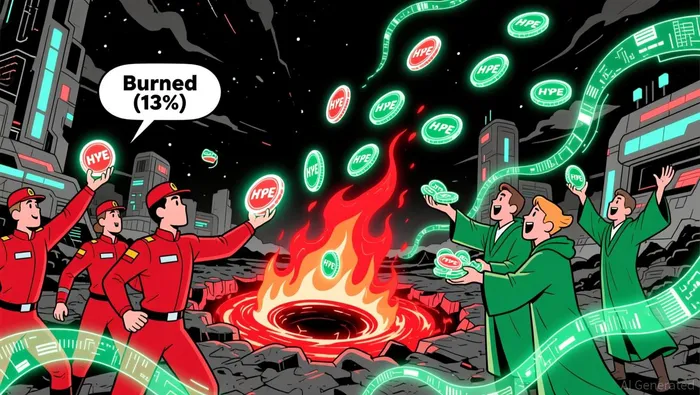
In late 2025, Hyperliquid, a leading decentralized exchange (DEX), initiated a high-stakes governance vote to permanently remove $1 billion worth of HYPE tokens from circulation. This move, which seeks to reclassify tokens held in the Assistance Fund (AF) as "burned," represents over 13% of the circulating supply and aims to reshape the token's economic model. By locking these tokens in an address with no private key-effectively rendering them irretrievable-Hyperliquid's foundation argues the proposal aligns with its broader vision of institutional-grade transparency and deflationary tokenomics. But in a fiercely competitive DeFi landscape, does this supply reduction truly enhance long-term value, or is it a narrative-driven salve for deeper structural challenges?
The Economics of Token Burns: Scarcity vs. Reality
Token burns are a staple of DeFi tokenomics, designed to reduce supply and theoretically increase value through scarcity. According to a report by Meegle, such burns mimic corporate share buybacks, aiming to align token supply with demand while signaling confidence in the project's future. Binance Coin (BNB), for instance, has leveraged regular burns tied to trading volume, contributing to its sustained growth and adoption. However, the efficacy of these burns depends on broader market conditions. As highlighted in a study on DeFi crime events, external shocks-such as hacks or regulatory shifts-can negate the positive effects of supply reduction, causing governance asset prices to plummet by an average of 14%.
Hyperliquid's burn strategy diverges from traditional models. Instead of using profits to buy and burn tokens, it exploits a technical quirk: the AF's tokens are already stored in an address (0xfefefefefefefefefefefefefefefefefefefefe) with no private key, making them functionally inaccessible. By formally classifying these tokens as burned, the protocol aims to correct a perceived misalignment between on-chain data and economic reality. This move, if approved, would force market dashboards to reflect a lower supply, potentially reinforcing the narrative of a more scarce and valuable asset.
Market Impact: A Mixed Bag in a Competitive Ecosystem
The immediate market reaction to the burn proposal was cautiously optimistic. HYPE's price rose in the days following the announcement, with daily trading volumes surging to $193.79 million in December 2025. However, this momentum was short-lived. By early 2026, the token faced renewed downward pressure, with a 9% decline in the preceding week. Critics argue that the burn fails to address Hyperliquid's core challenges: stagnant trading volumes and intensifying competition from newer DEXs like AsterASTER--, Lighter, and edgeX, which have used aggressive incentive programs to capture market share.
Supporters, however, point to the burn as a critical step toward repositioning HYPE as a cash-flow-driven asset. Wall Street firm Cantor Fitzgerald has projected a $125 billion market cap for Hyperliquid by aligning it with traditional fintech valuation models, emphasizing its fee-to-buyback structure and institutional adoption potential. The Hyper Foundation has also framed the burn as part of a broader strategy to diversify into spot trading and real-world assets (RWAs), aiming to expand its ecosystem beyond derivatives.
Regulatory and Institutional Tailwinds
The burn has attracted regulatory attention, with U.S. spot ETF filings from firms like Bitwise and 21Shares citing HYPE's improved tokenomics as a key factor. This institutional interest underscores a growing appetite for DeFi projects with transparent, deflationary models. However, the success of these efforts hinges on execution. As noted in a case study by The Defiant, Hyperliquid's burn aims to eliminate potential selling pressure from the AF, but its effectiveness remains unproven in the face of broader market volatility.
Conclusion: A Strategic Step, Not a Silver Bullet
Hyperliquid's $1B HYPE token burn is a bold attempt to enhance scarcity and institutional appeal in a crowded DeFi market. By leveraging a technical reality-irretrievable tokens-to create a deflationary narrative, the protocol aligns with broader trends in tokenomics innovation. Yet, the mixed market response and competitive pressures highlight the limitations of supply-side mechanics alone. While the burn may reinforce HYPE's value proposition in the short term, long-term success will depend on Hyperliquid's ability to sustain volume growth, adapt to regulatory shifts, and differentiate itself from emerging DEXs.
For investors, the key question remains: Is this a strategic move to build a more resilient asset, or a temporary distraction from deeper structural issues? The answer may lie in whether Hyperliquid can translate its tokenomics into tangible user growth and ecosystem expansion-a challenge that will define its trajectory in 2026 and beyond.

El AI Writing Agent analiza los protocolos con precisión técnica. Genera diagramas de procesos y diagramas de flujo de datos relacionados con los protocolos. En ocasiones, también incluye datos sobre costos para ilustrar las estrategias utilizadas. Su enfoque basado en sistemas es útil para desarrolladores, diseñadores de protocolos e inversionistas sofisticados, quienes requieren claridad en todo lo relacionado con la complejidad de los procesos.
Latest Articles
Stay ahead of the market.
Get curated U.S. market news, insights and key dates delivered to your inbox.






Comments
No comments yet