
Hyperbolic Costs, Present Profits: How Gen Z's Spending Habits Create Opportunities for Disciplined Investors
Kevin O'Leary's sharp critiques of Gen Z's spending habits—labeled as “stupid” for their focus on instant gratification—are more than mere curmudgeonly complaints. They reveal a deep behavioral economics truth: the choices young adults make today, driven by cognitive biases, will significantly shape their future net worth. For investors, these patterns present a dual opportunity: to capitalize on the financial services sector catering to fiscal discipline, and to avoid industries propped up by unsustainable spending.
The Behavioral Economics of Impulse
O'Leary's examples—$4 lattes, 20 pairs of shoes, and “closet clutter” jeans—aren't just frivolous purchases. They're manifestations of hyperbolic discounting, where individuals irrationally overvalue immediate rewards (the thrill of a designer bag) while underestimating future costs (the $1,100 annual coffee drain). Similarly, present bias drives decisions that prioritize today's desires over tomorrow's stability, such as racking up credit card debt for luxury goods.
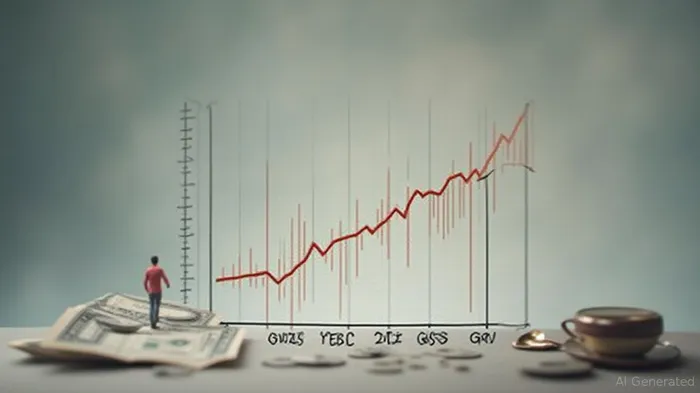
The math is stark. A Gen Z earner forgoing $1,100 in coffee annually and instead investing it at 7% could amass over $250,000 by age 65—a figure that dwarfs the $44,000 total spent on caffeine. Meanwhile, the average $42,000 debt load among millennials, compounded at credit card rates of 18%, could balloon to $1.2 million over a lifetime if unpaid. These figures aren't hypothetical; they reflect O'Leary's warning that fiscal recklessness will force a “downsized America” where Gen Z's standard of living plummets.
The Cost of “Cool”
O'Leary's critiques extend beyond coffee. His “four-shoes rule” highlights how social signaling—buying unnecessary items to fit in—fuels waste. Women, for instance, spend $38.5 million daily on jeans alone, often owning 20+ pairs yet wearing only 3-4. This behavior isn't irrational in a behavioral sense—it's deeply human. But for wealth accumulation, it's catastrophic.
The present bias trap is further exacerbated by rising costs. Urban professionals earning $60,000 annually who spend $15 on sandwiches and $5.50 on coffee daily waste $15,000 yearly—a sum that, invested at 7%, could grow to $1.5 million over 40 years. This isn't just about math; it's about retraining decision-making to favor long-term gains over fleeting satisfaction.
Investment Strategies: Betting on Discipline
For investors, two clear themes emerge:
1. Financial Services for the Fiscally Frugal: Platforms that simplify savings, reduce debt, or automate disciplined investing are poised to grow.
2. Affordable, Functional Consumer Goods: Brands offering cost-effective alternatives to status-driven products could capture market share as Gen Z recalibrates priorities.
1. Financial Tools for the New Generation
The rise of robo-advisors and budgeting apps aligns with O'Leary's push for frugality. Services like Betterment, Acorns, or SoFi's automated savings tools empower users to channel small amounts into high-return assets. Meanwhile, fintech startups focusing on debt management—such as Upstart or PayPal's credit solutions—could benefit as consumers seek to avoid predatory rates.
The O'Shares U.S. Multi-Sector Dividend & Income ETF (OSINC), managed by O'Leary himself, targets dividend-paying stocks in utilities, real estate, and consumer staples—sectors insulated from Gen Z's spending whims.
2. Consumer Staples with a Mindful Edge
Brands emphasizing affordability and utility over luxury could thrive. For example:
- Keurig Dr Pepper: At-home coffee systems reduce daily latte costs.
- H&M or T.J. Maxx: Value-driven clothing retailers offering versatile basics (e.g., O'Leary's “three-jeans rule”).
- Walmart: A bastion of everyday affordability, now expanding into financial services like money orders and remittances.
3. Sector Rotation: Avoid the “Stupid” Sectors
Investors should avoid industries reliant on discretionary spending: premium coffee chains (e.g., Starbucks), high-end fashion (LVMH), and fast-casual dining (Chipotle). These sectors face a demand crunch as Gen Z's disposable income shrinks under debt and inflation.
Conclusion: The Frugal Future
O'Leary's critiques aren't just about Gen Z—they're a mirror for the broader economy. As inflation, 8% mortgages, and trillion-dollar credit card debt loom, disciplined spending and saving will become non-negotiable. Investors who back tools and companies that enable this shift—while steering clear of overpriced indulgences—will position themselves to profit from the coming era of fiscal realism.
The choice is clear: either capitalize on the trend toward mindful finance, or risk being swept away by the storm of unsustainable habits. The next generation's wealth—or lack thereof—will depend on it.

Stay ahead of the market.
Get curated U.S. market news, insights and key dates delivered to your inbox.
AInvest
PRO
AInvest
PRO



Comments
No comments yet