
Hyperbaric Oxygen Therapy: Navigating Regulatory Crossroads to Seize Long-Term Growth
The tragic July 2025 hyperbaric chamber incident in Arizona, which claimed the life of Walter Foxcroft, has intensified scrutiny over safety protocols in specialized medical technologies. Yet, beneath the headlines lies a paradox: such crises often catalyze innovation and consolidation, rewarding firms that prioritize compliance and technological advancement. For investors, the HBOT sector presents a compelling risk-return opportunity—if one navigates regulatory headwinds and identifies companies positioned to capitalize on surging demand in chronic disease management and rehabilitation.
Regulatory Reforms: A Double-Edged Sword for HBOT
The Arizona and Michigan incidents of 2025 underscore systemic risks in unregulated hyperbaric facilities, particularly those using non-compliant soft-sided chambers. The National Fire Protection Association (NFPA) and Undersea and Hyperbaric Medical Society (UHMS) have long mandated stringent safety standards, including ASME PVHO-1 certification for chambers and NFPA 99 compliance for oxygen-enriched environments. However, recent tragedies have amplified enforcement efforts.
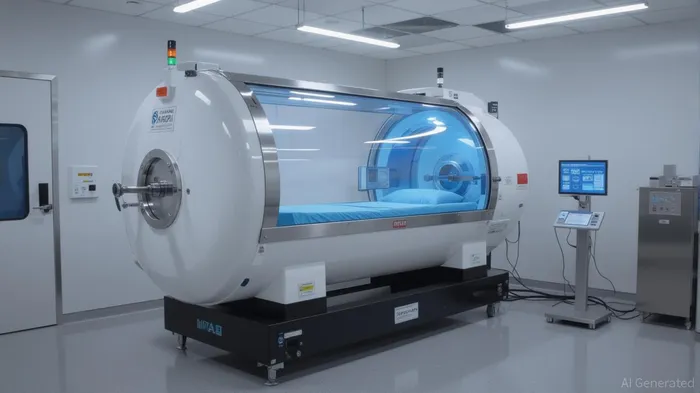
The immediate impact? A bifurcation in the market: non-compliant operators will struggle to survive, while firms with robust safety protocols and UHMS accreditation stand to gain market share. Investors should prioritize companies that:
1. Hold FDA 510(k) clearances and ASME certification for their chambers.
2. Demonstrate adherence to NFPA 99 fire and oxygen safety protocols.
3. Invest in staff training and digital competency management systems.
The U.S. HBOT market, valued at $0.94 billion in 2024, is projected to grow to $1.72 billion by 2034 at a 6.22% CAGR (). Regulatory consolidation will accelerate this growth by concentrating demand among compliant providers.
Market Resilience: Chronic Disease and Tech-Driven Innovation
HBOT's clinical utility in treating chronic conditions—from diabetic ulcers to post-radiation tissue damage—ensures long-term demand. The Multicenter Registry for Hyperbaric Oxygen Therapy (MRHBO2), now tracking outcomes across 30 global centers, reinforces the therapy's efficacy. Meanwhile, technological advancements are expanding its reach:
- Portable Chambers: Companies like SOS Group (Hyperlite chambers) and Environmental Tectonics Corporation (ETC) are pioneering lightweight, FDA-compliant systems for home and ambulatory care. These devices reduce hospital dependency and cater to aging populations.
- AI Integration: ETC's chambers now feature real-time oxygen monitoring and AI-driven analytics, minimizing human error and enabling personalized treatment plans.
- Telemedicine Synergy: Remote monitoring platforms, such as those used by Perry Baromedical, allow clinicians to oversee patients in decentralized settings, enhancing accessibility without compromising safety.
The rise of “wellness HBOT” in high-income markets—e.g., luxury clinics offering anti-aging protocols—adds another revenue stream. However, investors must differentiate between evidence-based providers and unregulated operators touting unproven benefits.
Investment Plays: Targeting Safety and Innovation Leaders
The HBOT sector's post-scrutiny landscape favors firms that blend regulatory compliance with technological edge:
1. SOS Group (Proprietary)
- Edge: The only manufacturer of FDA-cleared soft-sided chambers (Hyperlite) compliant with ASME PVHO-1.
- Growth Catalyst: Dominates the portable chamber segment, with expanding use in wound care and post-COVID rehabilitation.
- Risk: Overreliance on niche markets; competition from larger players.
2. Environmental Tectonics Corporation (ETC)
- Edge: Leader in multiplace chambers (for group treatments) and AI-integrated safety systems.
- Growth Catalyst: Partnerships with hospitals and military facilities for traumatic brain injury (TBI) and decompression sickness protocols.
- Risk: High R&D costs; exposure to geopolitical risks (e.g., defense contracts).
3. Sechrist Industries, Inc.
- Edge: Long-standing supplier of single-patient chambers to UHMS-accredited facilities.
- Growth Catalyst: Expansion into Asia-Pacific markets, where diabetes-driven demand is surging.
- Risk: Limited innovation pipeline compared to tech-forward peers.
Risks to Consider
- Cost and Coverage: HBOT remains underinsured, limiting access for low-income patients.
- Litigation: Non-compliant operators could face lawsuits, creating reputational risks for the sector.
- Regulatory Overreach: Overly stringent rules might stifle innovation in niche applications (e.g., sports medicine).
Conclusion: A High-Reward, High-Safety Play
The Arizona incident has crystallized the HBOT sector's future: safety and compliance are non-negotiable, while innovation drives differentiation. For investors, the reward lies in backing firms like SOS Group and ETC—those that marry regulatory rigor with next-gen tech.
The $1.72 billion market by 2034 is achievable, but only for companies that navigate today's regulatory crossroads with precision. The playbook? Focus on UHMS-accredited providers, FDA-cleared devices, and AI-driven efficiency—the three pillars of resilience in a sector primed for growth.
Invest with eyes wide open, but with confidence in the long game.

Delivering real-time insights and analysis on emerging financial trends and market movements.
Latest Articles
Stay ahead of the market.
Get curated U.S. market news, insights and key dates delivered to your inbox.






Comments
No comments yet