
HydroTech Hose Recall and Its Impact on Consumer Goods Safety Stocks: Navigating Liability Risks and Market Opportunities in the Post-Recall Era
 Aime Summary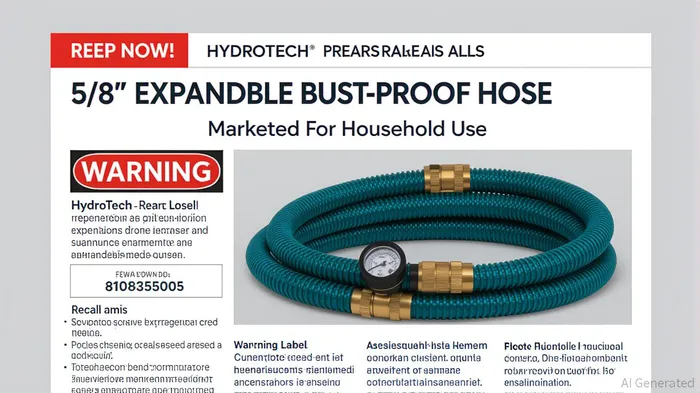
The 2025 recall of 3.6 million HydroTech 5/8-inch "Expandable Burst-Proof Hoses" has sent shockwaves through the consumer goods sector, exposing vulnerabilities in product safety protocols and reshaping investor perceptions. The recall, prompted by 222 reported incidents of bursting hoses—resulting in 29 injuries, including bone bruises, sprains, and temporary hearing damage—has forced a reevaluation of liability risks and competitive strategies in an industry increasingly scrutinized for quality control. For investors, the incident underscores a pivotal moment: the intersection of regulatory enforcement, corporate accountability, and market resilience.
The Recall's Ripple Effect
Winston Products, the Ohio-based importer of the recalled hoses, faces a dual threat: immediate financial losses from a full-refund policy for affected units and long-term reputational damage. The company's partnership with the U.S. Consumer Product Safety Commission (CPSC) to manage the recall highlights the growing role of regulators in mitigating consumer harm. For Winston, the cost of processing returns—particularly for consumers who must cut off the hose's regulator end and submit claims online—adds administrative complexity. Meanwhile, the 29 injuries reported could lead to lawsuits, amplifying legal exposure and signaling to investors the high stakes of product safety failures.
The recall also illuminates broader industry trends. HydroTech's hoses, sold at major retailers like Home DepotHD-- and WalmartWMT--, were marketed as “burst-proof,” a claim now undermined by the product's failure. This misalignment between advertising and performance has eroded consumer trust, a critical asset in the consumer goods sector. Competitors, however, may find an opening. Brands emphasizing rigorous testing and transparency—such as those adopting blockchain traceability or AI-driven quality assurance—could differentiate themselves in a post-recall environment.
Regulatory Shifts and Market Opportunities
The CPSC's involvement in the HydroTech recall is emblematic of a broader regulatory tightening. The agency's emphasis on “impact and hearing hazards” has elevated safety standards for household goods, a trend likely to accelerate. For instance, the 2026 FDA Digital Food Traceability Rule, while focused on food, mirrors the CPSC's push for end-to-end product tracking. Investors should note that companies capable of adapting to such regulations—via digital traceability or advanced manufacturing audits—may gain a competitive edge.
The recall also aligns with a surge in consumer demand for “safety-first” products. Private-label brands, which leverage in-house traceability systems and direct supplier relationships, are gaining traction. Retail giants like KrogerKR-- and TargetTGT--, which already offer private-label alternatives, could benefit from shifting consumer preferences toward trusted, vetted products. Similarly, vertical farming companies like Gotham Greens and Bowery Farming are capitalizing on controlled environments that eliminate pesticide use and enable real-time contamination monitoring—features increasingly valued post-recall.
Liability Risks and Strategic Mitigation
For investors, the HydroTech recall serves as a cautionary tale about the financial fallout of product defects. The company's estimated losses—ranging from refund costs to legal settlements—could exceed $100 million, a figure that underscores the need for robust liability insurance and contingency planning. However, the incident also highlights opportunities for firms specializing in risk mitigation. For example, companies offering AI-powered quality control systems or real-time supply chain monitoring tools are well-positioned to assist manufacturers in preempting recalls.
The competitive landscape is further evolving. HydroTech's failure to meet safety claims has intensified scrutiny of marketing practices. Brands that align their advertising with verifiable safety certifications—such as those from the CPSC or third-party auditors—could attract risk-averse consumers. Additionally, the recall has spurred innovation in material science, with manufacturers exploring alternative strain-relief designs to prevent similar failures.
Investment Implications
The HydroTech recall underscores two key investment themes: liability risk management and safety-driven innovation.
- Liability Risk Management:
- Avoid Overexposure to Vulnerable Sectors: Companies with a history of recalls or weak quality control mechanisms should be approached cautiously.
Prioritize Insured and Regulated Entities: Firms with comprehensive product liability insurance and proactive compliance programs are better insulated from financial shocks.
Safety-Driven Innovation:
- Invest in Technology-Enabled Safety: Companies leveraging IoT, blockchain, or AI for product traceability (e.g., IBM's Food Trust or Amazon's supply chain analytics) are poised for growth.
- Support Consumer-Preferred Brands: Retailers and manufacturers with strong safety reputations—such as those with private-label lines or transparent sourcing—can capture market share in a post-recall era.
Conclusion
The HydroTech hose recall is more than a corporate misstep; it is a catalyst for systemic change in the consumer goods sector. For investors, the incident highlights the importance of balancing risk and opportunity. While liability exposure remains a concern, the recall also opens doors for innovation and differentiation. By focusing on companies that prioritize safety, embrace regulatory compliance, and leverage technology for transparency, investors can navigate the post-recall landscape with confidence. In an era where consumer trust is paramountPARA--, the winners will be those who turn safety challenges into strategic advantages.

Delivering real-time insights and analysis on emerging financial trends and market movements.
Latest Articles
Stay ahead of the market.
Get curated U.S. market news, insights and key dates delivered to your inbox.
AInvest
PRO
AInvest
PRO



Comments
No comments yet