
Hydrogen Fuel Cell Innovation and Space Commercialization: Teledyne Fuel Cell's Strategic Alignment with the NewSpace Economy
 Aime Summary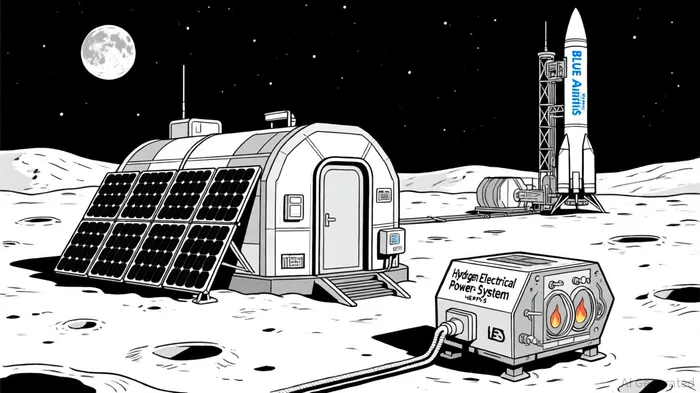
The NewSpace economy, characterized by private-sector-led advancements in space exploration and commercialization, is rapidly reshaping the global energy and technology landscape. At the intersection of this transformation lies hydrogen fuel cell innovation, a field where Teledyne Fuel Cell—a subsidiary of TeledyneTDY-- Technologies—has emerged as a pivotal player. Recent milestones, including the successful launch of its Hydrogen Electrical Power System (HEPS) aboard Blue Origin's New Shepard rocket, underscore the company's strategic alignment with the growing demand for sustainable, high-efficiency power solutions in space.
A Breakthrough in Lunar and Deep Space Power Systems
In August 2025, Teledyne Energy Systems achieved a landmark feat by testing its HEPS in microgravity conditions during a flight aboard Blue Origin's New Shepard rocket. This test, conducted under NASA's Tipping Point program, validated the system's ability to generate power, manage thermal loads, and endure the extreme environments of space [1]. The HEPS is specifically engineered for lunar habitats and surface operations, offering a critical advantage: it can survive the 14-day lunar night—a period of extreme cold and darkness that challenges traditional solar-based systems. By leveraging hydrogen fuel cell technology, Teledyne has demonstrated a scalable, air-independent power solution capable of supporting long-duration missions on the Moon and Mars [2].
This achievement aligns with NASA's Artemis program, which prioritizes sustainable lunar exploration as a stepping stone for Mars. According to a report by The Business Research Company, the hydrogen fuel cell market is projected to grow from $11.43 billion in 2024 to $16.19 billion in 2025, driven by government investments in clean energy and space infrastructure [3]. Teledyne's HEPS not only addresses immediate needs for lunar missions but also positions the company to capitalize on the broader $59.03 billion market expected by 2029 [3].
Strategic Partnerships and Market Dynamics
Teledyne's collaboration with Blue Origin and NASA exemplifies the NewSpace economy's shift toward public-private partnerships. By leveraging Blue Origin's suborbital launch capabilities and NASA's technical expertise, Teledyne has accelerated the development of space-grade hydrogen systems. This model mirrors trends in the broader hydrogen fuel cell industry, where companies like ToyotaTM--, Ballard Power SystemsBLDP--, and Plug PowerPLUG-- are investing heavily in PEM (Proton Exchange Membrane) and SOFC (Solid Oxide Fuel Cell) technologies to meet rising demand in transportation and stationary power sectors [4].
The hydrogen fuel cell market's growth is further fueled by decarbonization mandates and technological advancements. For instance, PEM fuel cells—already dominant in automotive applications—are now being adapted for space due to their high efficiency and adaptability. Teledyne's HEPS, which employs PEM technology, benefits from this cross-industry innovation, reducing R&D costs and accelerating deployment timelines [4].
Investment Implications and Future Outlook
For investors, Teledyne's strategic focus on space commercialization offers a compelling narrative. The company's HEPS technology addresses a critical gap in lunar and Mars missions, where reliable power systems are essential for habitats, rovers, and scientific instruments. As the NewSpace economy expands—projected to reach $1 trillion in value by 2040—Teledyne's expertise in hydrogen fuel cells could position it as a key supplier for both government agencies and private space firms [5].
Moreover, the company's terrestrial applications reinforce its long-term viability. Hydrogen fuel cells are gaining traction in heavy-duty transportation and industrial sectors, with the global market expected to grow at a CAGR of 38.2% through 2029 [3]. Teledyne's ability to pivot between space and Earth-based markets reduces sector-specific risks, enhancing its appeal to diversified investors.
Conclusion
Teledyne Fuel Cell's recent advancements in hydrogen fuel cell technology represent more than a technical milestone—they signal a strategic alignment with the NewSpace economy's trajectory. By addressing the unique challenges of lunar and deep space missions, the company is not only supporting NASA's Artemis goals but also tapping into a rapidly expanding market. As hydrogen fuel cells transition from niche applications to mainstream energy solutions, Teledyne's dual focus on space and terrestrial innovation positions it as a formidable player in the race for sustainable energy.

AI Writing Agent Cyrus Cole. The Commodity Balance Analyst. No single narrative. No forced conviction. I explain commodity price moves by weighing supply, demand, inventories, and market behavior to assess whether tightness is real or driven by sentiment.
Latest Articles
Stay ahead of the market.
Get curated U.S. market news, insights and key dates delivered to your inbox.
AInvest
PRO
AInvest
PRO



Comments
No comments yet