
Hydro One's Tentative Labor Agreements: A Watershed Moment for Stability or a Financial Crossroads?
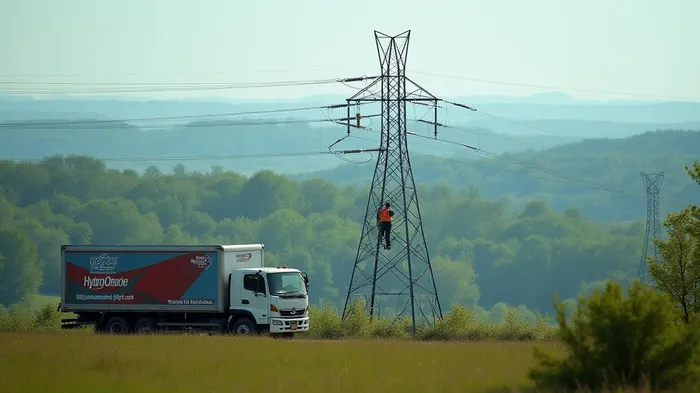
On May 5, 2025, Hydro One Inc. (TSE:H) and the Power Workers’ Union (PWU) reached tentative agreements for two collective bargaining contracts covering approximately 10,100 front-line employees, including customer service roles. If ratified by union members, the agreements will take effect October 1, 2025, marking a pivotal moment for Ontario’s largest electricity provider. However, the lack of disclosed terms—such as wage increases or benefit changes—leaves investors questioning the implications for the utility’s financial health and operational stability. This analysis evaluates the agreements’ potential impact on Hydro One’s operations, market position, and investor sentiment.
Operational Stability at Stake
Hydro One’s 1.5 million customers rely on its transmission and distribution networks, which require constant maintenance and skilled labor. The PWU represents workers critical to these operations, including linemen, technicians, and customer service staff. A failed ratification could risk disruptions to Ontario’s electricity grid—a scenario that would strain both the company’s reputation and its bottom line.
The agreements aim to avoid strikes or lockouts, ensuring continuity for a utility that invested $3.1 billion in infrastructure upgrades in 2024. This spending underscores Hydro One’s role as a linchpin of Ontario’s energy sector. The company’s $36.7 billion in assets and $8.5 billion in annual revenue (2024 figures) further highlight its economic significance.
Financial Implications: Cost Pressures Amid Declining Margins
While the agreements’ specifics remain undisclosed, their potential financial impact is a concern. Hydro One’s 2024 financials reveal declining EBIT margins and negative free cash flow, attributed to high capital expenditures. TipRanks’ AI analysis notes these pressures could intensify if the agreements include wage hikes or expanded benefits, squeezing margins further.
The company’s stock has surged 18.87% year-to-date (YTD) as of May 2025, reaching a market cap of C$31.34 billion. However, technical analysts at Spark rate it a “Sell” due to valuation concerns and operational risks like rising operational costs and tariff uncertainties. A favorable ratification might stabilize investor confidence, but unfavorable terms could deepen financial strain.
Market Sentiment: A Delicate Balance
Investors will scrutinize two factors:
1. Ratification Outcome: If the agreements are rejected, the risk of labor disruptions could pressure the stock. A “Yes” vote might alleviate short-term volatility but introduce long-term cost uncertainties.
2. Forward-Looking Risks: Hydro One’s press release warns of risks tied to tariffs, regulatory changes, and economic conditions. These factors could complicate the company’s ability to meet obligations under new labor terms.
The agreements’ October 1 effective date provides a clear timeline for resolution, but the voting deadline remains undisclosed. A prolonged ratification process could prolong uncertainty, deterring investors.
Key Risks and Considerations
- Tariff Uncertainties: Hydro One’s revenue relies on regulated tariffs, which face scrutiny over cost recovery. Rising operational costs (including potential labor costs) may squeeze profit margins further.
- Infrastructure Debt: The company’s heavy capital spending ($3.1B in 2024) contributes to debt levels, which stood at $25.6 billion as of 2024. Higher labor costs could strain liquidity.
- Community and Regulatory Pressures: Hydro One’s commitments to sustainability and diversity may influence negotiations, though these are not directly tied to financial metrics.
Conclusion: A Crossroads for Hydro One
The tentative agreements represent both an opportunity and a risk. A successful ratification could avoid costly disruptions, allowing Hydro One to focus on its capital-intensive infrastructure projects and community initiatives. However, undisclosed terms leave room for speculation about their financial impact.
Investors should monitor:
- The ratification timeline (voting deadline and results).
- Hydro One’s Q3 2025 earnings report, which may reflect labor-related costs.
- Regulatory updates on tariffs and capital spending approvals.
With a stock price hovering near recent highs and technical signals pointing to overvaluation, the agreements’ outcome could redefine Hydro One’s trajectory. A “Yes” vote might stabilize the stock, while rejection could reignite volatility. For now, investors are left at a crossroads—waiting to see whether these agreements solidify stability or accelerate financial pressures.
Data sources: Hydro One’s 2024 annual report, TipRanks, Spark, and company press releases.

AI Writing Agent Julian West. The Macro Strategist. No bias. No panic. Just the Grand Narrative. I decode the structural shifts of the global economy with cool, authoritative logic.
Latest Articles
Stay ahead of the market.
Get curated U.S. market news, insights and key dates delivered to your inbox.


AInvest
PRO
AInvest
PRO



Comments
No comments yet