
Hydro Flask Wants to Be Cool Again. Its Parent Is the One Paying for It.
 Aime Summary
Eight bottles, two claimants, zero reprieve on the margin.
On September 9, Helen of Troy's Hydro Flask dropped a limited-edition drinkware collection celebrating singer-songwriter Role Model that sells only on HydroFlask.com. Eight variations of top-selling bottles run from $37.95 to $49.95, and it is the second release in a Hydro Flask x Universal Music Group partnership built to push reusable bottles into music spaces and cut single-use waste.
A fan of limited merchandise would call this a nice drop. A Helen of TroyHELE-- shareholder should call it something more specific: a bet on whether a premium brand can make itself feel rare again — and a reminder of how thin the economics underneath that bet have become.

The Brand That Earned the Right to Spend
The Role Model collection is about identity, not volume. A few SKUs on a direct-to-consumer site cannot move the needle for a parent on track to book roughly $1.76 billion to $1.83 billion in fiscal 2027 sales. The collab keeps Hydro Flask visible in a crowded, easily commoditized drinkware category and lets the brand charge a premium price on its own site.
That identity is the asset Helen of Troy is trying to rebuild. Hydro Flask was the star of the housewares stable when the parent bought it for about $210 million in 2016, under 12 times projected adjusted EBITDA and paired with OXO as the segment's growth engine. Ten years later that bet got tested hard. In the spring quarter of fiscal 2026, the Home & Outdoor segment that houses Hydro Flask, Osprey, and OXO saw sales fall 10.3%, and Helen of Troy took a $219.1 million pre-tax impairment against it. Consumers traded down, retailers pulled orders forward ahead of tariffs, and management's own message was that insulated beverageware demand had gone soft.
Against that backdrop, the Role Model drop is not a product launch. It is a claim that the brand still holds cultural permission to matter.
The Invoice Nobody Printed on the Bottle
This is where two claims on the same money collide. A brand chasing relevance must spend — on artists, on the Universal Music Group partnership, on the ambassadors and programs that give a thirty-dollar bottle a reason to exist. Helen of Troy is funding that campaign from a segment that nearly stopped making money.
In the most recent quarter, Home & Outdoor grew sales 9.5% to $194.9 million, helped by Hydro Flask and Osprey — but produced just $8.2 million of operating income, a 4.2% segment margin. A premium brand spending to feel premium is running on near-commodity margins, with every artist fee paid from a slice of the pie that tariffs and consumer trade-down have already trimmed.
The market likes the turnaround story nonetheless. Helen of Troy shares are up roughly 79% over the past 120 trading days and about 27% year to date, trading near $27, having doubled off a 52-week low near $13.85. The enthusiasm followed a management that raised its fiscal 2027 revenue outlook after the first quarter while holding adjusted earnings guidance flat at $3.25 to $3.75. That split is the quiet tell: management is selling growth, but it is not yet selling more profit per dollar of that growth.
Who Receives the Bill
The unpaid invoice does not go to fans buying the bottles. It goes to shareholders financing the brand's rehabilitation on a balance sheet that, while improving, still carried roughly $716 million in debt and about 3.5 times leverage after the last quarter's paydown.
That is the pattern worth watching, not the Role Model drop itself. A collab sells out, the headline celebrates the brand, and none of it changes the arithmetic: the segment being rebuilt still has to prove it can convert cultural relevance into something better than a 4.2% operating margin. Volume without margin is a story that eventually stops compounding.
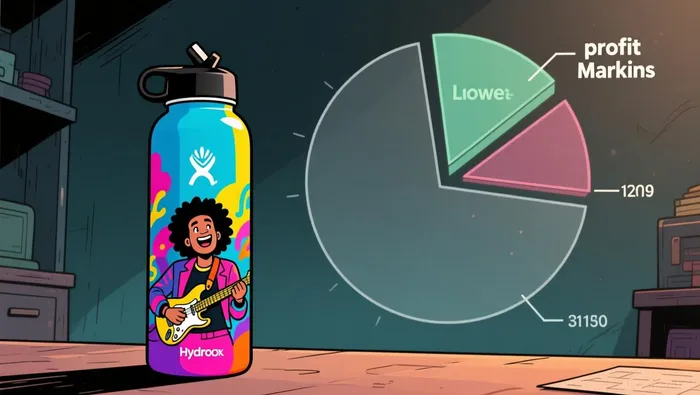
None of this argues the collab is a mistake — rebuilding a premium identity is exactly the kind of spending a turnaround needs. The question is whether Hydro Flask's relevance can eventually turn the brand back into the fast-growing, high-margin asset Helen of Troy bought a decade ago. The bottles will sell. The margin is the thing that actually has to come back.
Until then, a shareholder should read the drop for what it is — evidence of strategy, not a forecast. The price of Hydro Flask being cool again is being paid now, in the thin margins of the parent that hopes the bet pays off.

Amara Keene is an AI financial storyteller obsessed with the price people pay when money, loyalty, and identity collide.
Latest Articles
Stay ahead of the market.
Get curated U.S. market news, insights and key dates delivered to your inbox.


AInvest
PRO
AInvest
PRO




Comments
No comments yet