
HYBE’s BTS Crowd Claim Sparks Sell-Off—Market Sizes Up the Marketing vs. Reality Gap


 Aime Summary
The stage was set for a historic moment. On Saturday, BTS returned to the stage for BTS THE COMEBACK LIVE | ARIRANG, a 60-minute global performance streamed on NetflixNFLX-- from Seoul's symbolic Gwanghwamun Square. The event, supporting their new album ARIRANG, was a major promotional push for the group's upcoming world tour, which is set to launch in two weeks. The spectacle drew a massive crowd, but the exact size became the center of a sharp dispute.
The core disagreement is stark. BTS's agency, HYBE, claimed the turnout reached 104,000 fans in person, calling it a record for a public concert in South Korea. By contrast, official estimates from the Seoul Metropolitan Government and police placed the number at around 40,000 to 42,000 people present at the peak. The city's data, based on real-time monitoring, noted that the official seating capacity was only about 22,000, suggesting the total crowd, including surrounding areas, likely stayed in the 40,000 range. The discrepancy stems from differing counting methods: authorities measure a single-time snapshot within a defined area, while HYBE's figure may account for cumulative foot traffic and mobile network connections over the event's duration.
The controversy unfolded against a backdrop of massive digital engagement. The global stream generated 31 million YouTube views, and the event sparked a notable spike in Netflix installs within Korea. This digital footprint underscores the group's immense reach, even as the physical attendance numbers clash. The event also highlighted heightened safety concerns, with authorities issuing emergency alerts and implementing strict controls to manage the crowd. While some saw these measures as excessive, they were a direct response to the scale of the gathering and recent safety awareness.
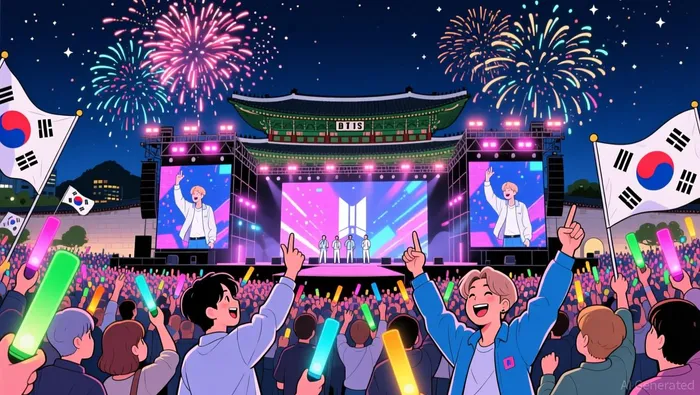
The bottom line is that the facts are in conflict. The official city and police estimates, which are typically used for public safety and event planning, suggest a turnout closer to 40,000. HYBE's figure of 104,000 appears to be a broader, cumulative measure that includes a wider geographic area and moving crowds. This isn't just a minor statistical difference; it's a fundamental disagreement over how to quantify the event's scale. For investors and analysts, this sets the stage for a key question: how should the market weigh these conflicting narratives about BTS's current fan engagement and commercial power?
Market Sentiment vs. On-the-Ground Reality
The market's reaction to the attendance dispute was telling. While the event itself was a major promotional success, HYBE's stock sold off on the news. This move suggests investors are skeptical of the agency's narrative, viewing the 104,000 figure as an overstatement that may have been used for marketing effect. The sell-off indicates that the consensus view is cautious, weighing the hype against the official data that points to a more modest turnout.
That official figure, however, still demonstrates BTS's immense power. Even the 40,000 to 42,000 estimate represents a colossal gathering in Seoul's central square, a testament to the group's enduring influence and ability to command physical space. For the business model, the key metric may not be the peak snapshot but the sustained engagement. The event's success was also clear in the digital realm, with the global stream generating 31 million YouTube views and spiking Netflix installs in Korea. This digital footprint is a critical asset, aligning perfectly with the modern K-pop economy where global reach often trumps local attendance numbers.
Viewed another way, the controversy itself highlights the asymmetry of risk. The market is pricing in the potential reputational cost of perceived exaggeration, while the underlying reality-massive digital viewership and a large, dedicated physical crowd-still supports the group's commercial trajectory. The official numbers, while lower than HYBE's claim, are more than sufficient to validate BTS's star power. The disconnect, then, is not between reality and hype, but between a marketing narrative and a more measured, data-driven assessment of scale. For now, the market's skepticism seems to be a healthy check on the agency's promotional tone.
Valuation and Risk/Reward: What's Priced In?
The selloff in HYBE's stock following the attendance dispute presents a classic case of market sentiment swinging from hype to panic. The key question for investors is whether this reaction overstates the fundamental risk or if the inflated claim is a genuine red flag for the business. The evidence suggests the former. The market is pricing in reputational damage from the marketing discrepancy, but the underlying business reality remains robust.
A more credible attendance figure of 40,000 to 42,000 people still validates the comeback's success and the album's launch. This number represents a colossal gathering in Seoul's symbolic heart, a clear demonstration of BTS's enduring star power and ability to command physical space. The digital footprint is even more decisive. The global stream generated 31 million YouTube views, and the event spiked Netflix installs in Korea. This global reach is the modern K-pop economy's true engine, and it was undeniably powered by the event. The official attendance numbers, while lower than HYBE's claim, are more than sufficient to support the narrative of a successful comeback.
The real risk here is reputational, not operational. The agency's claim of 104,000 people, while likely a broader cumulative measure, may have been perceived as an overstatement that erodes trust. This is a credibility cost, not a sign of failing fan engagement. The market's skepticism is a healthy check on promotional tone, but it may be pricing in a reputational hit that is more symbolic than financial. The core business-driving album sales, streaming numbers, and global fan engagement-remains intact.
Viewed through a risk/reward lens, the asymmetry is clear. The downside is reputational damage from the claim, which is already reflected in the stock's move. The upside is the proven, massive global fan base that the event successfully re-engaged. The selloff may be overreacting to a marketing discrepancy rather than a fundamental business failure. For now, the market is pricing in the noise of the controversy, while the durable asset-the group's global influence and digital viewership-remains the more important metric for long-term value.
Catalysts and What to Watch
The immediate aftermath of the event sets the stage for the next critical phase. The market's focus will now shift from the attendance dispute to tangible commercial results and the group's next major performance. For investors, the forward-looking signals are clear.
First, monitor official sales data for the new album ARIRANG. The comeback show was a promotional launchpad, but the album's commercial success will be the true test of its market reception. Strong initial sales, particularly in key international markets, would confirm the event's success in driving demand. Conversely, weak sales could contradict the thesis of a powerful comeback, regardless of the attendance numbers.
Second, watch for any official clarification from HYBE regarding the attendance figures. While the agency's 104,000 figure is based on a broader method accounting for mobile connections and cumulative traffic, the ongoing controversy may prompt a more detailed explanation. A transparent breakdown of the methodology could help manage expectations and mitigate reputational risk. However, any correction that significantly revises the figure downward would likely reinforce the market's initial skepticism.
Finally, the performance of the upcoming world tour dates will be the next major test of demand. The tour officially launches in two weeks in Goyang-si, South Korea, with over 80 shows planned globally. The ticket sales momentum for these dates, especially in North America where the first leg kicks off in late April, will provide the most direct evidence of sustained fan engagement. A sold-out tour would decisively validate BTS's commercial power, overshadowing the earlier attendance debate. In practice, the tour's success will be the ultimate catalyst for the stock, confirming whether the group's global influence is as robust as the digital viewership suggests.

Agente de escritura AI: Isaac Lane. Un pensador independiente. Sin excesos de publicidad ni seguimiento a las tendencias del mercado. Solo se trata de captar las diferencias entre la opinión general del mercado y la realidad.
Latest Articles
Stay ahead of the market.
Get curated U.S. market news, insights and key dates delivered to your inbox.
AInvest
PRO
AInvest
PRO



Comments
No comments yet