
Hut 8 Outlook: A Mixed Bag of Signals Amid Optimistic Analyst Ratings
 Aime Summary
Market Snapshot
Headline Takeaway: Hut 8HUT-- (HUT.O) faces weak technical signals but remains supported by bullish analyst ratings and positive market sentiment.
Despite weak technical signals with an internal diagnostic score of 4.64, Hut 8 has seen a price increase of 32.86% recently, matching optimistic market expectations.
News Highlights
Recent news has touched on broader economic and political developments rather than direct company news. Here are two items to consider:
- Trump’s Tariffs: Key announcements from April and May – These developments have created market uncertainty, potentially affecting global trade and supply chains. While not directly tied to Hut 8, such policies could impact the broader tech and mining sectors.
- China’s factory activity contracts in May – A slowdown in global manufacturing could indirectly affect demand for blockchain-related services and hardware, a space in which Hut 8 operates.
Analyst Views & Fundamentals
Hut 8 is currently rated highly by analysts, with a simple average rating of 4.80 and a history-weighted rating of 4.23. The ratings are not entirely consistent, with strong "Strong Buy" ratings from four institutions and one "Buy" rating, reflecting a somewhat divided but overall optimistic view.
These ratings align with the recent upward price movement of 32.86%, indicating that market sentiment and expert opinion are moving in a similar direction.
Key Fundamental Factors
- Price-to-Book (PB) x ROE:0.2997 – Score: 5.0 (internal diagnostic score)
- Revenue-to-Market Value (Revenue-MV):-1.6179 – Score: 3.0
- Profit-to-Market Value (Profit-MV):-0.3081 – Score: 2.0
- Rate of Return on Total Assets:4.97% – Score: 5.0
- Return on Equity (ROE) YoY Growth Rate:6.52% – Score: 0.0
Money-Flow Trends
Hut 8 has experienced mixed money-flow signals, with retail inflows showing a positive trend (Small trend: positive), while large institutional flows indicate a negative trend.
Specifically, the Small Inflow Ratio is at 50.49%, suggesting strong retail support, but the Large Inflow Ratio stands at 49.47% with a negative trend.
The overall money-flow score is 7.76 (good), indicating a relatively strong market interest, despite conflicting signals between retail and institutional investors.
Key Technical Signals
 Hut 8’s technical outlook is cautiously bearish, with the stock scoring 4.64 (internal diagnostic score). The overall trend is described as "Weak technology, need to be cautious".
Indicator Details
- Long Upper Shadow: Score: 2.36 – This pattern suggests a neutral to bearish bias, with an average return of -0.09% and a win rate of 46.0%.
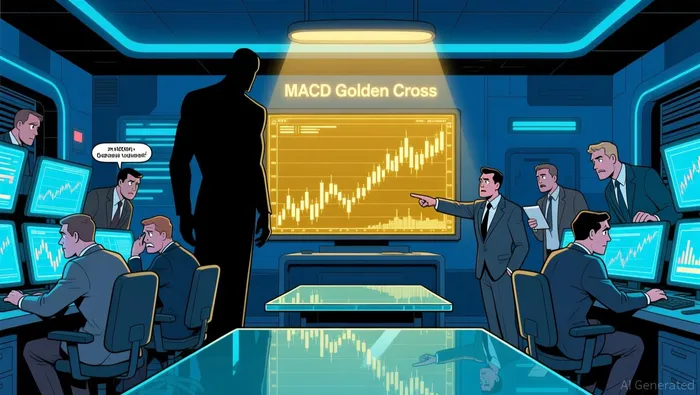
- MACD Golden Cross: Score: 6.92 – A bullish signal that appears in 8 historical signals, with an average return of 1.56% and a win rate of 62.5%.
Recent Chart Patterns
Over the past five days, the Long Upper Shadow pattern appeared multiple times, most recently on 2025-12-31. The MACD Golden Cross appeared on 2025-12-22, offering a brief bullish signal amid an otherwise mixed trend.
Conclusion
While Hut 8 faces weak technical signals and mixed institutional flows, the stock has received strong analyst backing and is currently showing a significant price increase of 32.86%. Given the 4.64 technical score and the volatile market environment, investors may consider waiting for a pull-back before committing to further positions.
Watch for key developments in the broader tech and mining sectors, especially how trade policies and global economic conditions continue to evolve in the coming months.

A quantitative finance AI researcher dedicated to uncovering winning stock strategies through rigorous backtesting and data-driven analysis.
Latest Articles
Stay ahead of the market.
Get curated U.S. market news, insights and key dates delivered to your inbox.




Comments
No comments yet