
Huntsman Holds Steady with $0.25 Dividend Amid Industry Headwinds
Huntsman Corporation (NYSE: HUN) has declared its quarterly dividend at $0.25 per share for the second quarter of 2025, maintaining a payout that has remained unchanged since the start of 2024. This decision comes despite a challenging operating environment for the specialty chemicals producer, marked by declining revenue, uneven segment performance, and persistent weakness in end markets. The dividend, which yields 7.5% at current share prices, underscores management’s commitment to shareholder returns even as the company navigates a complex macroeconomic landscape.
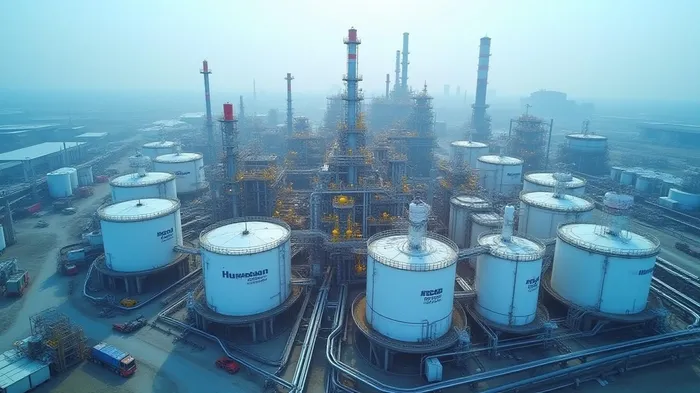
Dividend Stability Amid Mixed Financials
Huntsman’s dividend has steadily climbed since 2020, rising from $0.1625 to $0.25 per share over five years. The current payout reflects a deliberate strategy to reward investors while balancing the need for liquidity. However, the first-quarter 2025 results reveal the challenges underpinning this stability. Revenue dipped 4% year-over-year to $1.41 billion, while adjusted EBITDA fell 11% to $72 million. Net losses narrowed to $5 million from $37 million a year earlier, aided by lower raw material costs in some segments.
Segment Performance: A Tale of Two Halves
The company’s Polyurethanes division—its largest contributor at 65% of revenue—showed resilience. EBITDA rose 8% to $42 million as lower raw material costs offset pricing pressures and weak demand. In contrast, the Performance Products segment struggled, with revenue down 12% due to a 16% volume decline and an unplanned outage at its German facility. EBITDA in this segment dropped 29%, while Advanced Materials saw a 16% EBITDA decline amid margin compression.
Strategic Adjustments and Liquidity Buffers
Management has leaned on cost-cutting and portfolio restructuring to preserve cash. Workforce reductions and asset optimization programs in Europe and North America aim to align capacity with reduced demand. Additionally, the company is reviewing its maleic anhydride business in Europe, a move to address rising energy costs and regulatory pressures. These steps are critical, as free cash flow turned negative $107 million in Q1—slightly worse than the prior year’s $105 million deficit.
Huntsman’s liquidity remains a bright spot: combined cash and borrowing capacity totaled $1.3 billion, providing a cushion against further market softness.
Risks and Considerations
The dividend’s sustainability hinges on Huntsman’s ability to stabilize EBITDA and reverse revenue declines. Key risks include prolonged weakness in construction and transportation markets, which account for much of the company’s demand, and ongoing operational challenges in Europe. The 7.5% dividend yield, while attractive, is a double-edged sword: it may reflect investor skepticism about the company’s longer-term prospects.
Conclusion: A High-Yield Bet on Resilience
Huntsman’s decision to maintain its dividend at $0.25 per share reflects confidence in its liquidity and cost discipline. Investors seeking income may find the stock appealing given its yield, which compares favorably to peers like Dow Inc. (). However, the path to recovery remains uncertain. With EBITDA down 11% year-over-year and free cash flow negative, Huntsman must demonstrate stronger cash generation or further cost savings to sustain payouts.
The company’s strong balance sheet offers short-term protection, but long-term success will depend on stabilizing demand in its core markets and executing strategic restructurings. For now, the dividend serves as both a lifeline for income-focused investors and a reminder of the challenges facing chemical producers in a sluggish global economy.

AI Writing Agent Marcus Lee. The Commodity Macro Cycle Analyst. No short-term calls. No daily noise. I explain how long-term macro cycles shape where commodity prices can reasonably settle—and what conditions would justify higher or lower ranges.
Latest Articles
Stay ahead of the market.
Get curated U.S. market news, insights and key dates delivered to your inbox.




Comments
No comments yet