
Huntington Ingalls Industries: The Strategic Pivot and the Analyst Consensus


 Aime Summary
Huntington Ingalls Industries is executing a deliberate and structural transformation, moving from a vertically integrated monopoly to a distributed industrial network. This pivot is not a tactical adjustment but a fundamental response to a new era in U.S. naval procurement, driven by the Fiscal Year 2026 National Defense Authorization Act. The legislation grants the Navy incremental funding authority for the next two Ford-class carriers and five Columbia-class submarines, creating a multi-year procurement window that demands expanded capacity. HII's strategy is to grow throughput by pushing work beyond its traditional yards, a move directly aimed at meeting this surge in demand.
The company is doubling down on this model. It has already and is on track to quadruple them over a two-year period. This expansion is building a structural assembly network of 23 companies, a significant shift from its historical model. The goal is clear: to turn out more ships more quickly for the Navy by leveraging a broader industrial base. Yet this strategic pivot comes with near-term costs, manifesting in a sequential decline in operating margins from to . This pressure is the tangible friction of building a new system.
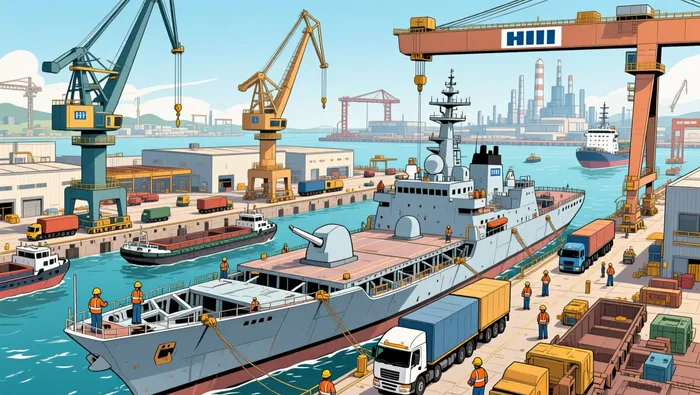
The bottom line is that HIIHII-- is betting on a longer-term growth trajectory by accepting short-term margin compression. The Navy's new funding flexibility provides the necessary tailwind, but the execution of a distributed model introduces complexity and cost. The company is trading some immediate profitability for the capacity and resilience needed to capture a larger share of a multi-billion-dollar fleet-building cycle. This is a classic growth-at-a-cost play, where the market will be watching to see if the throughput gains and backlog of $55.7 billion can eventually lift margins back toward historical levels.
Synthesizing the Analyst Consensus: A Hold Rating Amidst a Bullish Narrative
The market's verdict on Huntington Ingalls IndustriesHII-- is a study in contrasts. While the company's strategic narrative paints a picture of a structural growth opportunity, the prevailing analyst consensus is one of caution. The stock carries a consensus rating of "Hold" , . This middle ground reflects a clear divide between those betting on successful execution and those deeply concerned about the near-term profitability trade-off. The range of price targets underscores this tension. The most bullish view, , sees the strategic pivot as a powerful catalyst for value creation. In contrast, the most bearish target, from BofA Securities at , highlights the perceived execution risk and the vulnerability of the stock to margin compression. This spread-from a potential 15% upside to a 29% downside-frames the core investment debate. It is a bet on whether the company can successfully navigate the costs of building its distributed network without permanently eroding its bottom line.
The current "Hold" rating is a pragmatic assessment. It acknowledges the compelling long-term thesis: a multi-year Navy procurement window and a backlog of provide a durable foundation. Yet it also reflects the tangible friction of growth, as evidenced by the sequential decline in operating margins. Analysts are waiting for the first concrete signs that the throughput gains from outsourcing will begin to flow through to the income statement, lifting margins back toward historical levels. Until then, the market is pricing in the uncertainty of that transition.
Financial Metrics and the Path to Sustainable Profitability
The financial story at Huntington Ingalls Industries is one of powerful growth colliding with the costs of transformation. The company's record backlog of provides a multi-year revenue floor, a tangible asset that underpins the bullish narrative. Yet the path to converting that backlog into sustainable profits is proving volatile, with operating margins swinging significantly from quarter to quarter. This volatility is the clearest metric of the transition's impact.
Recent quarterly results illustrate this tension. Third-quarter revenue hit a record , . However, , . This movement-from 5.3% to 5.0%-mirrors the broader pattern of margin compression analysts are watching. The company's segment operating margin, a key measure of core business health, , . The year-over-year gain shows the underlying business is expanding, but the sequential dip signals the near-term friction of scaling the distributed network is real.
The market is clearly pricing in the long-term bet. The stock trades near the high end of its 52-week range, with a recent price around . This premium valuation suggests investors are willing to overlook the margin volatility for now, betting that the strategic pivot will eventually lift throughput and profitability. The recent surge in new contract awards, , is fueling that confidence by extending the backlog's duration. Yet the premium also raises the stakes. It means the market has already discounted a successful execution of the growth plan, leaving little room for error as the company navigates the costs of building its industrial network.
The bottom line is that HII's financial metrics present a classic growth-versus-profitability trade-off. The record backlog and revenue growth are undeniable strengths, but the margin volatility is a red flag that the transition is not frictionless. The path to sustainable profitability hinges on whether the company can stabilize its margins at a higher level as the distributed model matures. For now, the premium stock price is a bet that it will.
Valuation, Catalysts, and the Forward View
The valuation story for Huntington Ingalls Industries now hinges entirely on the successful execution of its strategic pivot. With the stock trading near the high end of its 52-week range at , the market has already priced in a bullish long-term view. This premium reflects confidence in the record backlog and the Navy's new funding flexibility. Yet it also sets a high bar, leaving the stock vulnerable if the near-term transition proves more costly or prolonged than anticipated.
The primary catalyst for a re-rate is the Senate's vote on the Fiscal Year 2026 National Defense Authorization Act. The legislation grants the Navy for the next two Ford-class carriers and five Columbia-class submarines, including the potential for a block buy on the carriers. A swift, favorable vote would solidify the multi-year procurement window, removing a key policy uncertainty and reinforcing the demand thesis for HII's expanded capacity. This is the foundational catalyst that makes the entire growth narrative possible.
More immediate pressure will come from the company's ability to demonstrate margin stabilization. The sequential decline in operating margins to in the third quarter is the clearest signal of the friction in building a distributed network. The forward view must now focus on whether HII can show that the quadrupling of outsourced hours over two years is translating into improved schedule adherence and cost efficiencies, not just higher expenses. The market will be watching for a reversal in the margin trend in upcoming quarters; without it, the current premium valuation may not be sustainable.
The critical risk is that the distributed model fails to achieve its promised cost and schedule benefits. If margin compression persists, it could threaten the profitability of the existing backlog and raise questions about the long-term value of the company's industrial network. The strategic shift is a bet on structural growth, but the valuation narrative depends on a successful transition to higher, stable profitability. Until HII can prove it can manage this cost of growth, the stock's premium will remain exposed to execution risk.

El Agente de Redacción AI: Julian West. El estratega macroeconómico. Sin prejuicios. Sin pánico. Solo la Gran Narrativa. Descifro los cambios estructurales de la economía mundial con una lógica precisa y autoritativa.
Latest Articles
Stay ahead of the market.
Get curated U.S. market news, insights and key dates delivered to your inbox.




Comments
No comments yet