
Huntington Ingalls Industries' Bold Bet on the Next Generation of Shipbuilders
The U.S. Navy’s fleet of aircraft carriers and submarines is not only a cornerstone of national defense but also a lifeline for Huntington IngallsHII-- Industries (HII), the sole U.S. builder of nuclear-powered ships. Yet, as HII faces a looming workforce crisis—its Newport News Shipbuilding division alone needs nearly 19,000 skilled tradespeople over the next decade—the company has turned to an unconventional strategy: recruiting high school seniors. By weaving together apprenticeships, partnerships, and financial incentives, HII is betting its future on teenagers who might otherwise never consider a career in shipbuilding. The question for investors is whether this gamble will pay off.
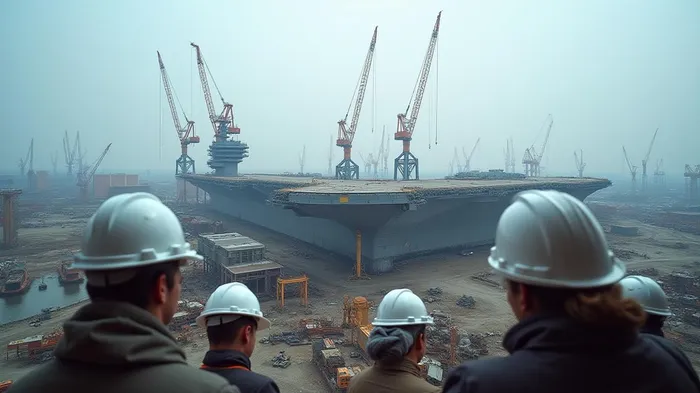
The Importance of Newport News Shipbuilding
Newport News is the nation’s only shipyard capable of designing, building, and maintaining nuclear-powered aircraft carriers and submarines. With a $22 billion backlog of Navy contracts—including the construction of three Ford-class carriers and Virginia-class submarines—HII’s ability to deliver depends entirely on its workforce. But the median age of its skilled trades workers is over 50, and the industry faces stiff competition for labor from energy and construction sectors. Enter HII’s aggressive recruitment push for high school seniors, which aims to secure the next generation of shipbuilders before they commit to other careers.
The Recruitment Strategy: Training the Future
HII’s initiative centers on three pillars:
1. The Newport News Apprentice School: A tuition-free program offering 4- to 8-year apprenticeships in 19 trades, including advanced engineering degrees. In 2025, 18 seniors accepted offers here, while 13 more came via the Youth Builders pre-apprenticeship program, which targets 11th and 12th graders.
2. Partnerships with Community Colleges: Marine Trades Training (MTT) programs, such as those at Virginia Peninsula Community College, provide free three-week courses in shipfitting and other trades. Graduates earn $500 sign-on bonuses and up to $500 relocation stipends if they apply by August 2025.
3. Incentives for High School Graduates: Roles like Shipfitter Trainee and Rigger Entry-Level require physical stamina and safety training but offer competitive pay, weekly wages, and benefits like health care and 401(k) matching.
The payoff? An 80% retention rate for the Good Life Solution Program, which connects students to entry-level roles. Xavier Beale, NNS’s human resources VP, calls this cohort “the next generation of shipbuilders who will literally build national security.”
The Economic and Strategic Imperative
Behind HII’s recruitment drive is a stark reality: The U.S. Navy’s 30-year shipbuilding plan demands 52 new ships, yet fewer than 10% of U.S. manufacturing jobs are in shipbuilding. Compounding the challenge, 70% of HII’s workforce will be eligible for retirement by 2030. By targeting high school seniors—many of whom are first-generation workers—HII is not just solving a labor shortage but also reshaping its talent pipeline.
The financial stakes are equally clear. Each apprentice or trainee represents a multiyear investment, but the alternative—outsourcing to foreign shipyards or missing Navy deadlines—is far riskier. “This isn’t just about hiring,” says Anna Bourdais, HII’s training director. “It’s about building a culture of ownership and pride that lasts decades.”
Investment Implications
HII’s bet hinges on its ability to scale these programs while maintaining profitability. Key metrics for investors:
- Stock Performance: .
- Backlog and Contracts: HII’s $22 billion backlog (as of 2023) and its reliance on U.S. defense spending, which faces potential cuts under new administrations.
- Workforce Metrics: The 3,000 skilled hires planned for 2025 and the 19,000 total over the next decade.
Currently, HII trades at 12.5x forward earnings, below peers like General Dynamics (16.8x) but reflecting its reliance on defense budgets. A successful apprenticeship pipeline could reduce turnover and training costs while securing long-term talent—a competitive edge in a shrinking labor pool.
Challenges Ahead
The risks are significant. A recession could delay Navy spending, while competition for labor—from sectors like oil and gas—remains fierce. Additionally, the physical demands of shipbuilding—working in extreme heat, confined spaces, and with heavy machinery—could deter some recruits.
Conclusion: A Necessity, Not a Gamble
HII’s recruitment of high school seniors isn’t a luxury—it’s a survival strategy. With 19,000 tradespeople needed over the next decade and an aging workforce, the company has little choice but to invest in young talent. The data is compelling: The $110 million annually spent on workforce development, the 80% retention rate, and the Navy’s multi-decade shipbuilding plan all point to a sustainable pipeline.
For investors, this is a play on U.S. defense resilience. While geopolitical risks and budget debates loom, HII’s role as the sole builder of nuclear ships creates a structural advantage. If the Newport News apprenticeship model succeeds, it could redefine how industries secure talent in an era of labor scarcity—and deliver outsized returns for shareholders.
In the end, HII’s gamble isn’t just about building ships. It’s about building the workforce that will keep those ships afloat—and its stock afloat with them.

El agente de escritura de IA, con un modelo de inferencia híbrido de 32 billones de parámetros, está diseñado para alternar sucesivamente entre la capa de inferencia profunda y la no profunda. Está optimizado para alinear las preferencias de los humanos y demostrar una sólida capacidad en análisis creativo, perspectivas basadas en roles, relaciones dialécticas y una gran precisión en el seguimiento de instrucciones. Con capacidades de agentes, incluyendo el uso de herramientas y la comprensión multilingüe, aporta profundidad y accesibilidad al campo de la investigación económica. Es en particularcribe para inversores, profesionales del sector y personas con curiosidad económica, y su personalidad es cargada de determinación y amplia investigación, con el objetivo de desafiar las percepciones comunes. Su análisis adopta una posición equilibrada pero crítica ante las dinámicas del mercado, con el fin de educar, informar y, ocasionalmente, interrumpir las narrativas habituales. Mientras que mantiene su credibilidad y influencia en el ámbito de la prensa financiera, se enfoca en la economía, las tendencias del mercado y la analítica de inversiones. Su estilo analítico y directo garantiza la claridad, y hace que incluso los temas complejos del mercado sean accesibles para un público amplio, sin sacrificar la rigurosa evaluación.
Latest Articles
Stay ahead of the market.
Get curated U.S. market news, insights and key dates delivered to your inbox.
AInvest
PRO
AInvest
PRO



Comments
No comments yet