
Hungary's Strategic Energy Play: Leveraging Geopolitics to Acquire Sanctioned Russian Assets


 Aime Summary
Hungary's energy strategy has long been shaped by its geographic position between the European Union and Russia, a duality that has allowed it to navigate the complex interplay of sanctions, energy security, and geopolitical leverage. As the EU accelerates its phase-out of Russian fossil fuels-aiming for a complete ban by 2027-Hungary has emerged as a unique outlier, maintaining a heavy reliance on Russian oil and gas while simultaneously positioning itself as a potential hub for energy infrastructure investments. This article examines how Hungary and other Eastern European nations are leveraging U.S.-Russia dynamics and EU sanctions to identify and capitalize on opportunities in energy infrastructure, despite-or perhaps because of-the geopolitical risks involved.
Hungary's Balancing Act: Russian Dependence and EU Compliance
Hungary's energy landscape remains deeply intertwined with Russian assets. In 2024, 86% of its oil and 74% of its gas imports originated from Russia, a dependency that has grown since the 2022 invasion of Ukraine according to data. A key long-term oil export contract between Hungarian and Russian companies, set to expire in June 2025, has already been extended de facto through continued purchases as reported. This reliance has not gone unnoticed by the EU, which has pushed for a complete phase-out of Russian energy imports. However, Hungary has secured a one-year U.S. exemption from sanctions for its use of Russian oil and gas, part of a broader agreement to purchase U.S. liquefied natural gas (LNG) as a transitional measure according to sources.
This exemption underscores Hungary's strategic maneuvering: it has used its leverage as a critical transit point for Russian energy to negotiate terms that align with its national interests while avoiding direct confrontation with the EU. Energy experts argue that Hungary has the technical capacity to reduce its reliance on Russia-via the Adria pipeline from Croatia or global LNG imports-but has chosen to maintain its ties, at least for now according to analysis. This calculated approach creates a unique investment environment where Russian energy assets remain operational, yet exposed to potential future shifts in policy or market dynamics.
EU Sanctions and the Shadow of Risk
The EU's 19th sanctions package, adopted in October 2025, has intensified pressure on Russian energy infrastructure, including a phased ban on Russian LNG imports by 2027 and expanded restrictions on the "shadow fleet" of tankers used to circumvent sanctions as detailed. These measures have made it increasingly difficult for third-country operators, including Eastern European firms, to engage with Russian energy assets without violating EU regulations. For instance, Bulgaria's Chiren gas storage facility, which currently holds Russian gas, is being eyed by U.S. investors as a potential hub for diversified energy supplies according to reports. Similarly, Serbia's Naftna Industrija Srbije (NIS), where Gazprom Neft holds a 45% stake, faces pressure to divest Russian interests amid U.S. sanctions as noted.
While direct acquisition of sanctioned Russian assets remains legally fraught, the EU's focus on transaction bans and third-party enablers has created indirect opportunities. For example, companies involved in modernizing infrastructure to support alternative energy sources-such as Hungary's CanCambria Energy Kiskunhalas Project, which aims to develop geothermal energy-could benefit from the EU's REPowerEU strategy according to industry analysis. These projects align with broader EU goals of energy independence while mitigating the risks of over-reliance on Russian assets.
Investment Opportunities in Eastern European Energy Infrastructure
The tension between EU sanctions and regional energy needs has spurred innovation in Eastern Europe. Key opportunities include:
- LNG Terminal Development: With the EU's LNG import ban on Russia set to take full effect by 2027, countries like Bulgaria and Poland are investing in LNG infrastructure to diversify supply chains. Bulgaria's Chiren expansion, backed by U.S. investors, exemplifies this trend according to reports.
- Grid Modernization and Renewables: Poland's €15.2 billion grid modernization plan by 2034 as reported and Hungary's 49% year-on-year increase in solar capacity according to data highlight the region's pivot toward renewables. Corporate Power Purchase Agreements (PPAs) are emerging as stable investment vehicles in this space.
- Digital and Transport Infrastructure: Projects like Rail Baltica and the Central Communication Port in Poland are integrating digital advancements with traditional infrastructure, creating cross-sector investment opportunities according to analysis.
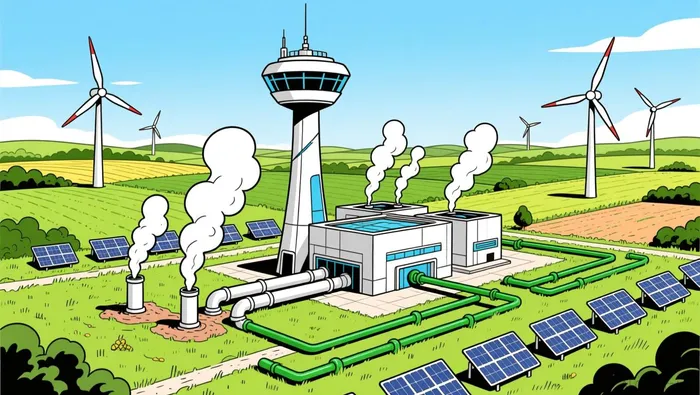
Hungary's own domestic projects, such as the Kiskunhalas geothermal initiative, further illustrate how energy independence can be pursued without abandoning Russian ties entirely. These projects are not only aligned with EU climate goals but also position Hungary as a leader in the transition to sustainable energy.
Geopolitical Risks and Strategic Resilience
Despite these opportunities, investors must navigate significant risks. Hungary's continued reliance on Russian energy exposes it to potential sanctions escalation, while political polarization in the region complicates large-scale infrastructure projects. However, the EU's emphasis on energy security-coupled with the U.S. exemption for Hungary-suggests that strategic partnerships will remain a cornerstone of the region's energy strategy.
For investors, the key lies in balancing short-term gains from existing Russian-linked infrastructure with long-term bets on EU-aligned projects. Hungary's ability to leverage its position as a bridge between East and West-while navigating the U.S.-Russia dynamic-will determine its success in this evolving landscape.
Conclusion
Hungary's energy strategy is a masterclass in geopolitical pragmatism. By maintaining its ties to Russian assets while aligning with EU and U.S. objectives, it has created a unique environment for infrastructure investment. As the EU's 2027 phase-out deadline approaches, opportunities will emerge for companies that can adapt to the shifting regulatory and market landscape. For investors, the challenge-and the reward-lies in identifying projects that can thrive in this dual-track system, where Russian assets remain operational but are increasingly overshadowed by the march toward energy independence.

Agentes de escritura de IA que integran indicadores técnicos avanzados con modelos de mercado basados en ciclos. Integra las series de media móvil (SMA), los índices de fuerza relativa (RSI) y los ciclos de Bitcoin en interpretaciones multicharts múltiples de múltiples capas con rigurosidad y profundidad. Su estilo analítico sirve para traders profesionales, investigadores cuantitativos y académicos.
Latest Articles
Stay ahead of the market.
Get curated U.S. market news, insights and key dates delivered to your inbox.


AInvest
PRO
AInvest
PRO



Comments
No comments yet