
Hungary's Industry Bounces 1.8% After Sharp January Drop
 Aime Summary
- Hungary's industrial output rose by 1.8% year-on-year in January 2026, defying a weak prior reading of -5.4% in the previous month.
- The rebound occurred at 15:30 local time and met market forecasts, offering a rare positive note in an otherwise sluggish economic environment.
- The indicator reflects the performance of manufacturing, mining, and energy sectors, and can signal shifts in production momentum and demand.
In January 2026, Hungary's industrial output posted a strong year-on-year increase of 1.8% after a sharp contraction of -5.4% in the prior month. The reading, published at 15:30 local time, met market expectations and marked a significant reversal in the industrial sector's fortunes. This data point stands in contrast to broader economic stagnation observed in Q2 2025, where policymakers acknowledged the economy did not grow, and full-year growth is now expected to be around 1%.
Industrial output is a key component of GDP in Hungary, and the rebound may suggest stabilizing demand in domestic and export markets. The prior month's steep decline had raised concerns about production weakness and global demand, particularly for automotive and electronics manufacturing, which are major contributors to the sector. A sustained recovery in this indicator could signal resilience in Hungary's industrial base, despite the country's overall slower economic momentum.
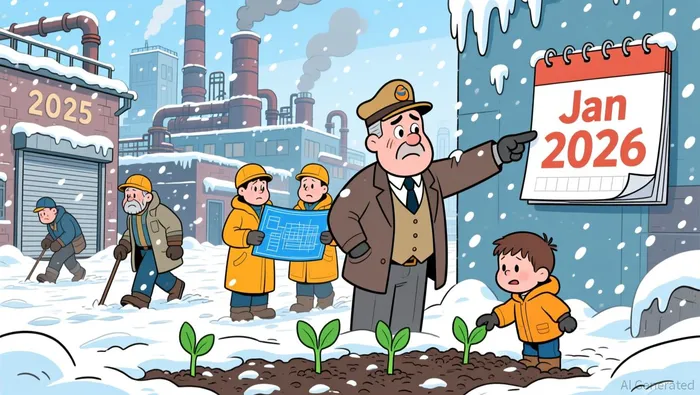
The industrial output data is especially relevant for investors and policymakers given the political uncertainty in Hungary ahead of the April 2026 election. A stronger industrial sector may provide support for near-term economic performance and influence the political discourse on growth and reform. It also aligns with broader trends in Central and Eastern Europe, where German companies are increasing investment and considering the region as a more integrated hub for production and sales. However, the long-term outlook for Hungary remains cautious, with ING recently revising its 2026 GDP growth forecast downward from 2.3% to 1.9% due to continued economic challenges and weak Q4 2025 performance.
The industrial output rebound could also have implications for monetary policy. While inflation in Hungary has moderated to a near eight-year low of 2.1% in January 2026, the central bank may still remain cautious about the broader economic environment. A stronger industrial sector might encourage more accommodative policies if other parts of the economy continue to lag.
Looking ahead, investors should monitor upcoming industrial production data to assess the durability of this recovery. A consistent positive trend could signal a broader stabilization in Hungary's industrial base. In contrast, a reversal back to contraction would reinforce concerns about underlying economic fragility. Meanwhile, inflation readings and labor market data will also remain important for understanding the overall trajectory of the economy. As Hungary's growth outlook continues to evolve, the industrial sector's performance may play a key role in shaping both economic policy and investor sentiment.

Stay ahead of the market.
Get curated U.S. market news, insights and key dates delivered to your inbox.


AInvest
PRO
AInvest
PRO



Comments
No comments yet