
Hungary's Industrial Output Surges 10%, Complicating Inflation Fight
 Aime Summary
- Hungary's July industrial output surged 10.1% year-over-year, a significant acceleration from the -0.4% contraction recorded in June.
- The data signals a robust rebound in domestic manufacturing activity, driven by a recovery in core industrial sectors.
- Rising industrial output often correlates with increased domestic demand, which may pose challenges for central bank inflation targets.
- Market participants are monitoring subsequent inflation data to assess whether this production surge translates into broader price pressures.
Hungary's industrial sector posted a dramatic turnaround in July, with year-over-year output jumping to 10.1% from the previous month's -0.4% contraction. This sharp acceleration underscores a notable recovery in the country's manufacturing base, providing a critical data point for investors assessing the trajectory of the Hungarian economy amid shifting global trade dynamics. The reversal from a near-stagnant reading in June suggests that underlying industrial demand is stabilizing, though the sustainability of this momentum remains subject to external economic headwinds.
What Does the Hungarian Industrial Output Data Reveal About Economic Momentum?
The 10.1% year-over-year expansion in Hungary's industrial output represents a decisive break from the stagnation observed in the previous month. When industrial production shifts from negative territory into double-digit positive growth, it often indicates a strengthening in the core manufacturing engine of the economy. This metric is particularly vital for Hungary, an export-oriented economy where industrial activity serves as a leading indicator for broader economic health. The data suggests that factory activity is not only recovering but accelerating at a pace that outpaces the modest growth seen in other sectors.
Historically, industrial output data is interpreted as a gauge of real economic activity, reflecting the volume of goods produced by mining, utilities, and manufacturing. The jump from -0.4% to 10.1% is statistically significant and points to a potential inflection point in the business cycle. Such a surge may be driven by a variety of factors, including seasonal adjustments, a recovery in global supply chains, or increased domestic consumption. For macro observers, this level of volatility in month-over-month readings highlights the sensitivity of the Hungarian industrial sector to both internal policy shifts and external demand shocks.
While the headline number is overwhelmingly positive, it is important to contextualize this rebound within the broader economic landscape. A single month of strong data does not automatically confirm a long-term trend, but it does alleviate concerns about a prolonged industrial downturn. Investors often look for consecutive months of positive growth to confirm a sustained recovery. Nevertheless, the 10.1% figure provides a strong foundation for optimism, suggesting that the industrial sector is regaining its footing after a period of weakness.
Why Are Investors Watching Industrial Production and Inflation Now?
The relationship between industrial output and inflation is a critical focus for macro investors, particularly in an environment where central banks are navigating the delicate balance between growth and price stability. Rising industrial production can lead to increased demand for raw materials, energy, and labor, all of which contribute to cost-push inflation. In Hungary, where inflation has been a persistent challenge, a sharp rise in manufacturing activity may complicate the central bank's efforts to bring price growth back to target levels.
If industrial output continues to accelerate, it could signal that the economy is overheating. This scenario often prompts central banks to maintain or even tighten monetary policy to prevent inflation from becoming entrenched. For currency traders, this dynamic is particularly relevant, as higher interest rates typically support the local currency. The Hungarian Forint (HUF) may benefit if the central bank signals a hawkish stance in response to robust industrial data and persistent inflationary pressures.
Furthermore, the divergence between industrial output and other economic indicators can provide valuable insights. If consumer spending or retail sales do not keep pace with industrial production, it could lead to inventory buildups, which might dampen future factory orders. Conversely, if the production surge is matched by strong demand, it would reinforce the case for economic resilience. Investors are advised to monitor subsequent releases, such as retail sales and consumer confidence indices, to gauge whether the industrial rebound is translating into broader economic strength.
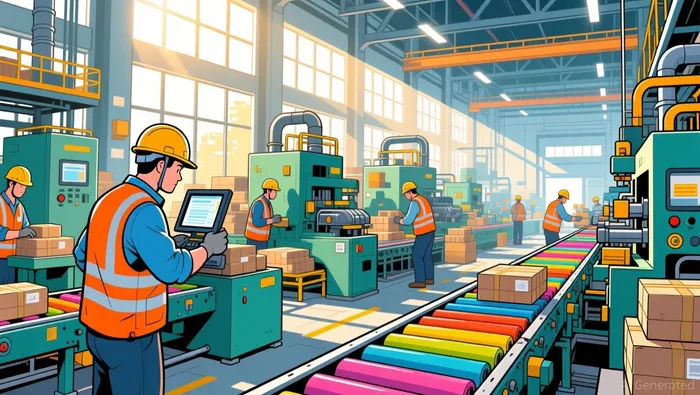
In the context of global markets, Hungary's industrial performance may also influence regional sentiment. As a member of the European Union, Hungary's economic trajectory is often viewed through the lens of the broader Eurozone. A strong performance in Hungary could provide a counter-narrative to stagnation concerns in larger European economies, potentially attracting foreign direct investment into the region. However, investors must remain cautious, as global trade tensions and energy prices continue to pose risks to industrial output.
Ultimately, the 10.1% surge in industrial output is a significant data point that warrants close attention. While it signals a positive shift in economic momentum, it also introduces complexities regarding inflation and monetary policy. Market participants should view this data as a piece of a larger puzzle, one that requires ongoing analysis of related economic indicators to fully understand its implications for the Hungarian economy and global markets.
What Should Investors Monitor in the Coming Months?
Following the release of the July industrial output data, investors should focus on upcoming inflation reports and central bank communications. The Hungarian National Bank (MNB) will likely weigh this surge in production against current inflation trends when making future policy decisions. If inflation remains sticky, the central bank may opt to keep interest rates higher for longer, which could impact borrowing costs and economic growth.
Additionally, tracking global demand indicators, such as manufacturing PMI data from key trading partners like Germany, will be essential. Hungary's industrial sector is heavily integrated with the European supply chain, making it vulnerable to external shocks. A slowdown in major European economies could quickly reverse the positive momentum seen in Hungary's industrial output.
Finally, investors should watch for any shifts in government policy regarding energy subsidies or industrial incentives. These factors can significantly influence production costs and profitability for Hungarian manufacturers. By staying informed on these developments, investors can better position themselves to navigate the evolving macroeconomic landscape in Hungary.

Stay ahead of the market.
Get curated U.S. market news, insights and key dates delivered to your inbox.


AInvest
PRO
AInvest
PRO




Comments
No comments yet