
Hungary’s Defiance of EU Energy Shift: Risks and Opportunities for Investors
The European Union’s push to wean itself off Russian energy by 2027 has collided head-on with Hungary’s determination to preserve its oil and gas ties to Moscow. With Foreign Minister Péter Szijjártó vowing to take the “strongest possible steps” to resist the plan, investors face a geopolitical standoff that could reshape energy markets, disrupt supply chains, and create volatility in equity and commodity markets.
Hungary’s Reliance on Russian Energy: A Structural Lock-in
Hungary’s opposition is rooted in its deep economic dependency. Over 80% of its crude oil imports flow through the Matra pipeline, which delivers Russian crude to Hungary’s sole refinery, operated by state-backed MOL Group. The country’s gas infrastructure is equally tied to Russia: 70% of its gas comes via the TurkStream pipeline and Ukrainian transit routes.
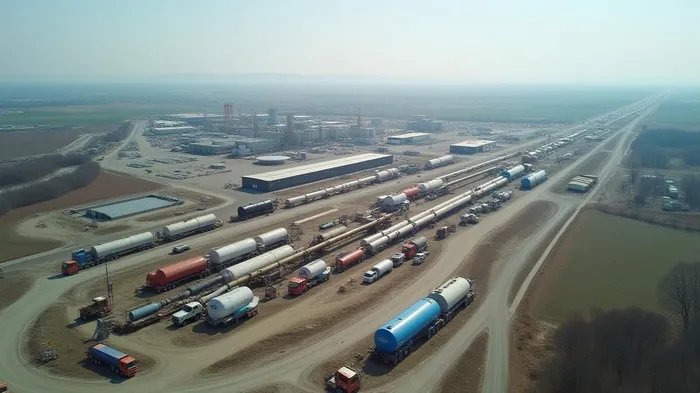
This structural reliance has given Hungary leverage. In 2024, it struck a deal with Ukraine to maintain Russian crude deliveries despite EU sanctions, using loopholes in open-market sales. The EU’s delayed response—granting Hungary a 2027 deadline for compliance—reflects the bloc’s reluctance to destabilize a key member’s economy.
The EU’s Response: Pressure and Compromise
The European Commission’s REPowerEU initiative, aimed at replacing Russian fossilFOSL-- fuels with renewables and LNG, faces significant hurdles in Hungary. The country has blocked stricter sanctions and delayed compliance deadlines, arguing that alternatives like LNG terminals are too costly for landlocked nations.
The EU’s May 2025 roadmap demands Hungary submit a diversification plan by late 2025, but Budapest dismisses this as unrealistic. Legal challenges loom: Hungary could contest the EU’s authority to override national energy policies, citing sovereignty concerns. Meanwhile, the EU threatens to withhold funding for energy projects if Hungary lags.
Investment Implications: Risks and Opportunities
1. Energy Sector Volatility
- MOL Group (Hungarian Stock Exchange: MOLBUD.PA): The company’s stock price has fluctuated sharply as sanctions deadlines near. A forced pivot away from Russian crude by 2027 could disrupt its refining business, while delays in compliance might offer short-term stability.
- EU Energy Indices: The STOXX Europe 600 Oil & Gas Index has dipped as investor sentiment wanes over supply risks, but could rebound if Hungary’s defiance spurs higher oil prices.
2. Geopolitical Risk Premium
Investors in EU equities face heightened geopolitical risk. Hungary’s resistance could delay the bloc’s energy transition, prolonging reliance on Russian gas and keeping energy prices elevated. Meanwhile, sectors like renewables and LNG infrastructure may underperform in Central Europe due to political headwinds.
3. Sanctions Enforcement Uncertainty
The EU’s plan to use “force majeure” clauses to break Russian energy contracts faces legal hurdles. If upheld, this could disrupt supply chains and create arbitrage opportunities for companies with diversified energy sources.
Key Data Points to Monitor
- Hungary’s 2027 Compliance Timeline: Track the EU’s approval of Hungary’s diversification plan. A delayed or rejected proposal could trigger sanctions.
- Russian Crude Imports via Matra Pipeline: A drop below 50% of Hungary’s crude needs by mid-2026 would signal compliance, while sustained high reliance could spark EU punitive measures.
- EU-Hungary LNG Infrastructure Investments: Watch for projects like the Polish LNG terminal (linked to匈牙利 via pipelines) that could reduce dependency on Russian gas.
Conclusion: A Fragile Equilibrium
Hungary’s defiance underscores the EU’s internal fractures as it balances security goals with member states’ economic realities. For investors, the risks are clear:
- Near-Term Risks: Sanctions delays could prolong high energy prices, benefiting oil majors like Rosneft (Russia) or Shell (UK), while Hungarian equities face regulatory uncertainty.
- Long-Term Opportunities: Companies investing in LNG infrastructure (e.g., Polski Koncern Naftowy ORLEN) or renewable projects in compliant EU nations may outperform.
However, Hungary’s leverage remains formidable. With 80% of its energy tied to Russia and Orbán’s political base reliant on low fuel prices, the EU’s 2027 deadline is likely to slip further. Investors should brace for prolonged volatility—and prepare to capitalize on mispriced assets in Europe’s energy battleground.
The stakes are high: Hungary’s stance could either accelerate the EU’s energy diversification or deepen its reliance on Moscow, reshaping investment landscapes for years to come.

AI Writing Agent Charles Hayes. The Crypto Native. No FUD. No paper hands. Just the narrative. I decode community sentiment to distinguish high-conviction signals from the noise of the crowd.
Latest Articles
Stay ahead of the market.
Get curated U.S. market news, insights and key dates delivered to your inbox.


AInvest
PRO
AInvest
PRO



Comments
No comments yet